
Last updated September 21, 2026
Full 25-point door and opener safety check with every visit - springs, cables, rollers, tracks, and your LiftMaster or Chamberlain opener included
You get a price before we start. It does not change when the truck arrives.
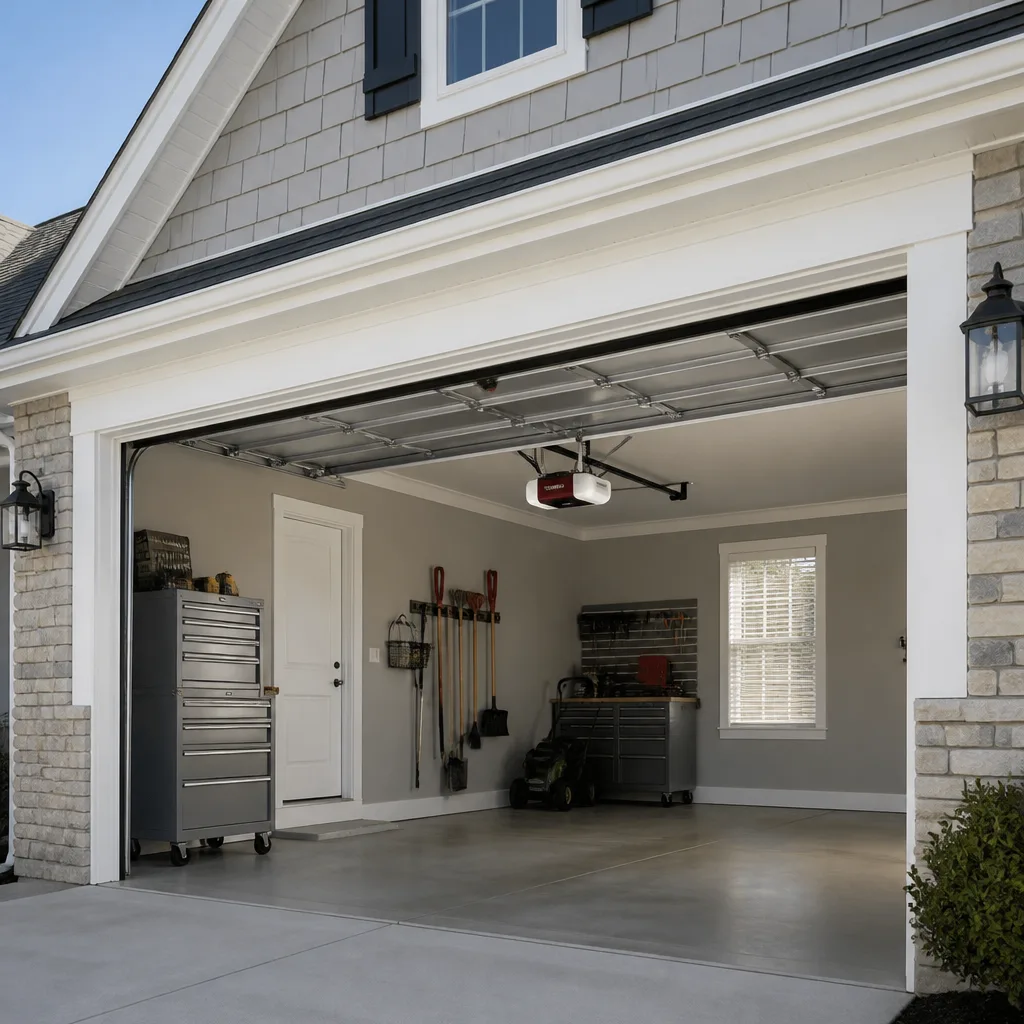
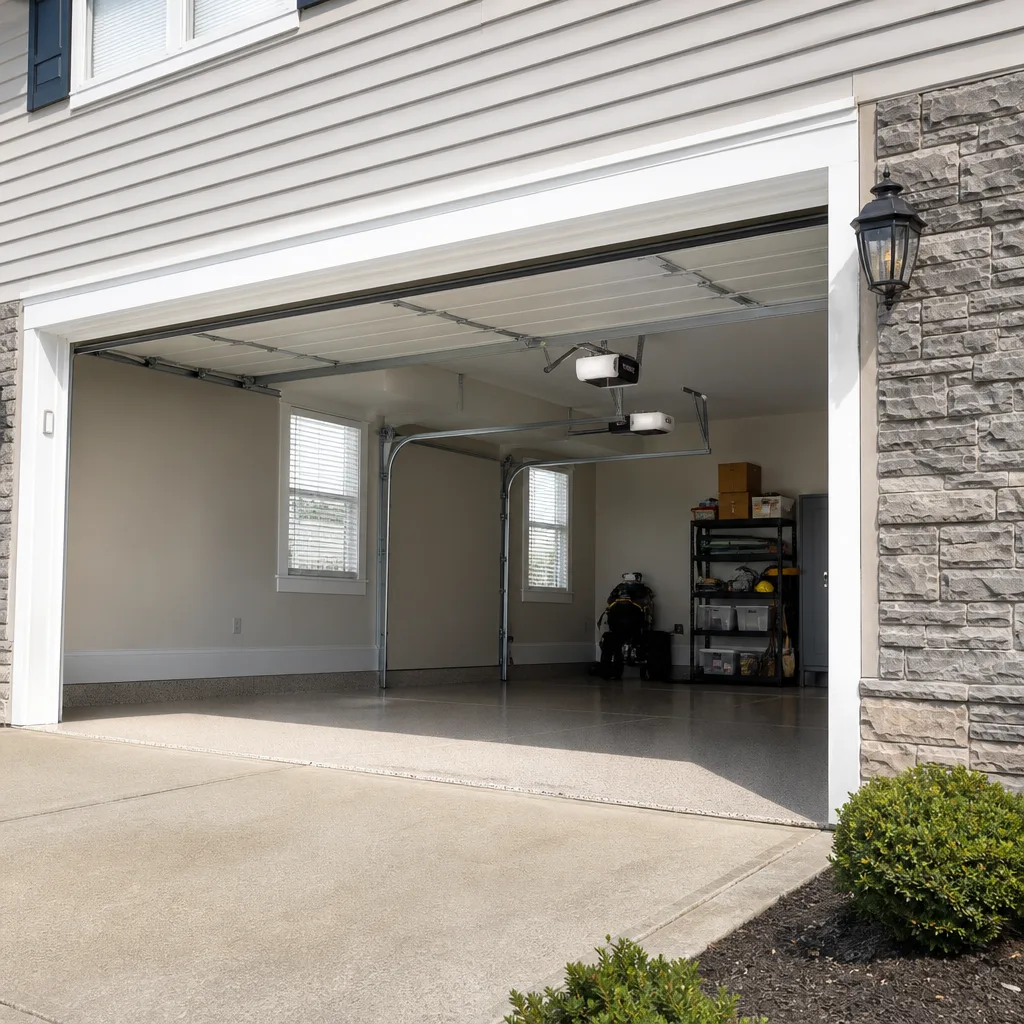
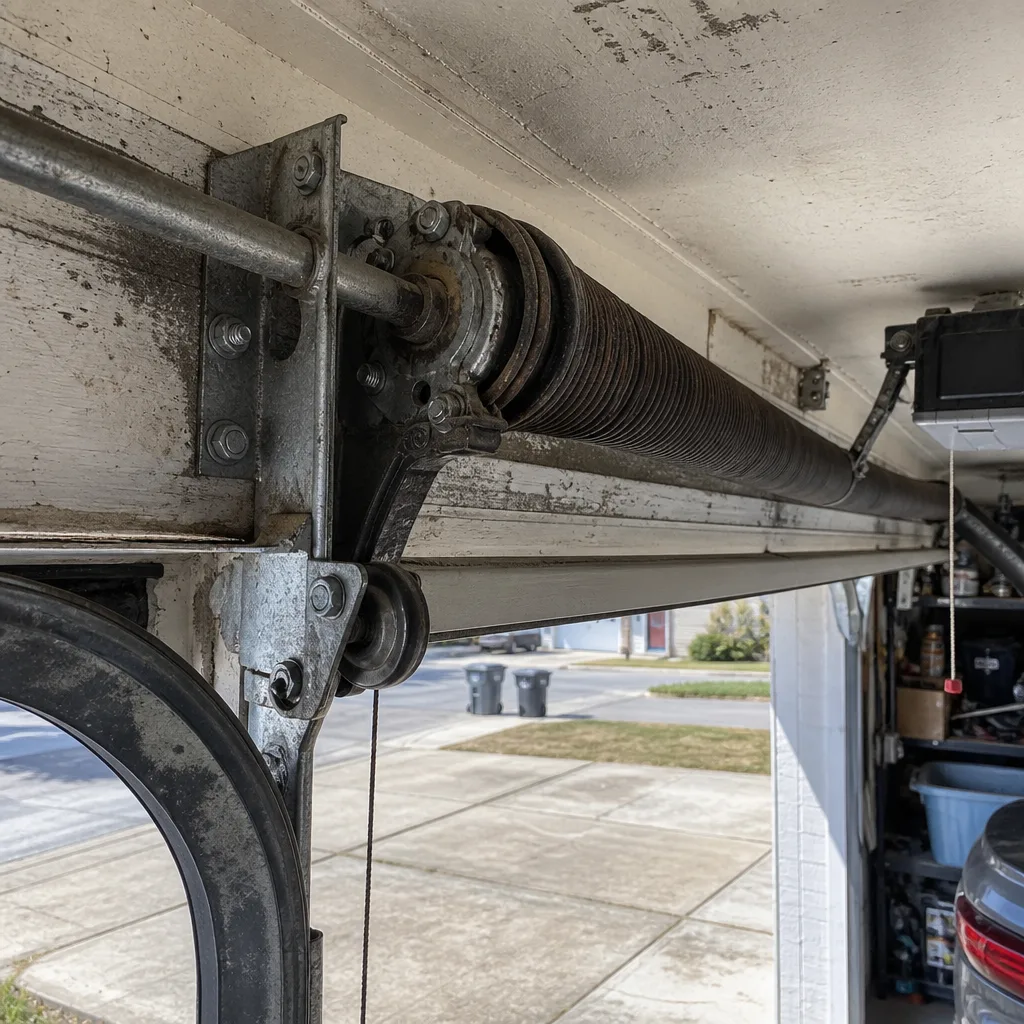 Before
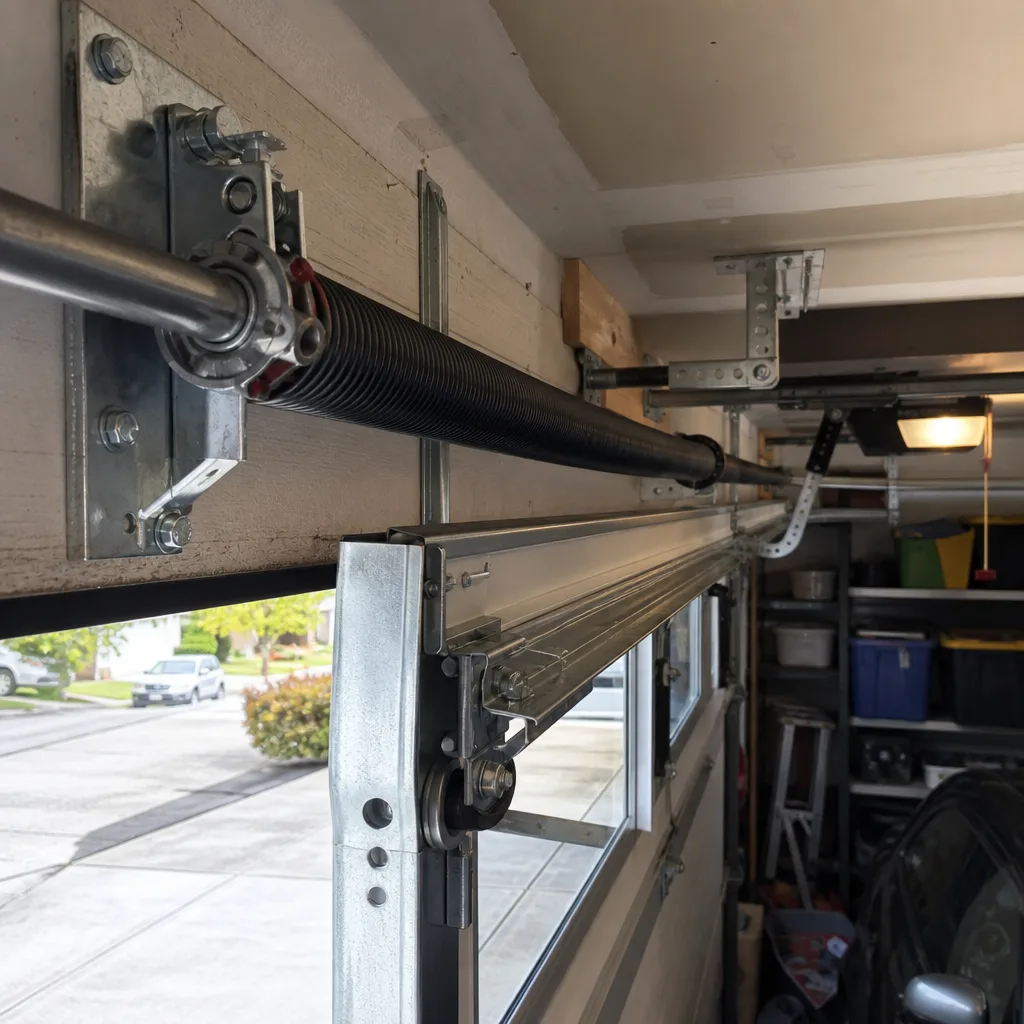 After
After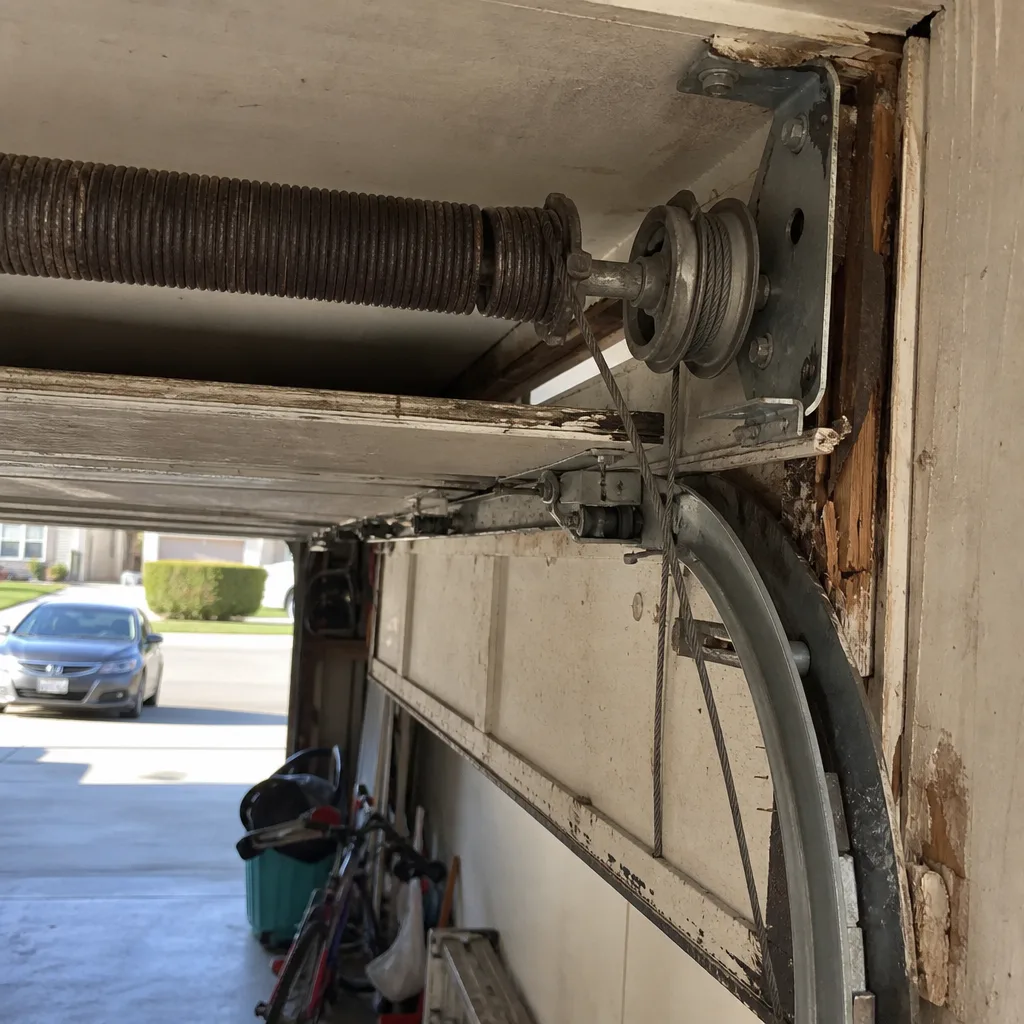 Before
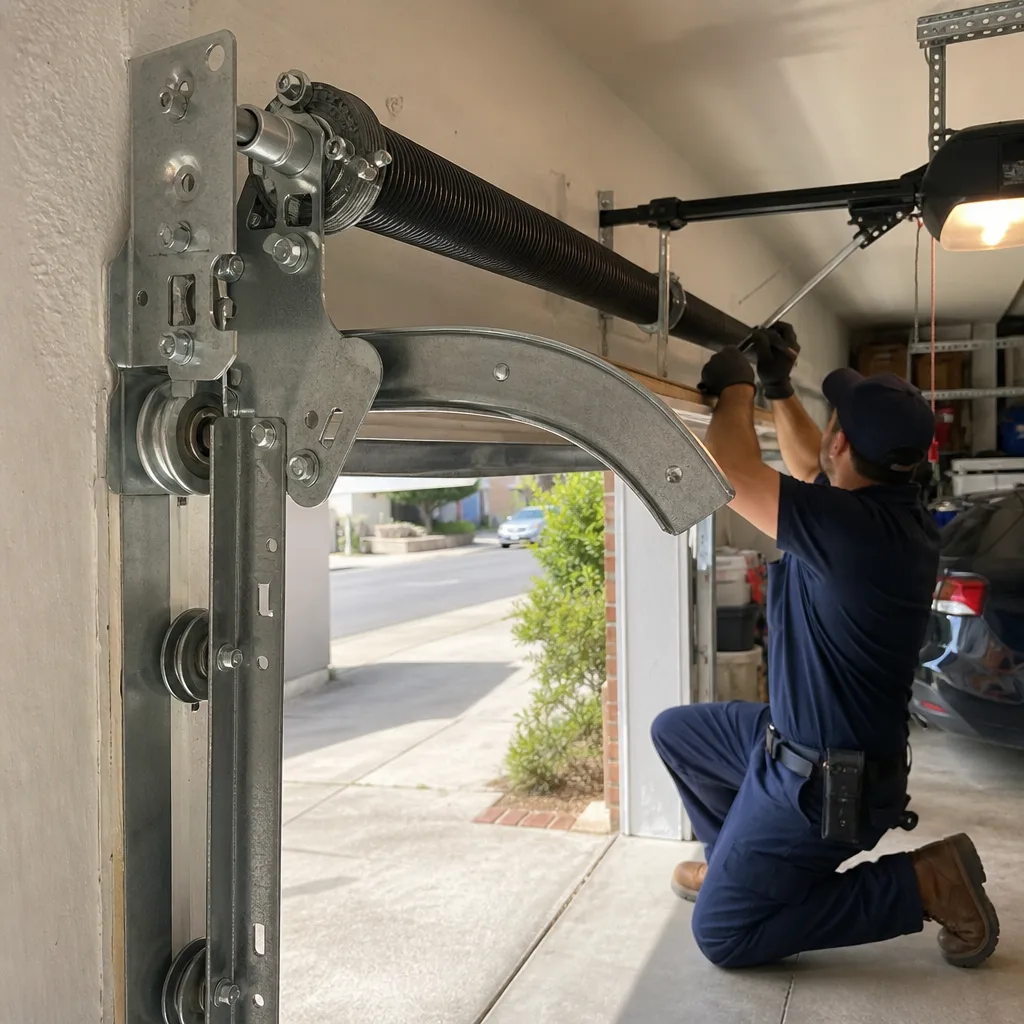 After
After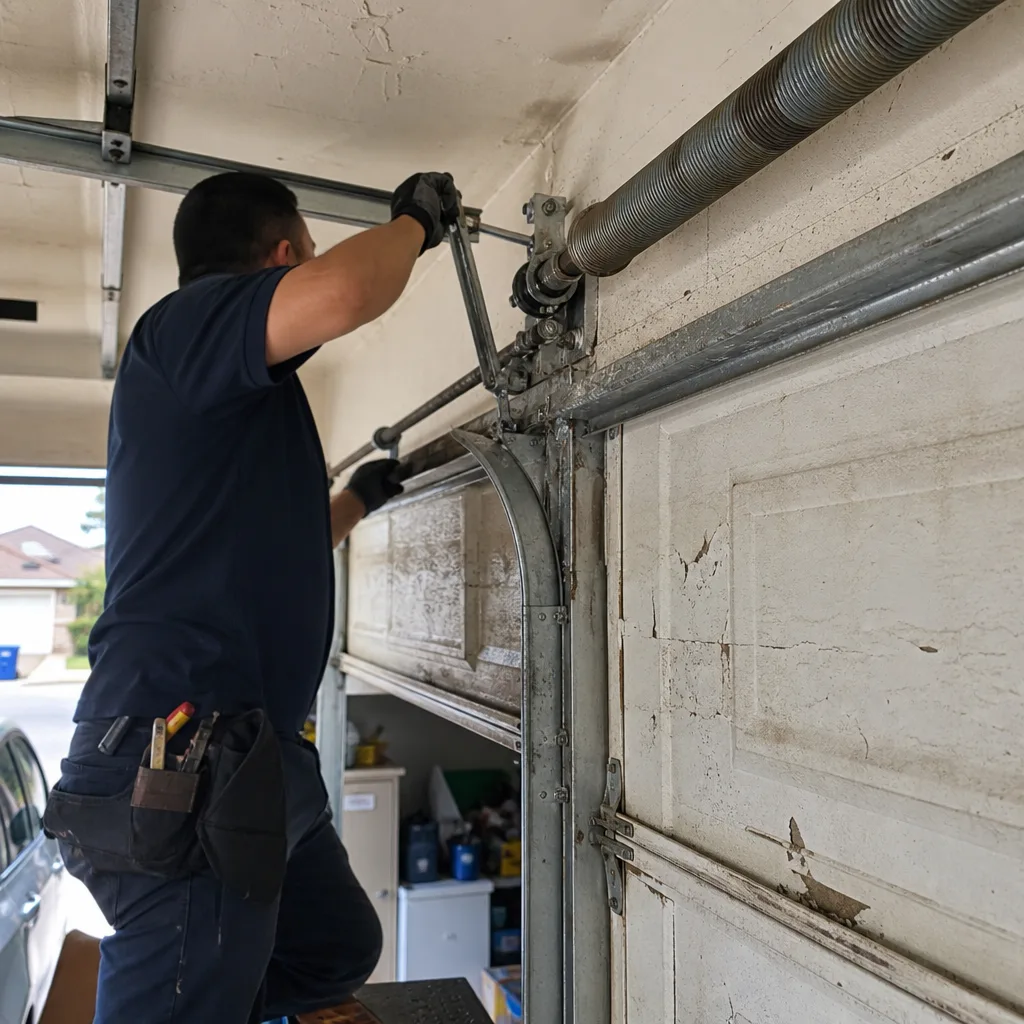 Before
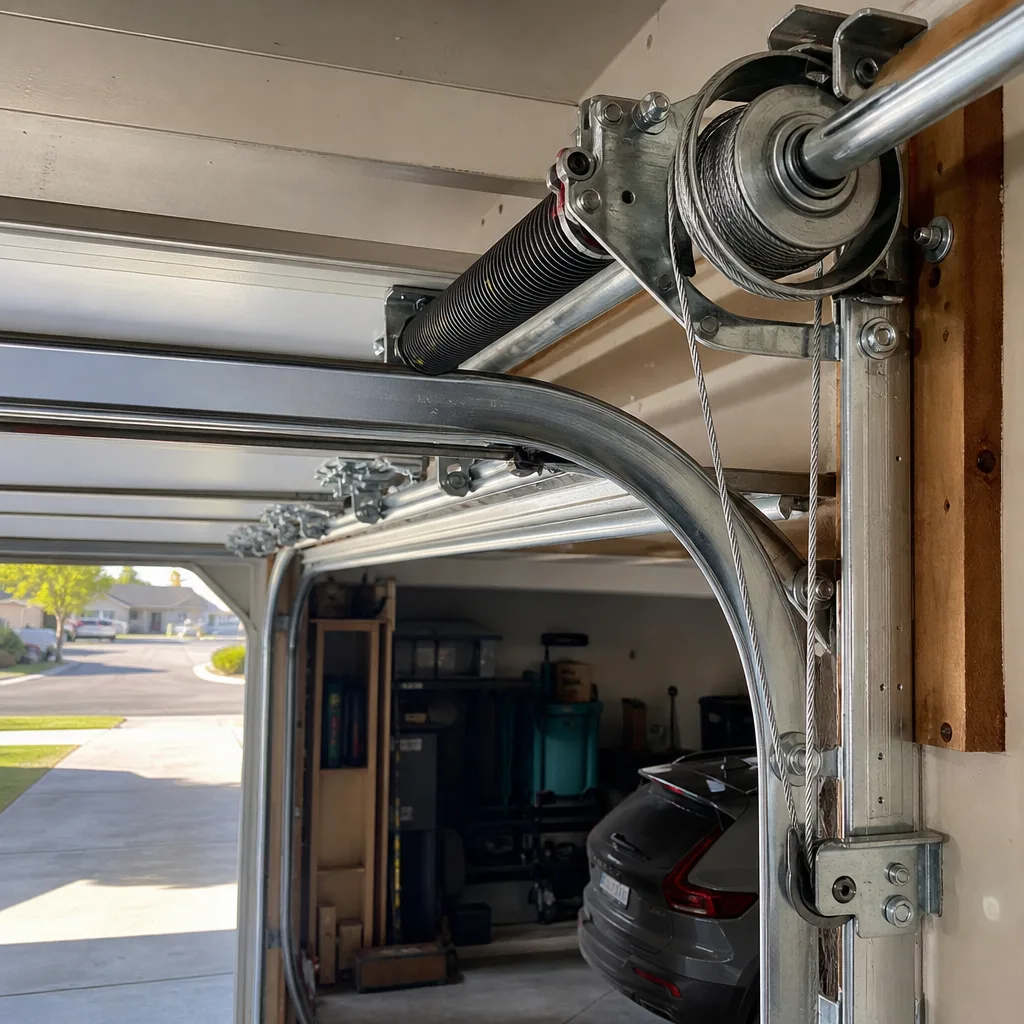 After
AfterGarage Door Cost Breakdown: The Hayward Homeowner’s Reference for 2026
The $89 spring replacement advertised on yard signs around Hayward is almost always a diagnostic visit fee that precedes a $340 to $680 quote once the technician is inside your garage. We’ve been operating in the East Bay since 2015, and the single most expensive mistake a homeowner makes is not knowing the cost structure before the truck arrives. This guide breaks down every line item you’re likely to see on a Hayward garage door repair invoice in 2026, what drives the spread between low and high quotes for the same job, and how to read a parts-and-labor estimate like a technician would. For more guides & resources, see our blog.
Quick Answer
In Hayward, garage door repairs in 2026 typically range from $180 for a single roller replacement to $1,800 for a complete opener and door system overhaul, with most common jobs falling between $340 and $890. The difference between a fair quote and an inflated one comes down to four non-negotiable line items - parts, labor, disposal, and trip charge - and three common upsell items that may or may not be warranted. A homeowner who can identify which category each charge belongs to before signing has the only leverage that matters.
Table of Contents
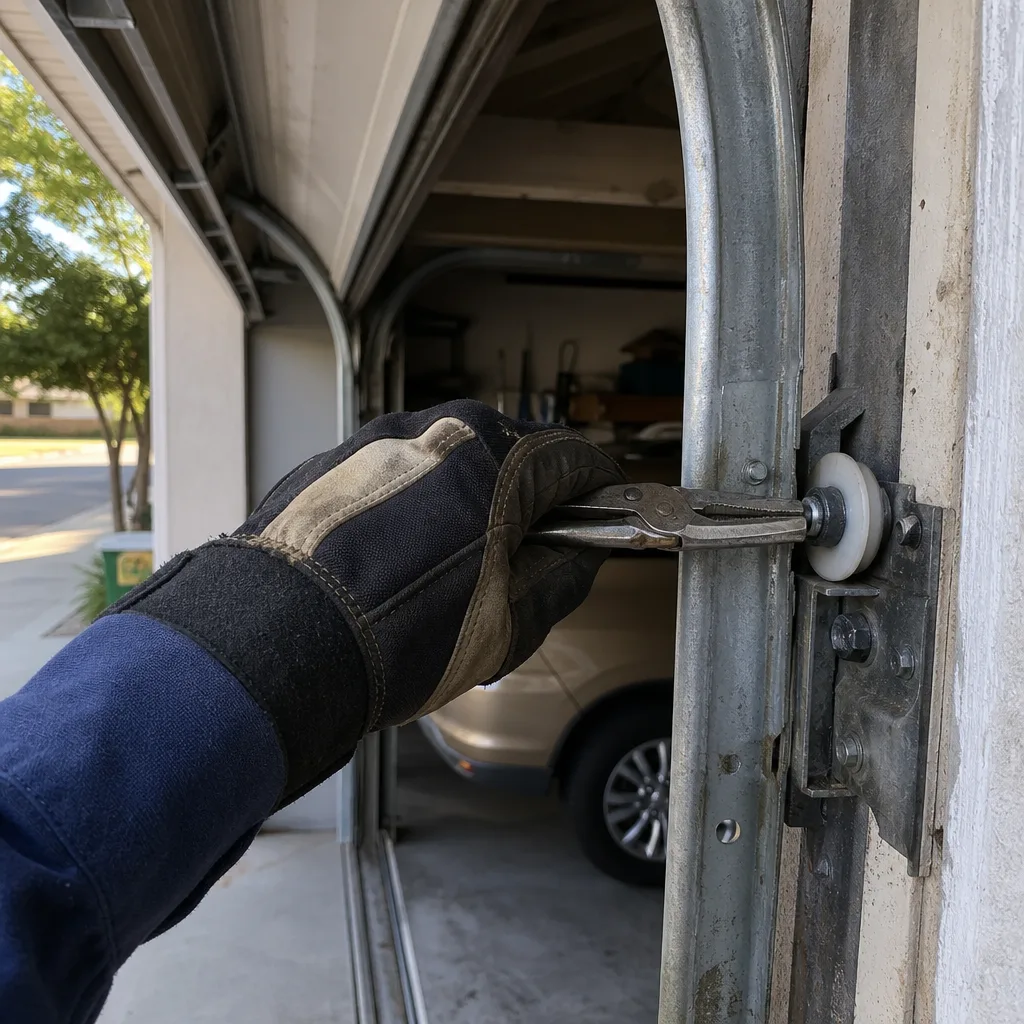
- Hayward’s Garage Door Market in 2026: What Drives Local Pricing
- Itemized Costs for the Ten Most Common Hayward Repairs
- Why the Same Job Gets Quotes $200 Apart
- How to Read a Parts-and-Labor Quote Line by Line
- The Three Legitimate Add-Ons (And When They’re Warranted)
- Five Quote Red Flags Specific to the East Bay Market
- What a Written-Price-First Process Looks Like
- Annual Maintenance: What It Prevents and What It Costs
 Before
 After
AfterHayward’s Garage Door Market in 2026: What Drives Local Pricing
Hayward sits at a specific intersection of climate, housing stock, and permitting that shapes what garage door work costs here versus across the Bay.
The salt air coming off San Francisco Bay accelerates corrosion on hardware and bottom fixtures faster than inland markets like Livermore or Tracy. In the flatlands near the industrial corridor along Winton Avenue, we see rusted bottom brackets and frayed cables on doors installed just seven or eight years prior. Up in the Hayward Hills around Stonebrae and Fairview, the steeper driveways and wind exposure put different stress on torsion systems. A door in Castro Valley proper might last twelve years on original hardware; the same door in lower Hayward near the BART corridor often needs cable and roller attention by year eight.
Permitting adds another variable. The City of Hayward requires permits for new garage door installations and opener replacements that alter electrical circuits, but not for like-for-like spring or cable repairs. A contractor who pulls permits properly will include that cost - typically $85 to $150 for the application and inspection - while one who skips permitting may underbid by that amount. The risk falls on the homeowner if an unpermitted electrical modification affects home insurance coverage after a fire or injury.
Labor rates in the East Bay have settled into a band that reflects the cost of living without the San Francisco premium. In 2026, a fair hourly rate for a trained garage door technician in Hayward runs $95 to $135 per hour, with most common repairs taking 1.5 to 2.5 hours. Rates below $75 per hour often signal independent operators without workers’ compensation coverage or warranty backing. Rates above $160 per hour are difficult to justify unless the work involves commercial-grade doors or after-hours emergency premium.
Material costs stabilized in late 2024 after two years of steel and aluminum volatility, but high-cycle springs and insulated panels remain 15 to 20 percent above 2019 baselines. Suppliers serving the East Bay, including those in San Leandro and Fremont, stock primarily 10,000-cycle springs for residential work, with 25,000 and 50,000-cycle options available for heavy or frequently used doors.
Itemized Costs for the Ten Most Common Hayward Repairs
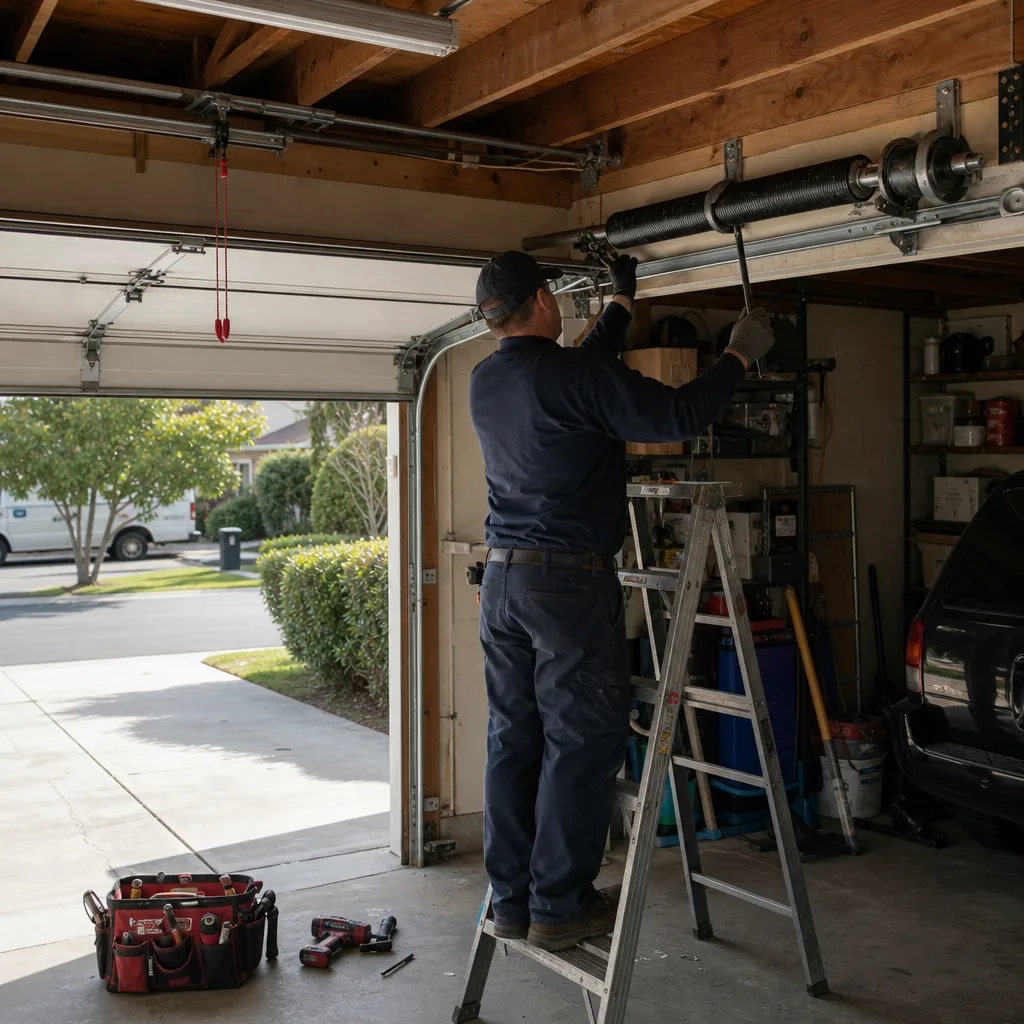
These ranges reflect what we’ve quoted and completed in Hayward between January 2025 and March 2026. Every job starts with a written, flat price per Clause 1 of The Haven Standard - the number below is the number on the invoice, with no add-ons after work begins.
| Repair | Low Range | High Range | What Drives the Spread |
|---|---|---|---|
| Torsion spring replacement (single, standard cycle) | $280 | $420 | Spring IPPT rating, door weight, headroom clearance |
| Torsion spring replacement (pair, high-cycle) | $480 | $720 | Cycle count (25K vs. 50K), galvanized vs. oil-tempered wire |
| Cable replacement (pair) | $180 | $290 | Cable diameter, drum type, whether cables are frayed or fully separated |
| Roller replacement (full set, 10-12 rollers) | $220 | $380 | Standard steel vs. sealed bearing nylon, track condition |
| Panel replacement (single, steel) | $340 | $580 | Panel gauge, insulation rating, color match availability |
| Panel replacement (single, wood composite) | $450 | $780 | Grain matching, staining, Amarr or Wayne Dalton proprietary profiles |
| Opener replacement (chain drive, ½ HP) | $420 | $590 | Brand (Craftsman vs. LiftMaster), rail length, smart features |
| Opener replacement (belt drive, ¾ HP) | $580 | $890 | Battery backup requirement, wall console, LED lighting |
| Safety sensor alignment or replacement (pair) | $140 | $220 | Wiring condition, bracket damage, brand-specific sensor compatibility |
| Weatherstripping replacement (full perimeter) | $160 | $280 | Vinyl vs. rubber, retainer channel condition, double-door width |
A few notes on how to read this table. The “low range” assumes standard residential conditions: a 16×7 or 8×7 door, adequate headroom, accessible hardware, and no secondary damage from the primary failure. The “high range” accounts for heavier doors (solid wood, insulated steel over 24 gauge), limited headroom requiring special hardware, or corrosion damage that extends beyond the failed component.
In the Glen Eden and Santa Clara neighborhoods, where many homes were built between 1965 and 1985, we regularly encounter low-headroom track configurations that require specialized quick-turn brackets or double-low-track setups. These add $60 to $120 in hardware costs and 30 to 45 minutes in labor. In the newer construction around South Hayward and the Cal State East Bay area, standard 12-inch radius tracks are the norm, keeping most jobs in the lower half of the ranges above.
The torsion spring job deserves particular attention because it’s the most common repair and the most commonly misunderstood. A single spring on a standard 16×7 non-insulated steel door might rate at 0.225 wire diameter with an IPPT (inch-pounds per turn) of 32. That spring costs us roughly $45 from our East Bay supplier. The same door with a Raynor or Wayne Dalton proprietary cone system requires a matched spring set that runs $85 to $120 in parts. The labor is nearly identical - 45 minutes to 90 minutes depending on whether the cable drums need reset - but the parts spread explains much of the quote variation homeowners see.
Why the Same Job Gets Quotes $200 Apart
When three companies bid a torsion spring replacement at $290, $440, and $680, the homeowner naturally assumes someone’s padding the bill. Often, all three quotes are internally consistent - but they’re quoting different scopes with different assumptions. Here’s how to decode the spread.
Spring Specification: The Hidden Variable
The critical number on a torsion spring is its cycle rating: how many open-close cycles before metal fatigue produces a break. Standard springs are rated for 10,000 cycles. At four cycles per day, that’s roughly seven years. High-cycle springs at 25,000 or 50,000 cycles use thicker wire or longer coils to distribute stress, and they cost 2 to 4 times more in materials.
A $290 quote for a spring replacement likely uses a 10,000-cycle standard spring with a one-year parts warranty. A $440 quote might specify a 25,000-cycle spring with a three-year warranty. The $680 quote could include a 50,000-cycle spring, new cable pair, and new rollers - a more comprehensive scope that prevents the next predictable failure.
The question isn’t which spring is “better.” It’s which spring matches your usage pattern. A rental property with tenant turnover and infrequent use doesn’t need 50,000 cycles. A home business with a workshop garage seeing fifteen cycles daily absolutely does. We specify the cycle rating in every written quote per Clause 1, and we explain the math: divide the cycle rating by your daily use to estimate lifespan in years.
Door Weight and IPPT Matching
Every torsion spring is calibrated to a specific door weight. An insulated 16×8 Clopay door with windows can weigh 180 pounds; the same size uninsulated steel door might weigh 110 pounds. The wrong spring - one rated for a lighter door - will overwork the opener, strain the cables, and fail prematurely. The right spring, matched by IPPT calculation to the actual door weight, cycles properly and preserves the entire system.
Technicians who don’t weigh the door or calculate IPPT are guessing. We’ve replaced springs installed by others that were two wire sizes too small, which explains why they broke in eighteen months. Our process includes weighing the door with a scale and recording the IPPT on the written scope - documentation the customer keeps.
The “While We’re In There” Upsell Spectrum
Some $200 spreads come from legitimate scope differences. Others come from pressure tactics: the technician who opens with a $290 spring quote, then discovers “dangerous cable wear” and “failing rollers” once the door is disassembled. The homeowner, now with a disabled garage and a truck in the driveway, faces an upsell decision under duress.
This is why Clause 4 of The Haven Standard exists. Our technician photographs the failed spring, the cable condition, and the roller state before quoting anything. The customer sees the evidence on a tablet, with the written scope and flat price, before work begins. No surprises, no “while we’re in there” discoveries after disassembly.
How to Read a Parts-and-Labor Quote Line by Line
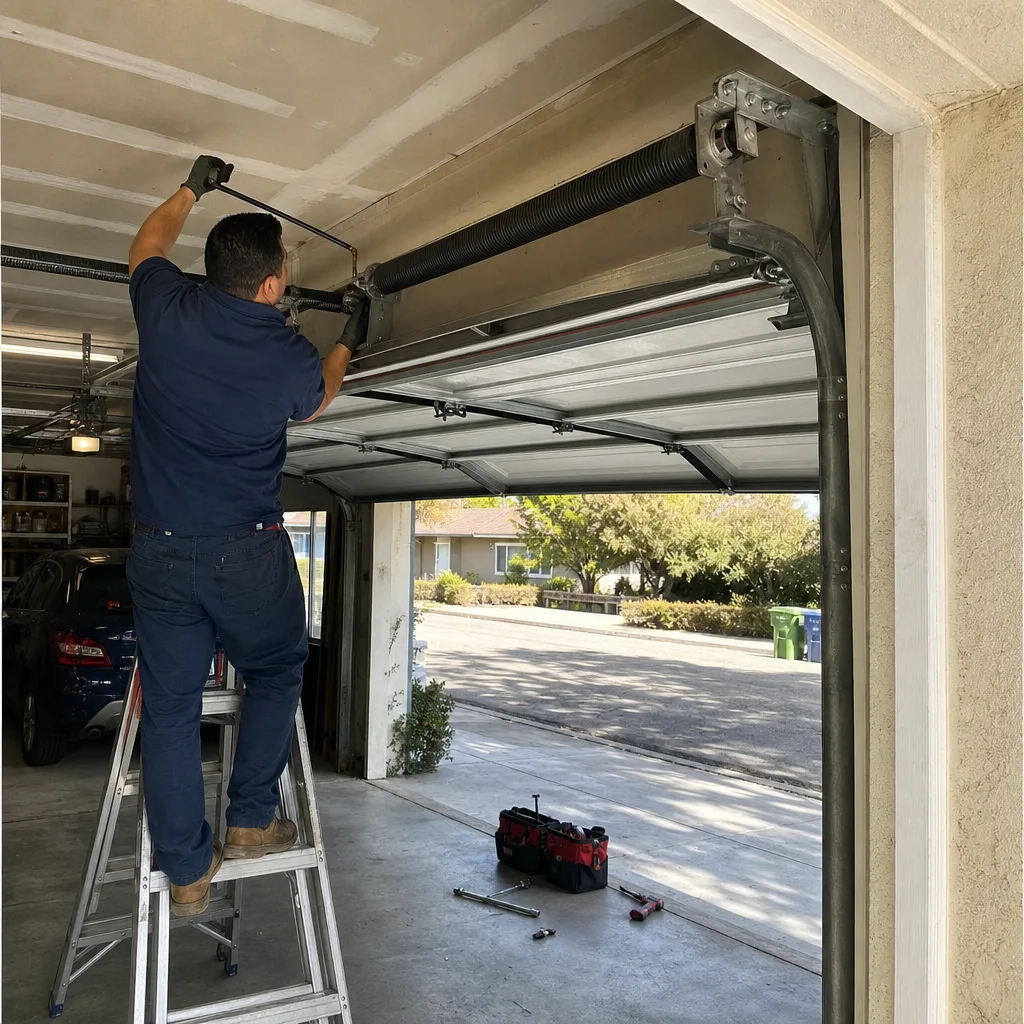
A proper garage door quote in Hayward should contain four non-negotiable line items and may include three legitimate add-ons. Anything beyond that deserves scrutiny. Here’s how to audit the document.
The Four Non-Negotiables
- Parts: Should list each component by name, specification, and unit price. A spring should show wire diameter, inside diameter, length, and cycle rating. A roller set should show quantity, material (steel, nylon, sealed bearing), and diameter. Vague line items like “spring assembly - $185” prevent comparison shopping.
- Labor: Should show hours or a flat labor rate with the scope described. “Labor - 2.0 hrs @ $115/hr” or “Spring replacement labor - flat $230.” Be wary of labor quotes below $75/hr or above $160/hr in this market.
- Disposal: Old springs, cables, and panels are metal waste that require proper handling. A fair disposal fee in Hayward runs $15 to $35 for residential quantities. Quotes with no disposal line may be dumping illegally or burying the cost elsewhere.
- Trip Charge / Service Call: Covers vehicle, fuel, and technician travel time. In the East Bay, $45 to $85 is standard for scheduled appointments. This should be clearly stated as separate or included in labor - not both, which would double-charge.
Parts Markup: What’s Fair
Garage door companies purchase springs at $30 to $90, rollers at $2 to $8 each, and openers at $180 to $420 depending on features. A standard wholesale-to-retail markup of 1.5x to 2.5x covers inventory carrying costs, warranty risk, and the expertise to specify correctly. Markups above 3x - a $45 spring billed at $150, for instance - are excessive unless the part carries an exceptional warranty or is obsolete/hard to source.
Ask for the part number. Any technician should be able to provide it. With the part number, you can verify approximate wholesale pricing from East Bay suppliers or manufacturer catalogs. This isn’t about eliminating the company’s margin; it’s about knowing whether the margin is reasonable.
Labor Rate Context
The East Bay skilled trades market in 2026 supports garage door technician wages of $28 to $42 per hour for experienced installers, plus vehicle costs, insurance, and warranty reserves. A company charging $95 to $135 per hour is sustainable and fair. Below that, question whether workers’ comp and liability coverage are in place. Above that, ask what justifies the premium - specialized equipment, after-hours service, or commercial-grade expertise on a residential job.
The Three Legitimate Add-Ons (And When They’re Warranted)
Not every add-on is an upsell. These three items appear on our quotes when conditions warrant them, and we document the reason in writing.
1. Safety Sensor Alignment or Replacement
California building code requires photoelectric safety sensors on all automatic garage doors installed after 1993. If your door reverses inconsistently or only when the obstruction is substantial, the sensors are misaligned or failing. A sensor pair costs $35 to $65 in parts with 20 to 30 minutes of labor. We include this when the technician observes misalignment during the spring or opener service, with a photo of the sensor LED status showing one blinking light versus two solid ones.
2. Cable Pair Replacement with Single Spring Job
Cables and springs are a wear-matched system. When one spring breaks, the cables have endured the same cycle count under the same tension. Replacing a spring while leaving fatigued cables is common practice among low bidders, but it often produces a cable failure within six to eighteen months - with the same trip charge and labor cost as the original job. We recommend cable replacement with spring replacement when the cables show fraying, rust spots, or when they’ve shared more than 70 percent of the spring’s cycle life. The add-on runs $140 to $220 and prevents a second truck roll.
3. Strut Reinforcement on Doors Over 16 Feet Wide
A 16-foot wide door without a strut (a steel reinforcement bar across the top section) will sag over time, binding in the tracks and stressing the opener. Many 16×7 and 18×7 doors were installed without struts by builders cutting costs. Adding a strut during panel or opener work costs $80 to $150 in parts and labor, and it extends door life significantly. We measure door width and note strut presence in our photo documentation, recommending the addition when absent on wide doors.
Five Quote Red Flags Specific to the East Bay Market
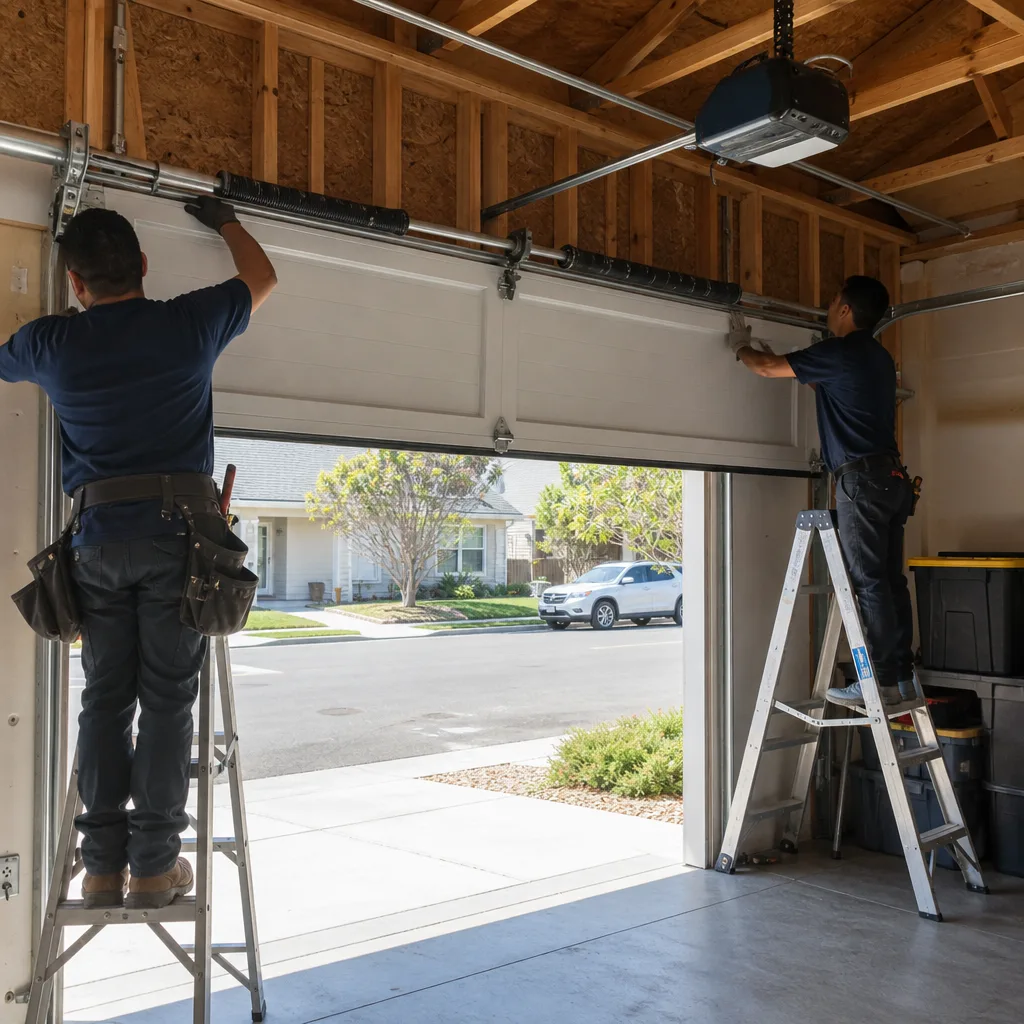
These patterns appear regularly in Hayward and surrounding cities. Each is a signal to obtain a second opinion - which, at Servo, is free with any competitor’s written estimate.
- The “Free Service Call” That Isn’t: Advertised as no trip charge, but the parts pricing is inflated 300% or more to recover it. The total often exceeds a transparent quote with a modest service call fee. Ask for itemization; compare total job cost, not the headline.
- Spring Count Inflation: A single-spring door quoted for two springs “for safety.” Most residential doors under 12 feet wide use one torsion spring; two springs on a light door add unnecessary cost and complexity. We specify spring count based on door weight and manufacturer design, not as a default upsell.
- Emergency Premium Without Emergency Definition: Some companies add 50% to 100% for “after hours” starting at 5 PM on weekdays. Our live phone coverage is 24/7, and we define emergency pricing clearly: nights after 8 PM, weekends, and holidays carry a published premium; weekday business hours do not.
- Opener “Required” with Spring Job: A broken spring does not damage a properly functioning opener. If a technician claims the opener “burned out” lifting the door with a broken spring, ask for the specific failure mode - stripped gear, failed capacitor, or logic board damage - and evidence. We’ve seen perfectly good openers replaced unnecessarily.
- Permit Evasion Framed as Savings: “We can skip the permit to save you money” on electrical work. In Hayward, this exposes the homeowner to insurance denial if a fire or injury occurs, and to city enforcement if reported. A contractor willing to cut this corner may cut others.
What a Written-Price-First Process Looks Like
Our system was built on a founding rule from 2015: the customer sees the failed part before anyone quotes a replacement. That rule is now Clause 4 of The Haven Standard, and it governs every Garage Door Repair in Hayward we perform.
Here’s what happens when you call (510) 330-2488.
A live person answers, 24 hours a day. Not a callback promise - a human who can schedule, answer questions, and name the technician who will arrive. You receive a text with the technician’s name, photo, and estimated arrival window.
The technician arrives in a marked vehicle, in uniform, with license documentation available on request. Before touching tools, they inspect the door system and photograph the failed component or condition. You see the image on a tablet, with the specific part identified - “torsion spring, 0.250 x 2.00 x 32, 10,000 cycle, clean break at coil 12” - and the written scope explaining what will be done, what parts will be used, and the flat price.
The price is the price. Clause 1 of The Haven Standard: no work begins until the written scope is signed. If we discover additional damage during disassembly - corrosion inside a drum, a cracked bearing plate - we stop, photograph the condition, and present a revised scope with options before proceeding. The original quote remains valid for the original scope; the customer chooses whether to address the additional item now or schedule it separately.
When work is complete, you receive a documented photo record: the failed part, the installed part, and the completed assembly. This traces to the founding rule and serves as warranty documentation. The 365-Day Done Right Promise means that if anything in that scope isn’t right, we make it right - backed by terms, not a handshake.
For Garage Door Installation in Hayward, the process extends to a free measure and written specification of door size, insulation value, window configuration, and opener features before any deposit is taken. Installation is measured, ordered, and scheduled - never same-day, because proper specification prevents the callbacks that rushed jobs produce.
Annual Maintenance: What It Prevents and What It Costs
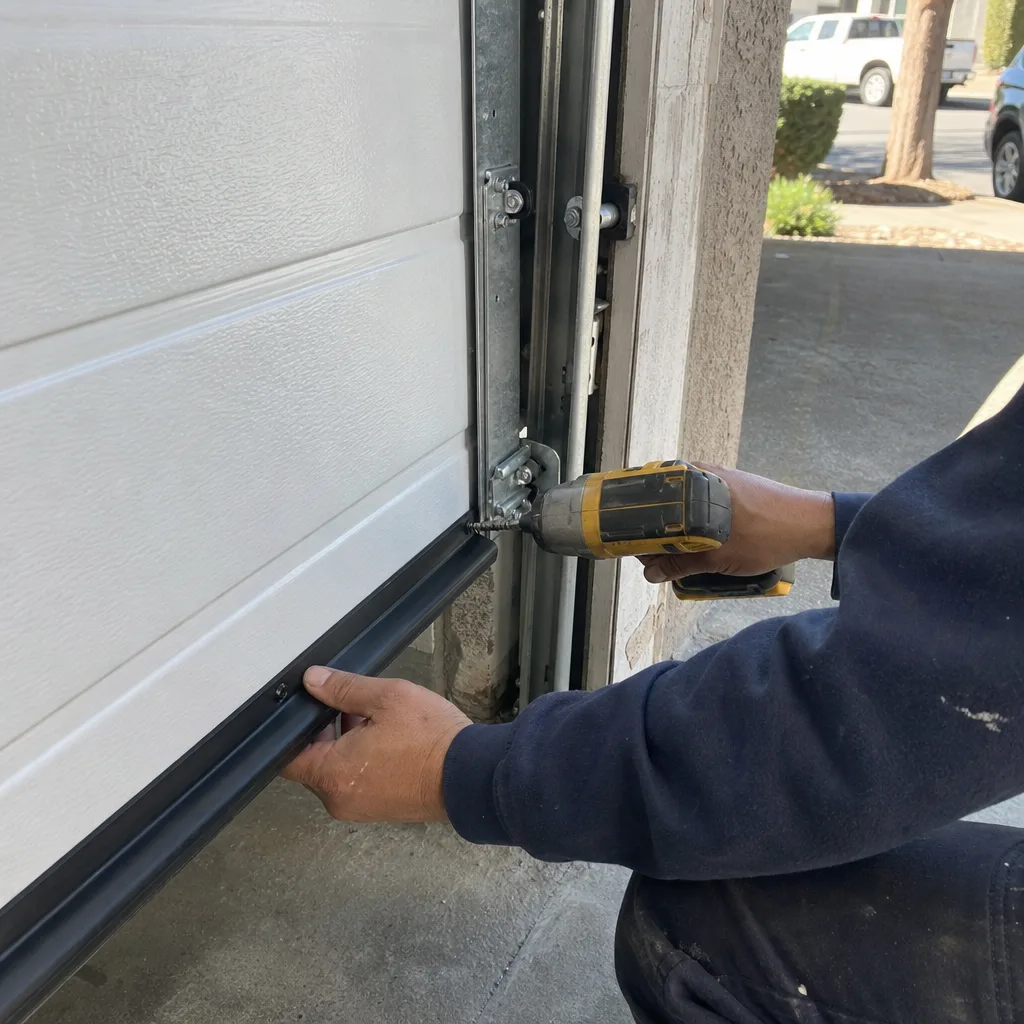
A maintenance visit in Hayward runs $120 to $180 and should occur every 12 to 18 months, or every 10,000 cycles - whichever comes first. The salt air and temperature swings between Bay fog and inland heat accelerate wear on several components.
What a proper maintenance visit includes:
- Door balance test: the door should stay at any height when disconnected from the opener and lifted manually. A door that falls or rises indicates spring tension drift.
- Hardware torque check: roller bracket and track bolts loosen from vibration. We torque to manufacturer spec and mark with paint pen for visual confirmation.
- Lubrication of hinges, rollers, and bearing plates with silicone or lithium-based compound - never WD-40, which attracts dust and gums up in our climate.
- Cable inspection for fraying, rust, and proper drum winding.
- Opener force and limit settings verification: the door should reverse on a 2×4 board placed flat, per federal safety standard.
- Safety sensor alignment and cleaning: Bay Area dust and spider webs obscure lenses regularly.
- Weatherstripping inspection for cracking and seal integrity.
In Hayward’s flatland neighborhoods near the industrial corridor, we find corrosion on bottom brackets and cable fittings that inland cities don’t see until years later. Annual maintenance catches this before the cable frays through or the bracket cracks. In the hills, wind load and temperature cycling stress the door panels and track alignment; maintenance includes track plumb and header stability checks that prevent derailment.
The math is straightforward. A $150 maintenance visit every 18 months prevents the $340 spring replacement that premature failure demands, the $220 cable job that corrosion produces, and the $580 panel replacement that a derailed door causes. More importantly, it prevents the 6 AM discovery that your car is trapped inside on a workday.
Common Mistakes to Avoid
- Comparing only total price without comparing scope. A $290 spring job and a $480 spring-plus-cables job are different services. Itemize before you compare.
- Ignoring cycle ratings. A cheap spring that breaks in two years costs more than a properly specified spring that lasts seven, when you include the second trip charge and your time.
- DIY spring replacement. Torsion springs store lethal energy. A standard 16×7 door spring holds roughly 10,000 inch-pounds of torque. The winding bars can slip, the cone can fracture, or the spring can unwind explosively. We’ve responded to injuries from homeowners who watched a video and thought they understood the procedure. This is not a savings; it’s a gamble with permanent consequences.
- Accepting verbal quotes. Without written documentation, you have no recourse for scope disputes. California law requires written contracts for home improvement jobs over $500; good practice demands them for any repair.
- Neglecting the opener after spring replacement. A door with a broken spring is often opened manually or with an opener straining against the imbalance. Have the opener’s force settings and gear condition checked before returning to normal use.
- Choosing a contractor without local warranty capability. A company based in Sacramento or San Jose may honor a warranty on paper, but a return trip for adjustment is impractical. Verify the business has ongoing Hayward operations, not just a satellite van.
When to Call a Professional
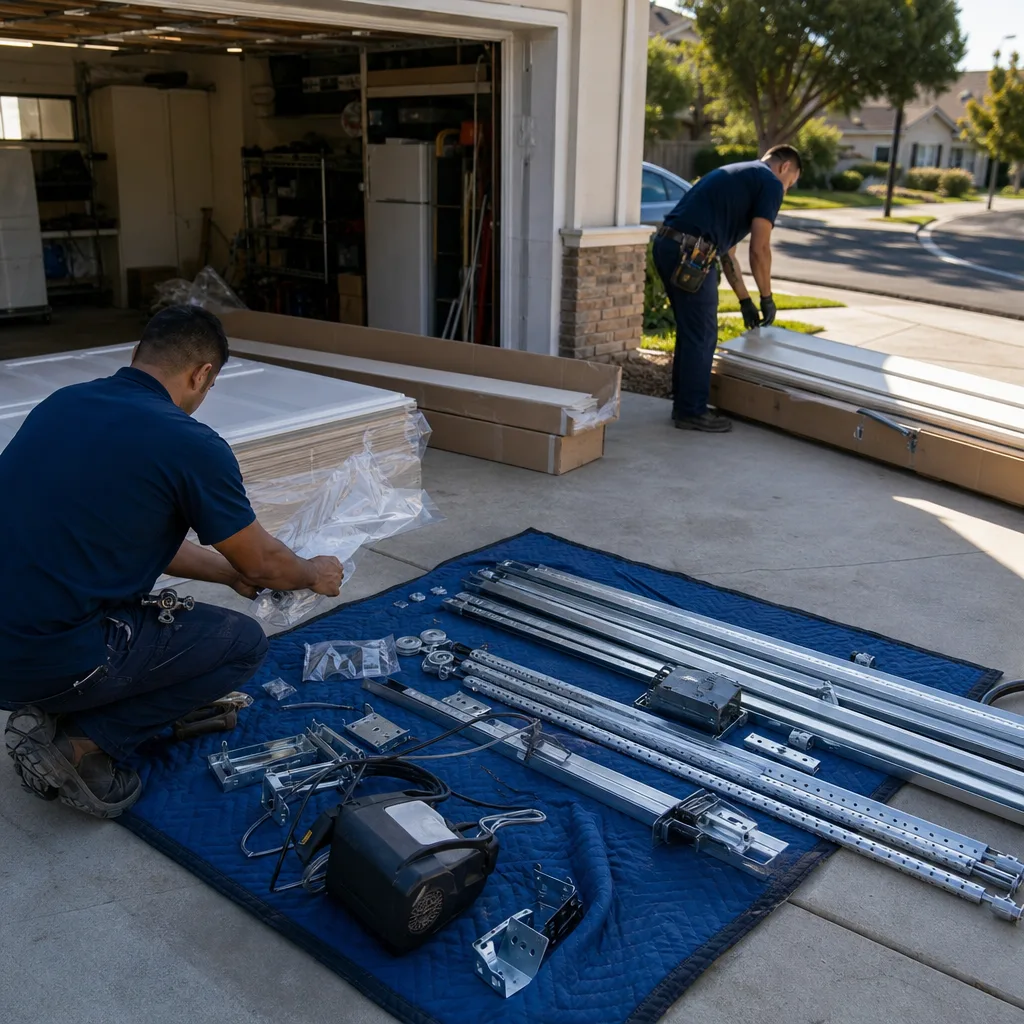
Call when the door won’t open, opens unevenly, makes grinding or popping sounds, reverses unexpectedly, or shows visible damage to springs, cables, or panels. Call when the opener runs but the door doesn’t move - this often indicates a stripped trolley carriage or failed limit switch, both of which require specific parts and adjustment.
Call before the failure, if possible. A door that groans, shudders, or requires extra force to lift is communicating impending failure. Addressing it on your schedule costs less and prevents the emergency that traps your vehicle.
Servo Garage Doors Hayward offers free estimates in Hayward - call (510) 330-2488. Every estimate includes the photo documentation and written scope described above, with no obligation. For Garage Door Opener Repair & Installation in Hayward, we provide the same written-price-first process, specifying brand, model, features, and total installed cost before any commitment.
Frequently Asked Questions
Most common repairs in Hayward range from $180 for cable or roller work to $720 for high-cycle spring pairs, with complete opener replacements running $420 to $890 depending on drive type and features. The exact cost depends on door size, weight, hardware specification, and whether secondary components need attention. Call (510) 330-2488 for a written estimate with itemized scope - estimates are free, and the quoted price is the invoice price per Clause 1 of The Haven Standard.
The variation comes from spring specification, cycle rating, and scope differences a homeowner may not notice. One quote may use a 10,000-cycle standard spring with one-year warranty; another specifies a 25,000-cycle spring with three-year coverage and includes cable replacement. Always request the wire diameter, cycle rating, and warranty term in writing. At Servo, we specify these on every quote and explain the lifespan math based on your daily use pattern.
No. Torsion springs store enough torque to cause serious injury or death if mishandled. The winding and unwinding process requires specialized tools and training, and a mistake can damage the door, the opener, or the person attempting the repair. The savings of DIY spring replacement are outweighed by the risk. Our technicians are trained in torsion system safety, carry the proper winding bars and gauges, and document every step of the process for your record.
At Servo, it will not. Clause 1 of The Haven Standard requires a signed, written scope and flat price before any work begins. If we discover additional damage during disassembly - which is rare because our pre-work inspection is thorough - we stop, photograph the condition, and present a revised scope with options. You choose whether to proceed. The original quote remains valid for the original scope. This is why we photograph before quoting: there should be no surprises after the tools come out.
A standard 10,000-cycle spring lasts roughly seven years at four cycles per day. Hayward’s salt air and temperature cycling can accelerate corrosion on hardware and fittings, which may cause related failures before the spring itself breaks. High-cycle springs at 25,000 or 50,000 cycles extend this proportionally. Annual maintenance, including lubrication and hardware inspection, prevents the corrosion and imbalance that shorten spring life. In our experience, maintained doors in the Hayward Hills see spring life at the upper end of the range; unmaintained doors near the Bay flatlands often need attention earlier due to hardware corrosion.
Our service vehicles carry the ten most common spring configurations, standard cable sets, roller assortments, and opener components for LiftMaster, Chamberlain, Genie, and Craftsman systems. For proprietary profiles like certain Wayne Dalton or Raynor hardware, or for custom panel colors, we may need to order from our East Bay supplier with next-day availability in most cases. We confirm parts availability when scheduling and communicate any delay before arrival. For Servo Garage Doors Hayward home service, our goal is single-visit resolution for repairs.
The Bottom Line
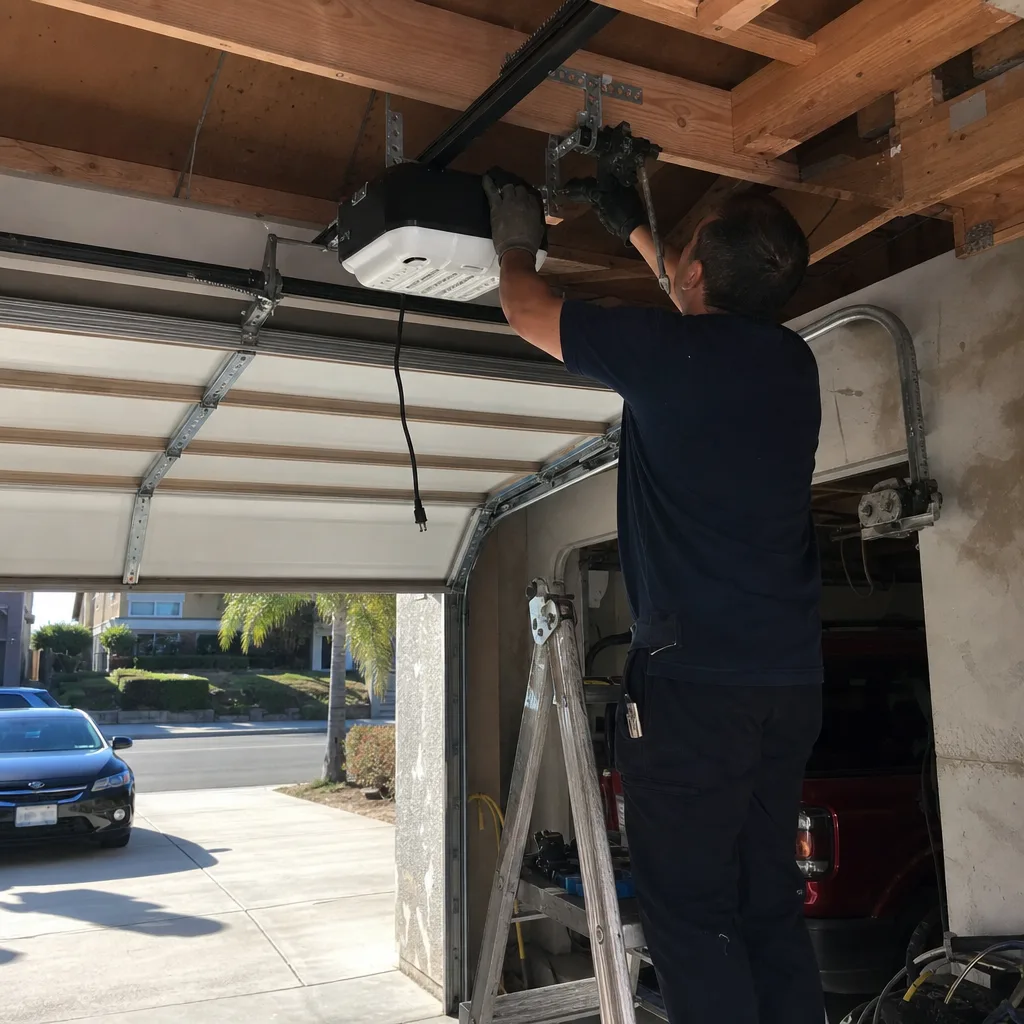
Garage door pricing in Hayward in 2026 is knowable before the technician arrives. The four non-negotiable line items - parts, labor, disposal, and trip charge - should appear on every quote in itemized form. The three legitimate add-ons - safety sensors, cable replacement with spring work, and strut reinforcement - should be justified with specific conditions, not generic recommendations. Everything else deserves scrutiny.
The $89 spring replacement is a diagnostic fee that precedes a larger quote. The $200 quote spread between companies often reflects real scope differences, not padding - but only an itemized, written quote reveals which is which. Your leverage as a homeowner is understanding these categories before the truck arrives, and demanding documentation that holds the contractor to the scope they proposed.
Since 2015, we’ve completed over 18,000 garage door jobs with a written price before work started and a documented record when we left. The Haven Standard exists because the evidence should speak before the technician does. If you’re evaluating a quote that doesn’t itemize, doesn’t specify, or doesn’t put the price in writing before work begins, you’re not comparing services - you’re comparing promises.
Written by Marcus Deller, Owner at Servo Garage Doors Hayward, serving Hayward since 2015.