
Last updated September 21, 2026
Full 25-point door and opener safety check with every visit - springs, cables, rollers, tracks, and your LiftMaster or Chamberlain opener included
You get a price before we start. It does not change when the truck arrives.
 Before
 After
After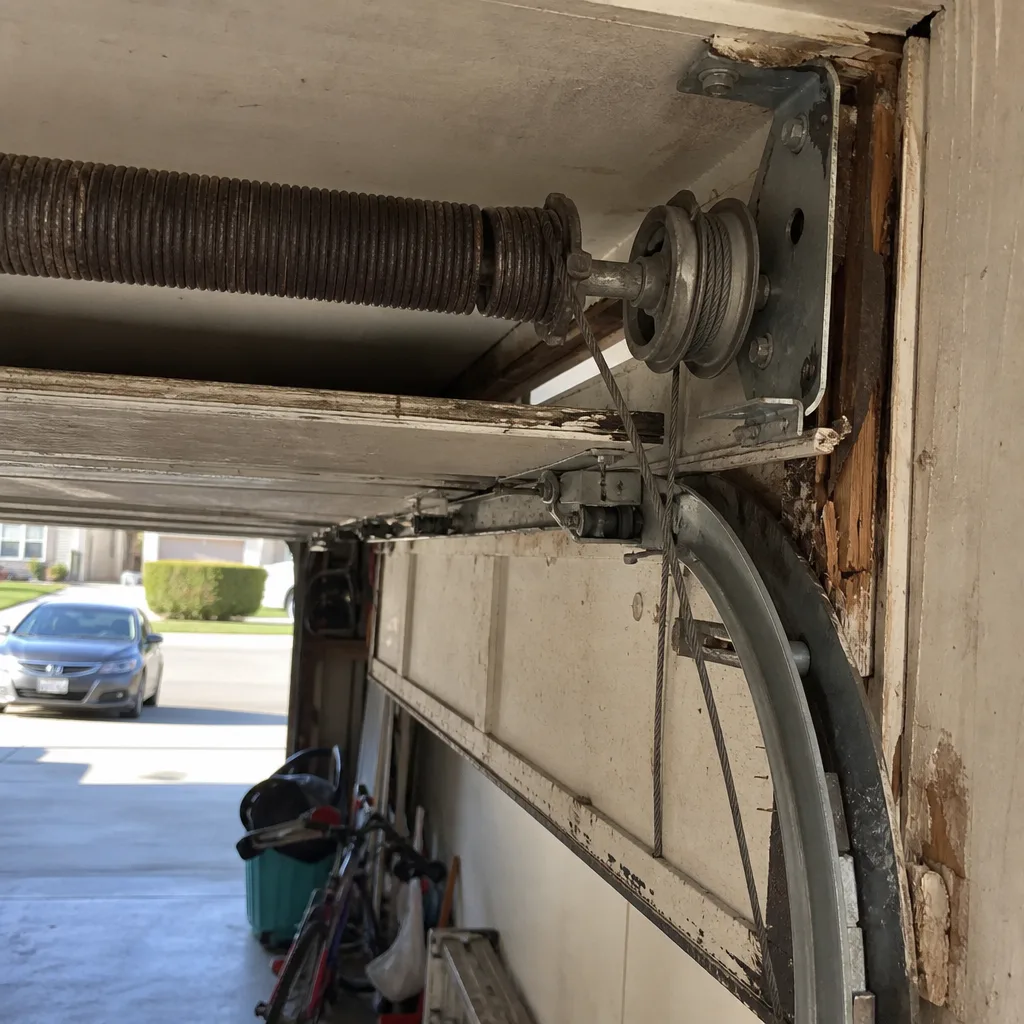 Before
 After
After Before
 After
AfterGarage Door Warning Signs: A Hayward Homeowner’s Reference Guide
Most Hayward homeowners don’t notice their garage door until it stops moving. But the door has been signaling trouble for weeks. A grinding noise during the 6 AM commute, a hesitation at the halfway point, a gap visible from the driveway at dusk - each symptom maps to a specific failed component with a specific repair cost. In our experience across Hayward’s flatlands and hillside neighborhoods, from the older stock in the Burbank area to the newer builds near South Hayward BART, a door that reverses before touching the floor isn’t “acting up.” It’s either a misaligned limit switch, a failing safety sensor, or a frayed cable, and those repairs differ by $200 to $600. This guide - along with our Complete Guide to Garage Door in Hayward - teaches you to read those signals, understand what component is failing, and know whether you can schedule the repair next week or need to leave the door closed today.
Quick Answer
The most common garage door warning signs in Hayward are grinding or squealing noises (worn rollers or hinges, $35-$180), slow or labored travel (spring tension loss or motor capacitor failure, $180-$450), reversal before reaching the floor (misaligned safety sensors or failing limit switch, $120-$280), visible gaps at the bottom (worn weatherstripping or warped panel, $85-$340), and sagging or uneven movement (cable wear or torsion spring imbalance, $180-$520). A broken torsion spring or visibly frayed cable requires the door to be left closed immediately; other symptoms typically allow scheduled repair within days or weeks. For more guides & resources on identifying these issues, explore our blog.
Table of Contents
- Symptom-to-Component Diagnostic: What Each Warning Sign Means
- Safety System Faults vs. Mechanical Faults
- Warning Signs That Require Immediate Door Closure
- Signs You Can Monitor While Scheduling Repair
- How Hayward’s Climate Accelerates Component Failure
- How to Photograph a Warning Sign for Accurate Remote Quoting
- What Happens When You Ignore a $35 Roller Problem for 60 Days
- A Hayward Homeowner’s Inspection Schedule
 Before
 After
AfterSymptom-to-Component Diagnostic: What Each Warning Sign Means
Every noise, hesitation, and visual irregularity your garage door produces is mechanical data. The skill is matching symptom to source. Below is the mapping we use in the field, developed across thousands of garage door repairs in Hayward since 2015.
Grinding, Squealing, or Screeching During Travel
The sound of metal on metal almost always traces to the roller-to-track interface or hinge pivot points. Steel rollers without ball bearings wear flat spots; nylon rollers crack and shed fragments into the track. Hinge pins seize when factory lubrication dries out, which happens faster in Hayward’s combination of marine moisture from the Bay and summer heat spikes above 85°F in the inland valleys.
Component: Rollers (10 per standard door) or hinges (typically 8-12).
Cost range in Hayward: $35-$65 per roller replaced; $180-$220 for full set. Hinge replacement runs $25-$45 each.
Continued use: Safe for days to weeks if noise is the only symptom. The door will not fall. The risk is accelerated track wear and, in extreme cases, a roller jumping the track.
Slow or Labored Door Travel
A door that once opened in 12 seconds now takes 20. The motor strains audibly. This is not “the opener getting old” as a category - it’s one of three specific failures:
- Torsion spring tension loss: Springs fatigue gradually. A standard 10,000-cycle spring in a two-car Hayward garage with daily commuter use (4 cycles/day) reaches fatigue in roughly 7 years. The motor compensates by working harder until the logic board overheats.
- Motor capacitor failure: The capacitor provides startup torque. When it degrades, the motor hums without turning or starts only after a delay. This is a $120-$180 repair on most LiftMaster, Chamberlain, and Genie units.
- Track misalignment: Less common but critical - a bent vertical track creates rolling resistance the motor cannot overcome.
Cost range in Hayward: Spring tension adjustment or replacement, $180-$340; capacitor replacement, $120-$180; track realignment, $140-$220.
Reversal Before Reaching the Floor
This is the most misdiagnosed symptom we encounter. Three distinct failures produce identical behavior:
- Safety sensor misalignment: The photo eyes mounted 4-6 inches above the floor have been bumped by a trash bin or bike tire. The LED indicator on one or both units is off or blinking. Repair: realignment, $0 if DIY-capable, $120-$160 if we dispatch.
- Limit switch drift: The opener’s internal limit switch - the component that tells the motor when to stop - has lost calibration. Common after power outages or on older Genie chain-drive units in Hayward’s pre-2000 housing stock. Repair: limit switch adjustment or replacement, $140-$220.
- Frayed or broken cable: The door cannot complete its descent because one side is hanging on a compromised cable. This is a safety-critical failure. Repair: cable replacement, $180-$280; if the cable failed due to spring imbalance, add spring service.
The homeowner who assumes “sensor problem” and continues cycling a door with a frayed cable risks sudden uncontrolled descent. This is why we photograph before quoting - Clause 4 of The Haven Standard exists because the symptom does not reveal the severity without inspection.
Visible Gap at the Bottom When Closed
A gap of even 1/2 inch admits rodents, water, and the cold air that raises PG&E bills in Hayward’s winter months. Two causes:
- Worn or compressed bottom seal: The rubber or vinyl bulb along the bottom panel hardens and cracks. Replacement: $85-$140 including labor.
- Panel warp or structural settling: The door itself has deformed, or the concrete threshold has shifted - common in Hayward’s expansive clay soils, particularly in the Jackson Triangle and Fairway Park areas where seasonal moisture variation is pronounced. Panel replacement or threshold adjustment: $220-$680 depending on door material and extent.
Sagging or Uneven Movement
One side of the door rises faster than the other, or the bottom edge is visibly angled when closed. This indicates unequal tension between the left and right torsion springs, or a cable that has slipped from its drum. Continued operation risks the door binding in the track or a cable jumping the drum entirely.
Cost range: Spring rebalancing, $140-$220; cable and drum service, $180-$280.
Safety System Faults vs. Mechanical Faults
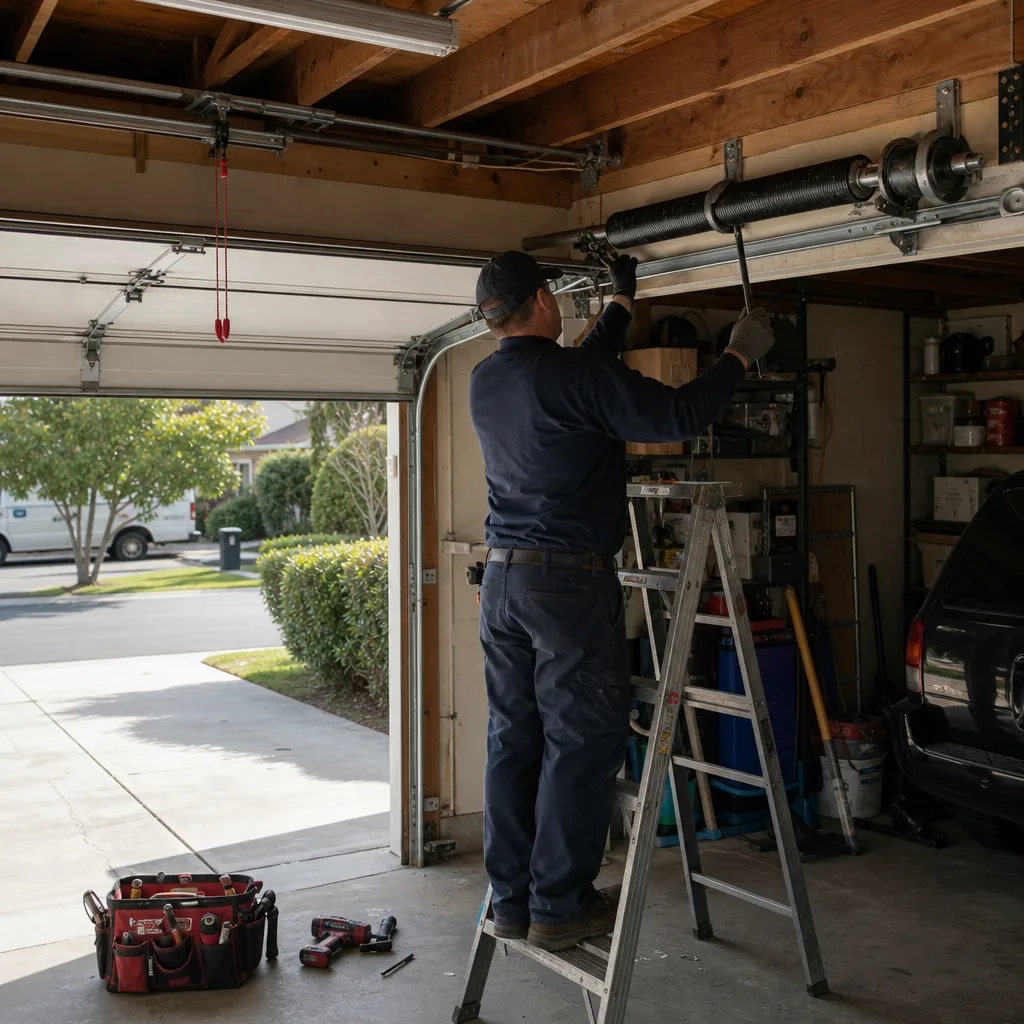
Garage door openers have two independent control layers, and confusing them leads to unnecessary parts charges.
Safety systems are designed to prevent injury: the photo-eye sensors (reverse if beam is broken), the force-sensitivity setting (reverse if resistance detected), and the manual release (disengage motor for hand operation). These are electronic or electromechanical. When they fail, the door typically behaves erratically - reversing, refusing to start, or stopping mid-travel - but the mechanical components (springs, cables, rollers, track) may be in perfect condition.
Mechanical systems are the physical load path: springs counterbalance the door’s weight, cables transfer that force, rollers guide travel, and the track constrains movement. When these fail, the door may move but with visible or audible distress, or it may become physically impossible to lift.
The diagnostic error we correct most often: a homeowner or inexperienced technician replaces a perfectly functional Genie or LiftMaster logic board ($280-$420) when the actual fault is a $120 sensor realignment or a $35 roller replacement. The safety system test is simple and should be performed monthly:
- With the door fully open, place a solid object at least 4 inches tall in the door’s path. Close the door using the remote. It must reverse on contact. If it does not, the force setting or safety sensor requires service.
- With the door closing, pass a broom handle through the sensor beam. The door must reverse immediately. If it does not, the sensors are misaligned, dirty, or failed.
- Disconnect the opener using the red manual release handle. The door should lift smoothly with one hand and stay open at waist height. If it falls or requires excessive force, the spring system is at fault - not the opener.
At Servo Garage Doors Hayward, we run this three-point test on every service call before touching a component. It prevents the wrong repair.
Warning Signs That Require Immediate Door Closure
Some symptoms permit continued use while you schedule repair. Others mean the door stays closed until a technician arrives. The difference is the risk of sudden, uncontrolled movement or structural collapse.
Broken Torsion Spring
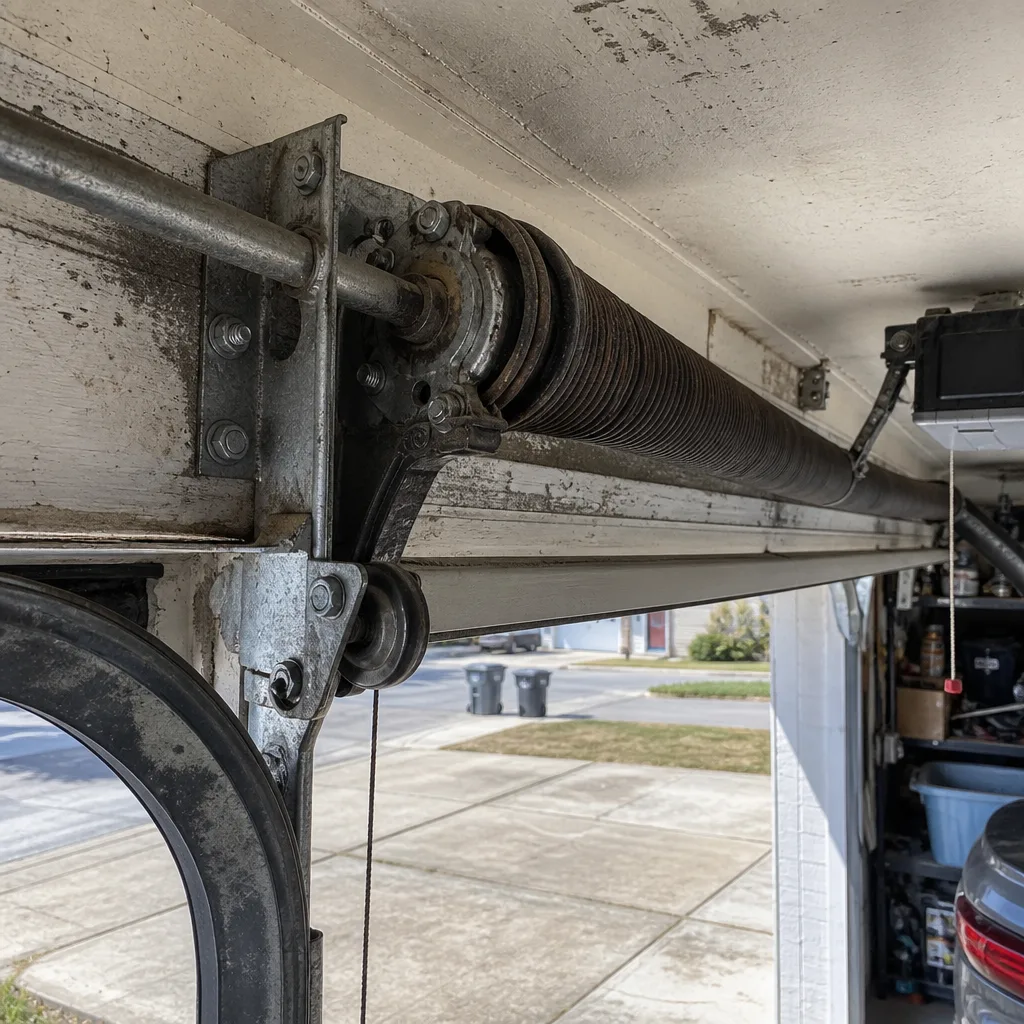
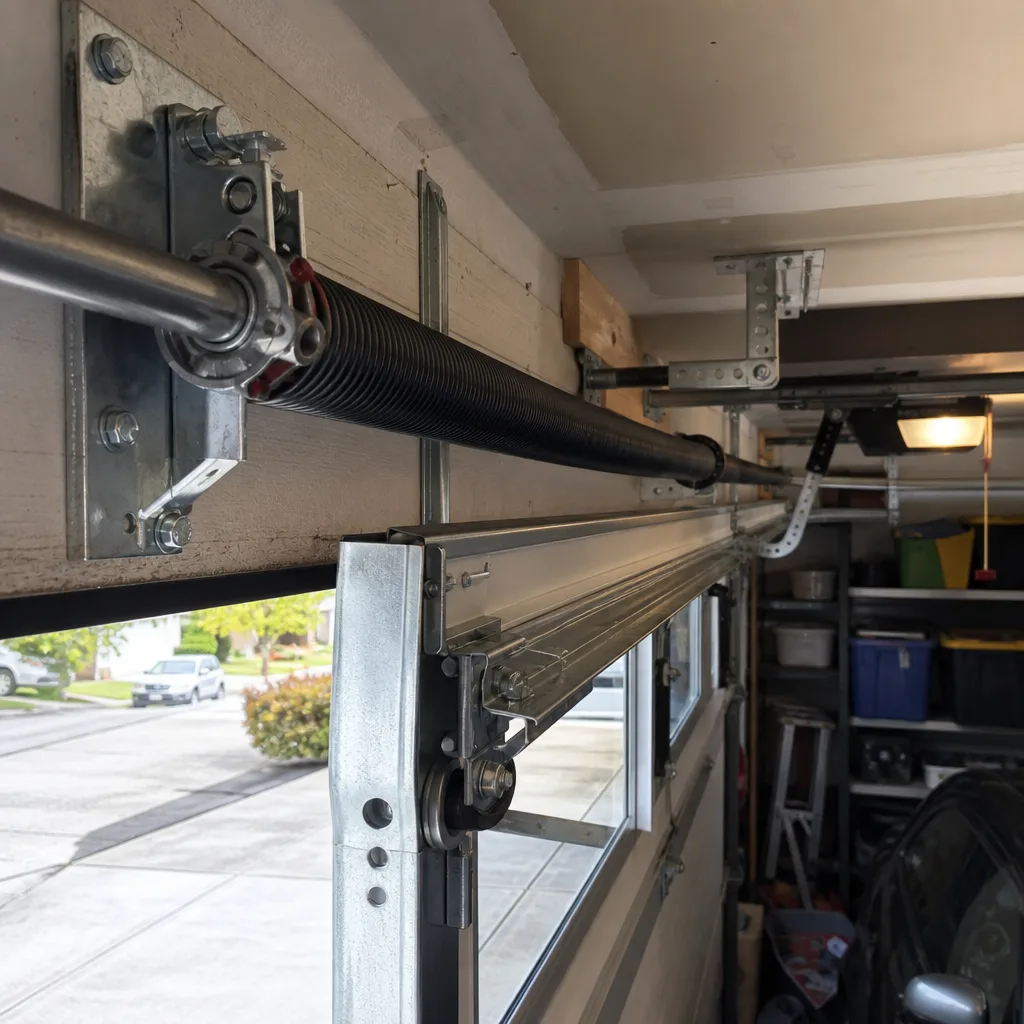
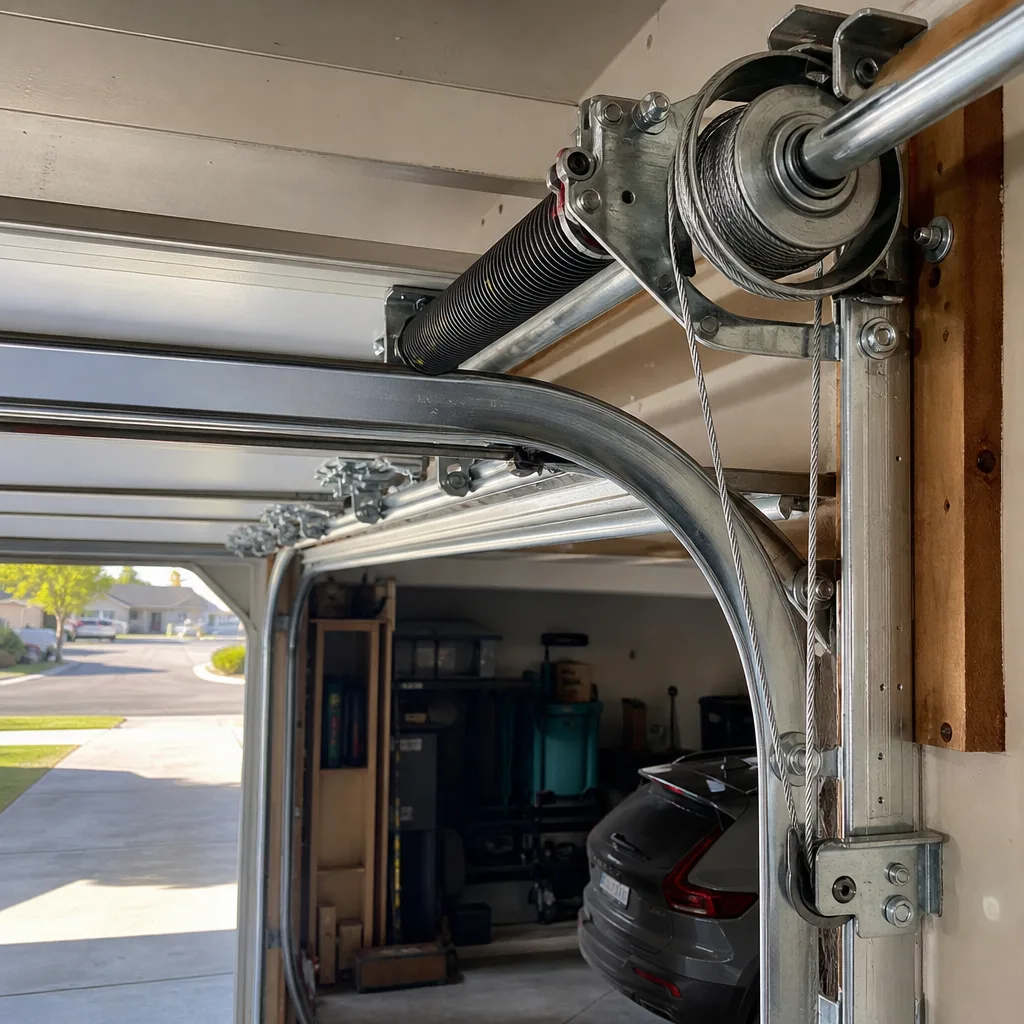
A torsion spring is the tightly wound steel coil above the door header. When it breaks, typically with a loud bang audible inside the house, the door’s 150-400 pound weight is no longer counterbalanced. Attempting to open the door manually requires lifting that full weight; attempting to use the opener strains the motor and risks stripping the nylon gears in the gear assembly. More critically, a second spring on a two-spring system is now carrying double load and may fail catastrophically.
Action: Leave the door closed. Disconnect the opener if it is engaged. Do not attempt repair - torsion springs store lethal energy and require winding bars and training.
Hayward context: In the Glen Eden and Mount Eden areas, where many garages were built in the 1960s-70s with single-spring systems rated for lighter doors, we see spring failures at higher rates. The original springs were never designed for the insulated steel doors homeowners installed in the 2010s.
Cost range: Single spring replacement, $180-$280; dual spring replacement, $280-$450. We quote both options when applicable - Clause 1 of The Haven Standard.
Frayed or Unwinding Cable
The lift cables run from the bottom bracket to the torsion spring drums. Fraying appears as visible broken strands, rust blooming, or a “bird’s nest” of loose wires. An unwinding cable has slipped from its drum groove and hangs with slack. Either condition risks sudden cable failure, after which the door drops on the unsupported side and may twist in the track or detach entirely.
Action: Leave the door closed. Do not cycle it. A frayed cable under tension can whip with lethal force if it breaks during operation.
Cost range: Cable replacement, $180-$280; if drum damage occurred, add $65-$120.
Detached Door from Opener Arm
The curved or straight arm connecting the opener trolley to the door bracket has pulled free, or the bracket itself has torn from the door panel. The door may be partially open and unsupported. Gravity is the only force holding it.
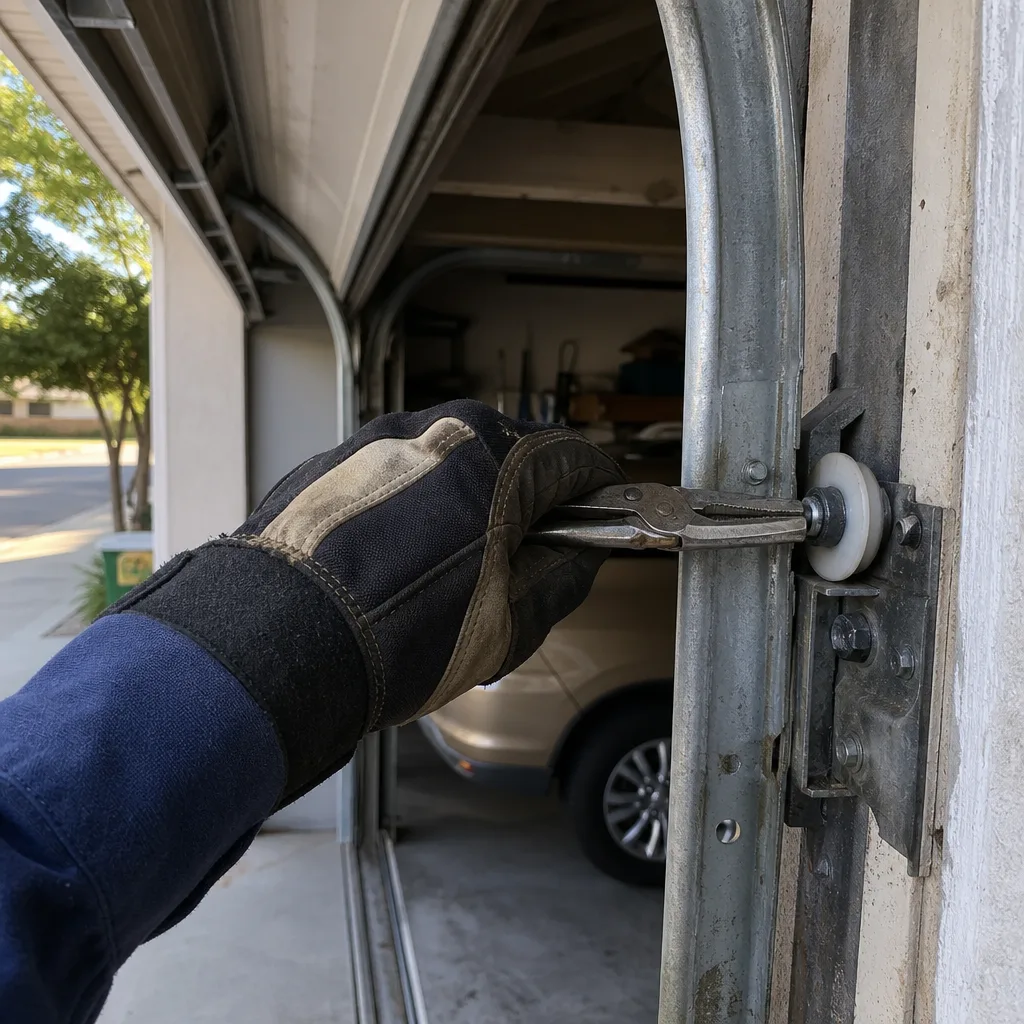
Action: Do not stand beneath the door. Do not attempt to lower it manually without securing it with locking pliers on the track. Call for same-day service.
Severe Track Damage or Separation
A vertical track pulled from the wall by a vehicle impact, or a horizontal track section visibly bent or separated from its hanger. The door is constrained on one side only and may jump track with the next cycle.
Action: Leave the door as-is. Do not attempt to force it closed or open.
Signs You Can Monitor While Scheduling Repair
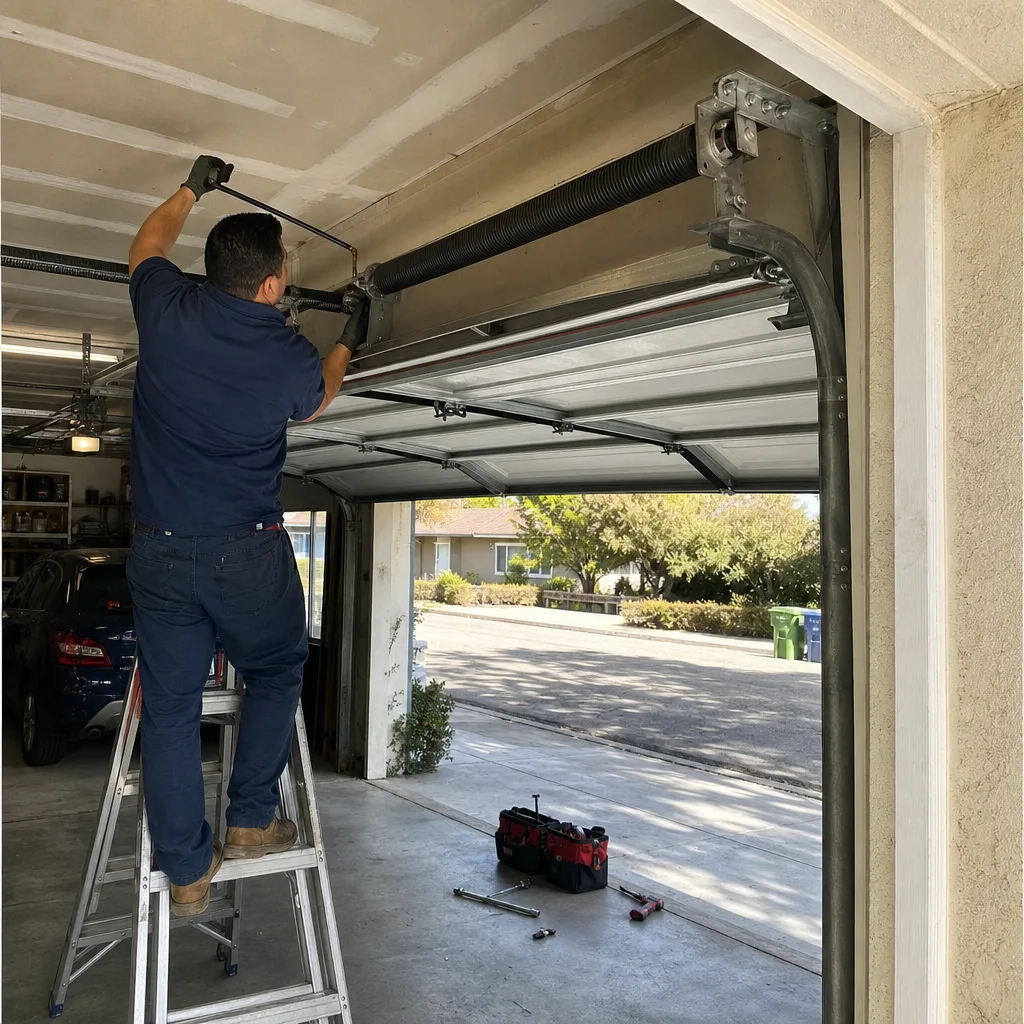
Not every warning sign demands emergency response. These conditions allow continued, careful use while you arrange service within days or weeks - see our Seasonal Garage Door Care for Hayward: Year-Round Homeowner’s Guide for maintenance timing:
- Gradual increase in noise without visible wear: Lubrication may resolve this; if not, roller replacement can wait 1-2 weeks with daily use.
- Minor weatherstripping gaps: Functional and aesthetic concern; schedule with seasonal maintenance.
- Slight hesitation at start of travel: Often capacitor early failure or spring tension beginning to fade. Monitor for worsening; schedule within 2 weeks.
- Remote range decreasing: Battery or antenna issue; door operates normally from wall button. Non-urgent.
- Cosmetic panel damage without structural compromise: Dents or scratches affecting appearance but not sealing or operation.
The key discriminator: is the door’s weight fully supported by intact springs and cables, and does it move in both directions without binding? If yes, the repair is schedulable. If any doubt exists, treat it as urgent.
How Hayward’s Climate Accelerates Component Failure
Hayward’s location at the eastern edge of San Francisco Bay creates specific environmental stress on garage door systems. Understanding this helps interpret warning signs that appear earlier here than in drier inland climates.
Marine moisture and salt air: The persistent onshore flow carries moisture and trace salt, particularly in neighborhoods west of Mission Boulevard with direct Bay exposure. Steel components - springs, cables, bottom brackets, track hardware - corrode faster than manufacturer cycle ratings assume. We see cable fraying from internal rust in Hayward 2-3 years earlier than in Sacramento or Fresno equivalents. The warning sign is rust staining on the cable or at the bottom bracket, often before any visible strand breakage.
Temperature cycling: Summer inland highs in Hayward reach the upper 80s; winter lows dip to the upper 30s. Daily expansion and contraction of steel springs and aluminum tracks stress fasteners and fatigue metal. The symptom is loosening track bolts and the “clicking” sound of a roller momentarily losing contact with track.
Clay soil expansion: Hayward’s foundation soils expand with winter rain and contract in summer dry periods. Garage slabs shift; door frames rack slightly out of square. The symptom is a door that sealed perfectly in October but shows a light gap by March. This is not a door problem - it’s a foundation problem affecting the door. We document this with photos and explain the distinction so homeowners don’t pay for a door adjustment that will reverse with the next rainy season.
UV exposure on south and west-facing doors: Fiberglass and vinyl door skins, and the rubber in bottom seals and window seals, degrade faster with direct afternoon sun. The symptom is surface chalking, seal hardening, and eventually cracking. Hayward’s sun angle is lower than Southern California’s, but cumulative exposure on unshaded west faces is significant.
How to Photograph a Warning Sign for Accurate Remote Quoting
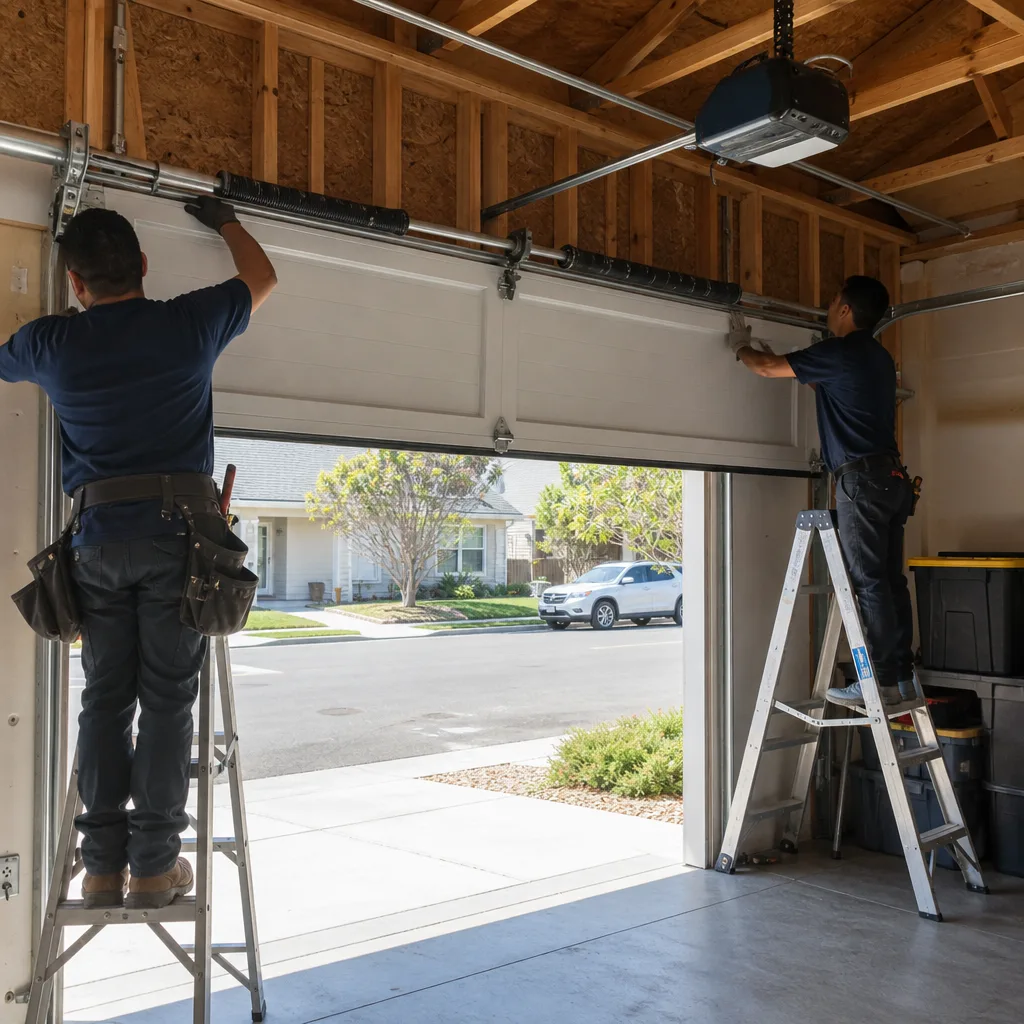
Since 2015, Clause 4 of The Haven Standard has required our technicians to photograph the failed component before quoting replacement. Homeowners can use the same principle to receive an accurate preliminary quote before we dispatch. A clear photo record eliminates the “I’ll have to see it” uncertainty that delays decisions.
For Noise Symptoms (No Visible Failure Yet)
- Photograph the full door from inside the garage, closed position, showing the entire track and spring assembly.
- Photograph the opener unit from below, showing the model number sticker (typically on the light lens or side panel).
- Record a 10-second video of the door operating, capturing the noise. Upload with the service request.
For Visible Component Failure
- Spring: Stand on a step stool or ladder (stable, three points of contact) and photograph the torsion spring from the side, showing the full coil. If broken, the gap will be visible. Include a photo of the spring mount bracket at both ends.
- Cable: Photograph the cable from bottom bracket to drum, with the door closed. Use your phone’s flash to highlight fraying or rust bloom. Include a close-up of the drum where the cable seats.
- Track damage: Photograph the damaged section with a clear view of both track and surrounding wall structure. Include a second photo showing the undamaged track on the opposite side for comparison.
- Panel or seal gap: With the door closed, photograph from outside at ground level, showing the full width. Place a coin or key in the gap for scale reference.
- Sensor or opener issue: Photograph the sensor units (both) showing their LED indicators. Photograph the opener unit and the wall control panel.
Send these to our office with your address and door dimensions (width x height, typically 16×7 or 8×7 for standard Hayward homes); for help selecting a qualified professional, read How to Hire a Garage Door Contractor in Hayward: A Step-by-Step Guide. We can narrow the likely repair and price range before the technician’s wheels turn. This is not a substitute for on-site confirmation - springs in particular require tension measurement - but it removes the “unknown cost” barrier that delays necessary repair.
What Happens When You Ignore a $35 Roller Problem for 60 Days
The escalation pattern is predictable and expensive. Here’s the mechanical sequence we document repeatedly in Hayward service records.
Day 1-14: A single roller develops a flat spot or cracked bearing. Noise increases. The door still moves smoothly. The homeowner adapts to the sound.
Day 15-30: The worn roller creates vibration transmitted to the hinge and track. The hinge pin begins to elongate its hole. The track develops a slight wear pattern at the roller contact point. The opener motor works 10-15% harder, increasing current draw and heat.
Day 31-45: In Hayward’s humidity, the now-loose hinge pin rusts slightly, accelerating wear. The roller begins to wobble in the track. On a 16-foot wide door, this creates a slight twist in the panel alignment. The gap at the bottom corner widens.
Day 46-60: The roller jumps the track during a close cycle, or the hinge pin shears. The door binds. The opener’s force sensitivity - if properly calibrated - reverses the door. If the sensitivity has been turned up to “override” the earlier noise, the opener continues to strain, stripping the nylon gear or burning the motor.
Final repair cost: Original roller replacement, $35-$65. Escalated repair: roller set ($180-$220), hinge replacement ($25-$45 each), track section if damaged ($140-$220), opener gear or motor if failed ($280-$520). Total: $625-$1,005 versus $35-$65.
The documentation matters. When we arrive at a failure that began as a single roller, the photo record shows the progression: the worn roller, the elongated hinge, the track damage, the final bind. The homeowner sees the evidence. The quote is not speculative.
A Hayward Homeowner’s Inspection Schedule
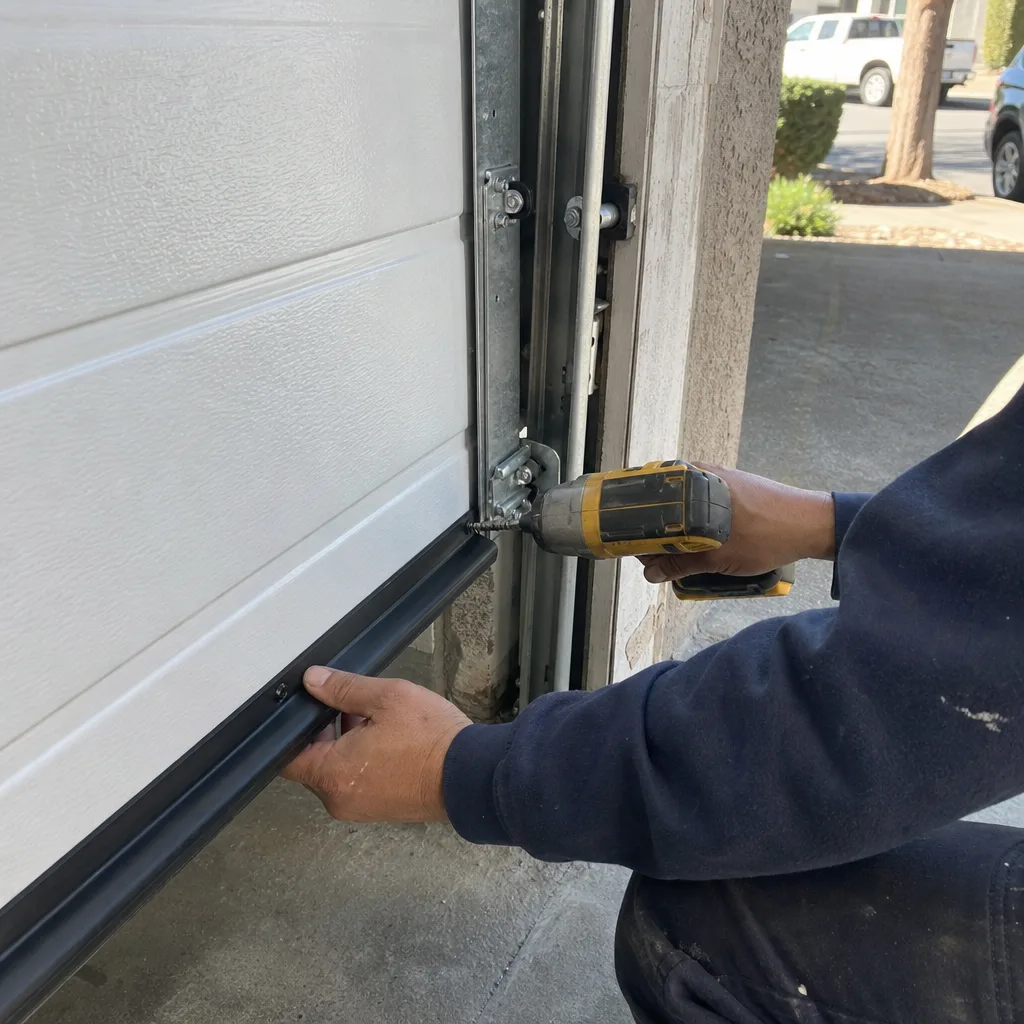
Preventive inspection catches warning signs before they become failures. We recommend this schedule, adapted to Hayward’s climate conditions.
Monthly (5 Minutes)
- Visual scan of cables for fraying or rust staining
- Listen during two complete cycles for new or changed noises
- Test the manual release - the handle should pull smoothly and re-engage with a firm pull
- Check sensor LEDs - both solid, not blinking
Quarterly (15 Minutes)
- Lubricate rollers, hinges, and springs with silicone-based garage door lubricant (not WD-40, which attracts dust)
- Inspect bottom seal for cracking or compression
- Tighten track bolts - use a socket wrench, do not overtighten
- Test force sensitivity and safety reversal (the three-point test from Section 2)
Annually (Professional Inspection)
Schedule a technician to measure spring tension, inspect cable drums for wear patterns, check opener gear backlash, and assess panel alignment. In Hayward’s climate, we recommend this before the winter rainy season when moisture accelerates corrosion on components already stressed by summer heat cycling.
For new garage door installations in Hayward, we provide a maintenance log matched to the specific components installed - Clopay hardware differs from Amarr, and Genie openers have different inspection points than LiftMaster. The documentation travels with the door.
Common Mistakes to Avoid
- Adjusting the force sensitivity to “fix” a mechanical problem: Turning up the opener’s down-force to overcome a binding door masks the underlying issue and risks crushing whatever the door eventually hits. The force setting is a safety limit, not a tune-up tool.
- Applying WD-40 to springs or rollers: WD-40 is a solvent, not a lubricant. It strips existing grease and attracts abrasive dust. In Hayward’s dusty summer conditions, this creates grinding paste. Use silicone or lithium-based garage door lubricant only.
- Ignoring a single loud “bang” from the garage: That sound is almost always a torsion spring breaking. The door may still move if it has a second spring, but the remaining spring is overloaded and the door is unbalanced. Continuing to operate it risks secondary failure.
- Attempting DIY spring or cable replacement: Torsion springs store enough energy to cause serious injury or death. Cable replacement requires releasing spring tension first. These are not YouTube-tutorial projects. The Haven Standard requires technician training for these components for good reason.
- Replacing the opener when the problem is the door: A new LiftMaster or Chamberlain unit will strain against the same worn springs and binding track. Diagnose the load path before diagnosing the motor.
- Accepting a verbal estimate for major repair: Without a written scope and flat price, the final invoice often exceeds the quote. Clause 1 of The Haven Standard exists because “trust us” is not a pricing system.
When to Call a Professional
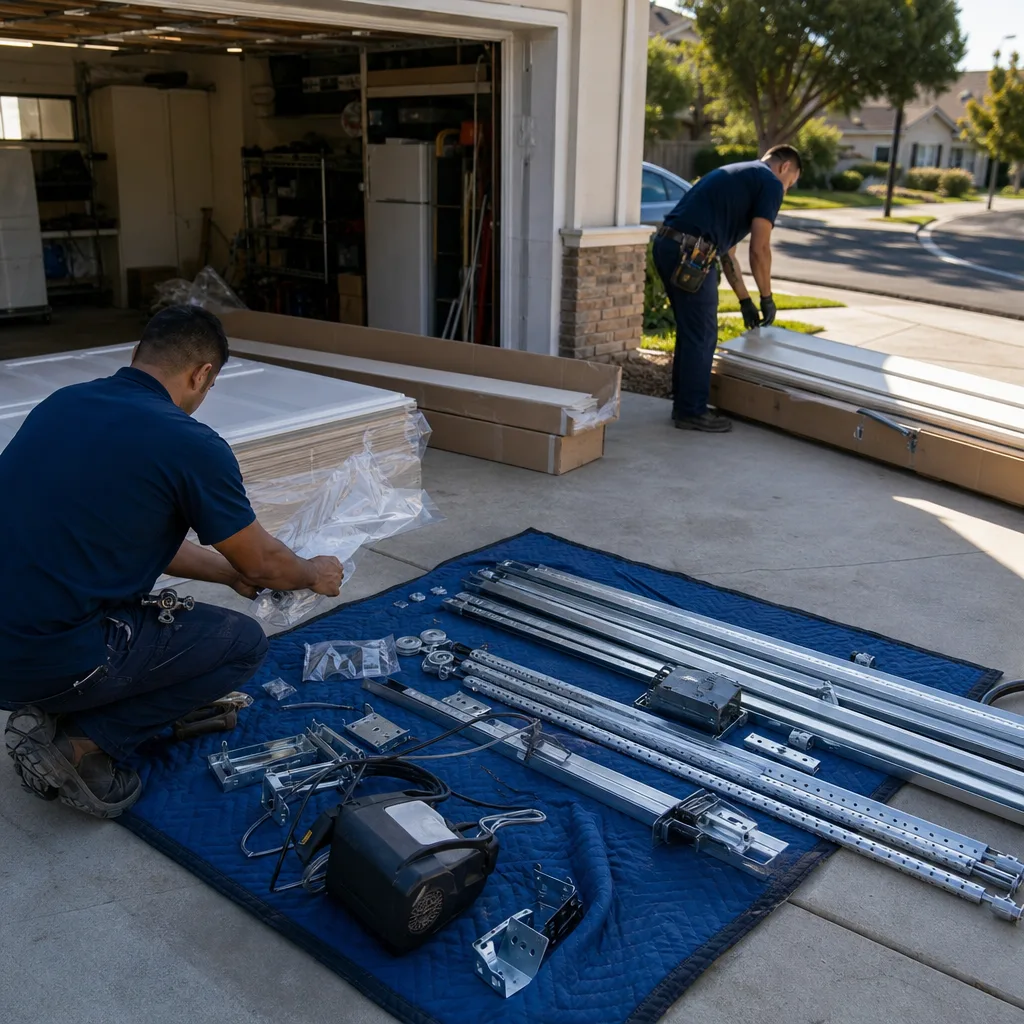
Call when a warning sign appears that you cannot confidently map to a benign cause, or when any symptom involves the spring or cable system. The cost of an unnecessary service call is far below the cost of a door collapse or personal injury.
Servo Garage Doors Hayward offers free estimates in Hayward - call (510) 330-2488. A live person answers, including overnight and holidays. We dispatch with a named technician and an on-the-way text. The technician arrives with a written price before work starts, photographs the failed component per Clause 4, and leaves with a documented record of what was found and what was done. The 365-Day Done Right Promise applies to every repair.
For garage door opener repair and installation in Hayward, we service all major brands including LiftMaster, Chamberlain, and Genie, with parts on the truck for common failures. For doors beyond repair, we measure and quote replacement with the same flat-price system.
Frequently Asked Questions
Single torsion spring replacement in Hayward typically runs $180-$280; dual spring systems range from $280-$450, depending on spring size and door weight. We quote the exact price after measuring the existing spring’s wire diameter, inside diameter, and length - three numbers that determine the correct replacement. Call (510) 330-2488 for a free estimate; we’ll ask for these measurements or schedule a no-charge visit to take them.
Yes, for days to weeks, depending on the noise source. Grinding from rollers or hinges is a wear indicator, not an immediate safety failure. However, a new grinding noise that appears suddenly, or any noise accompanied by visible shaking or hesitation, requires faster attention. The escalation pattern from a $35 roller to a $600+ multi-component failure typically spans 45-60 days in Hayward’s climate. Schedule inspection within two weeks.
Three causes: misaligned safety sensors (most common, $120-$160 to realign), failing limit switch in the opener ($140-$220), or a frayed cable preventing full descent ($180-$280). The sensors are the easiest to check yourself - verify both LED indicators are solid, not blinking. If they are, the fault is likely mechanical and requires professional inspection. Do not repeatedly cycle the door to “force” it closed.
Marine moisture accelerates steel component corrosion, particularly on cables and bottom brackets, often producing failure 2-3 years earlier than in drier climates. Temperature cycling expands and contracts metals, loosening track hardware and fatiguing springs. Clay soil expansion from winter rain shifts garage slabs, causing alignment changes that appear as seasonal gaps or binding. Annual inspection before winter catches climate-accelerated wear.
No. Clause 1 of The Haven Standard requires a flat, written price and written scope before any work begins. The only exception: if you approve additional work beyond the original scope, documented in writing before execution. We photograph the failed component (Clause 4) so the quoted repair is tied to visible evidence, not speculation. Bring any competing written estimate for our Free Second Opinion - no coupon required.
Yes. Our technicians stock common rollers, hinges, cables, springs, weatherstripping, and opener components for LiftMaster, Chamberlain, Genie, and other major brands. For less common door configurations - older Wayne Dalton or Raynor systems, or custom Clopay panel orders - we identify the part and schedule return installation with the same written-price guarantee. Call (510) 330-2488 to confirm same-day availability for your specific symptom.
The Bottom Line
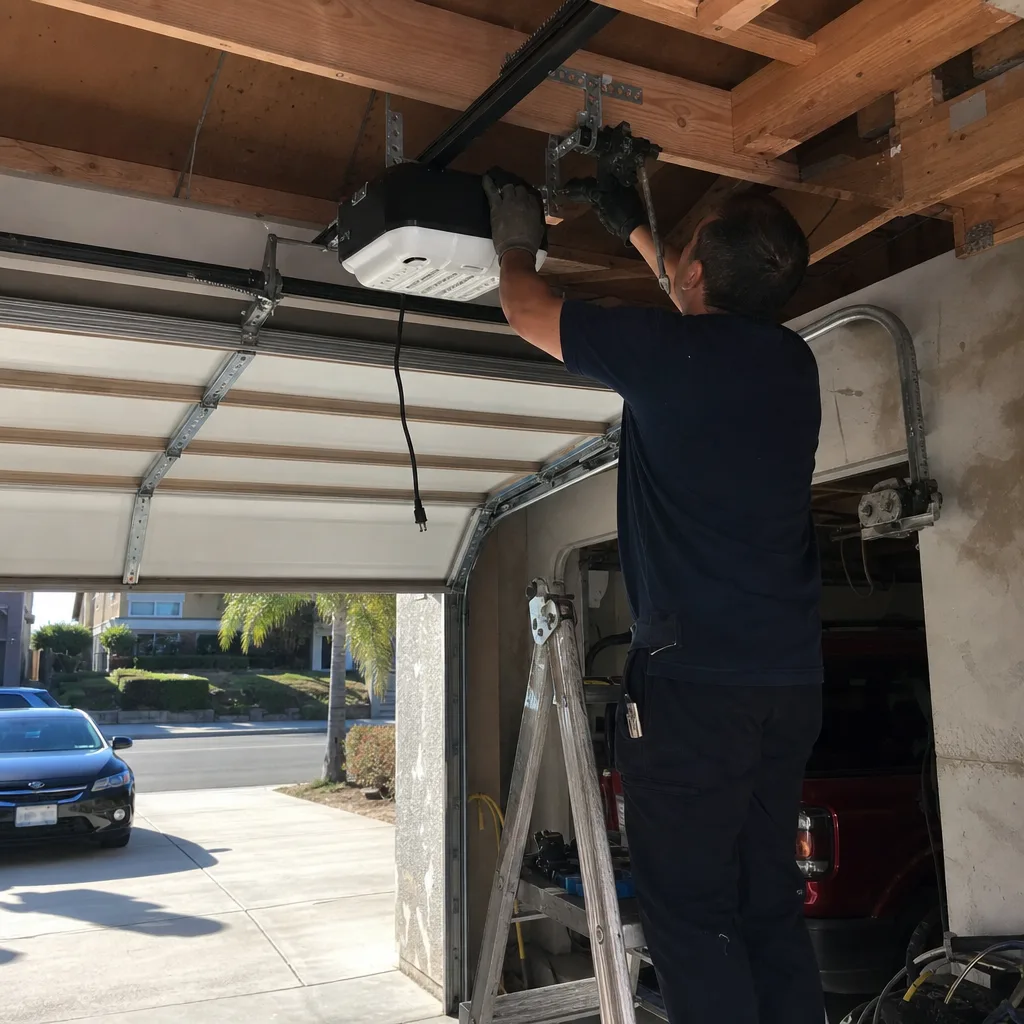
Your garage door communicates in specific mechanical signals. Grinding maps to rollers. Slow travel maps to springs or capacitors. Reversal maps to sensors, limits, or cables. The symptom is not a mystery - it’s diagnostic data that determines whether you’re facing a $35 maintenance item or a $450 safety-critical repair. In Hayward’s particular climate of marine moisture, temperature cycling, and expansive soils, warning signs appear earlier and escalate faster than manufacturer assumptions. Catching them requires looking and listening, not waiting for failure. Document what you see. Photograph for remote quoting. And when a symptom involves springs or cables, leave the door closed and call a technician who quotes in writing before touching a tool.
Written by Marcus Deller, Owner at Servo Garage Doors Hayward, serving Hayward since 2015.