
Last updated September 21, 2026
Full 25-point door and opener safety check with every visit - springs, cables, rollers, tracks, and your LiftMaster or Chamberlain opener included
You get a price before we start. It does not change when the truck arrives.
 Before
 After
After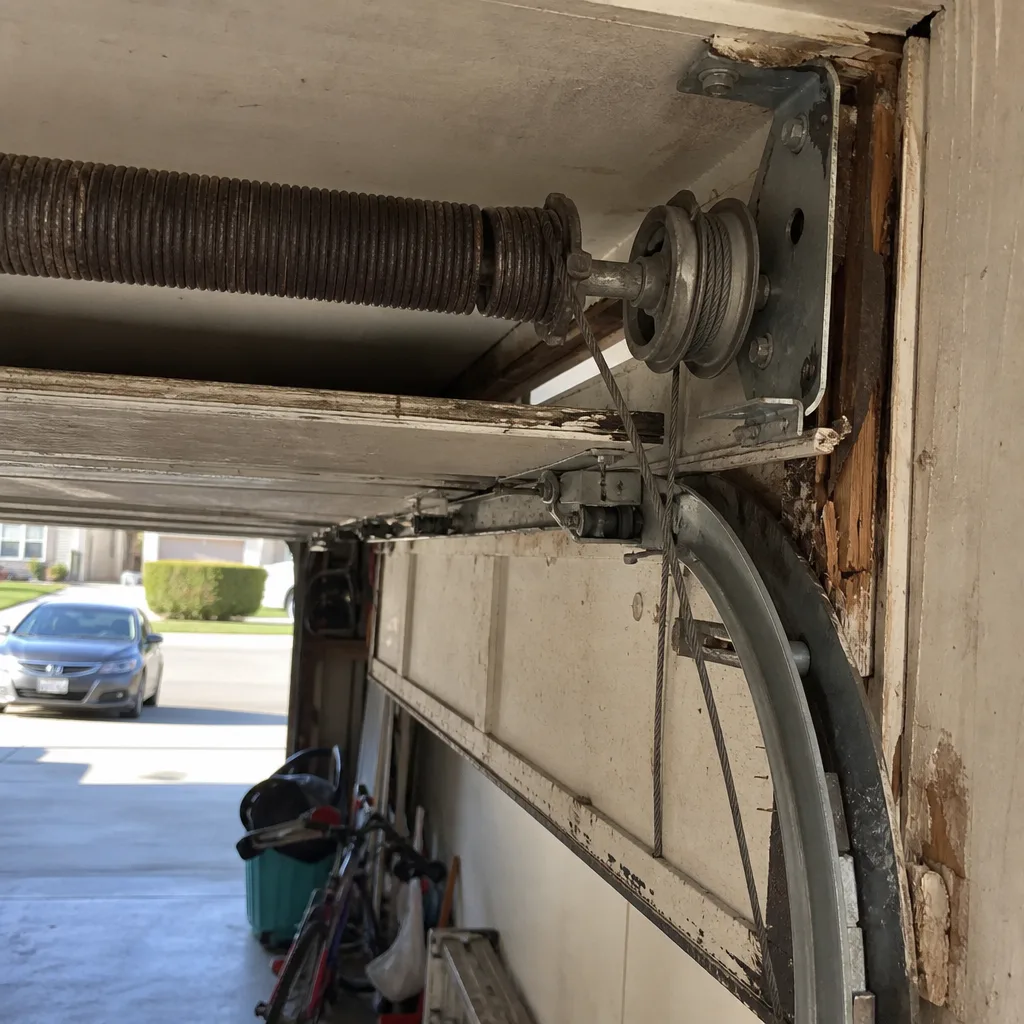 Before
 After
After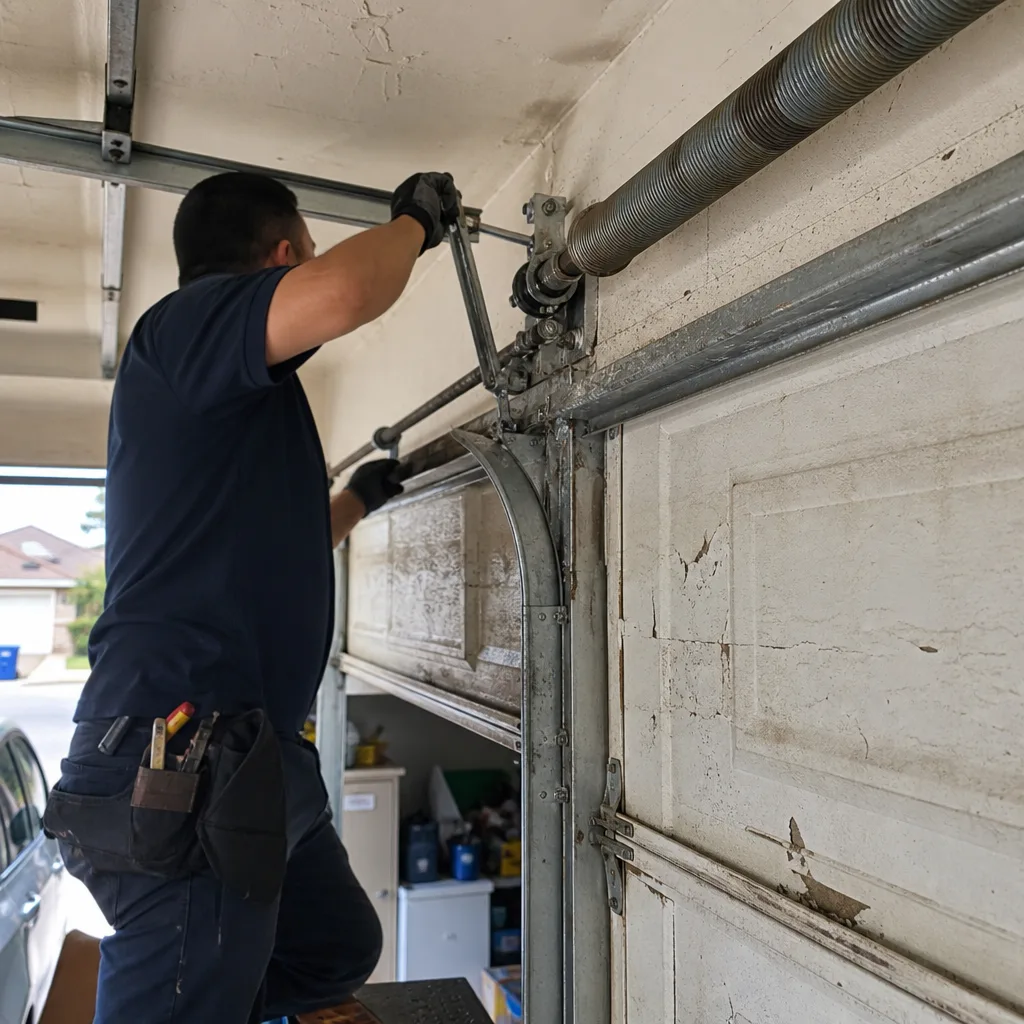 Before
 After
AfterGarage Door Repair Maintenance Checklist for Hayward Homeowners
WD-40 on a torsion spring accelerates corrosion instead of preventing it. It’s a solvent, not a lubricant, and it’s the single most common homeowner maintenance mistake our technicians photograph before quoting a replacement. In Hayward, where morning fog rolls in from the bay and seasonal temperature swings stress metal components, that mistake costs homeowners a preventable $180-$340 spring repair. This checklist gives you the exact products, measurable tolerances, and three tests a technician actually runs so you can maintain safely and know precisely when to call for our Garage Door Repair services.
Quick Answer
A proper garage door maintenance checklist for Hayward homeowners includes monthly visual inspections, semi-annual lubrication with correct products (white lithium grease for metal moving parts, silicone spray for weatherstripping, never WD-40 on springs), and annual professional balance and safety reversal testing. Tasks involving spring tension, cable tension, or opener force adjustment require a licensed technician due to documented injury risk; see our How to Hire a Garage Door Contractor in Hayward: A Step-by-Step Guide.
Table of Contents
- Monthly Visual Inspection Tasks
- The Correct Lubricant for Every Component
- The Three-Point Balance Test
- Testing Safety Systems and Auto-Reverse
- Maintenance Frequency Table
- What Homeowners Can Do Safely vs. What Requires a Technician
- Documenting Component Condition Before Calling for Service
- How Hayward’s Climate Affects Your Garage Door
 Before
 After
AfterMonthly Visual Inspection Tasks
These five checks take under ten minutes and require no tools. We recommend the first Saturday of each month, before the door has been operated that day, when components are cool and in their resting state.
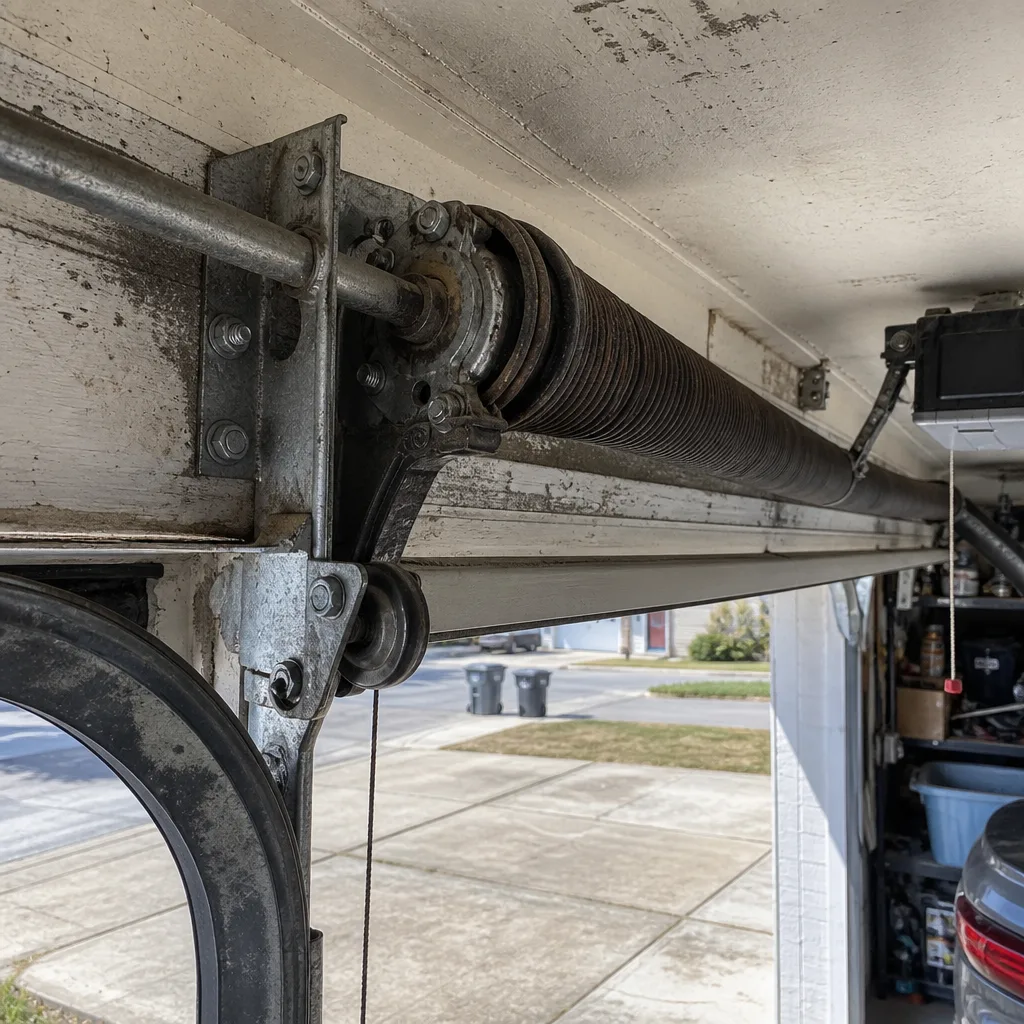
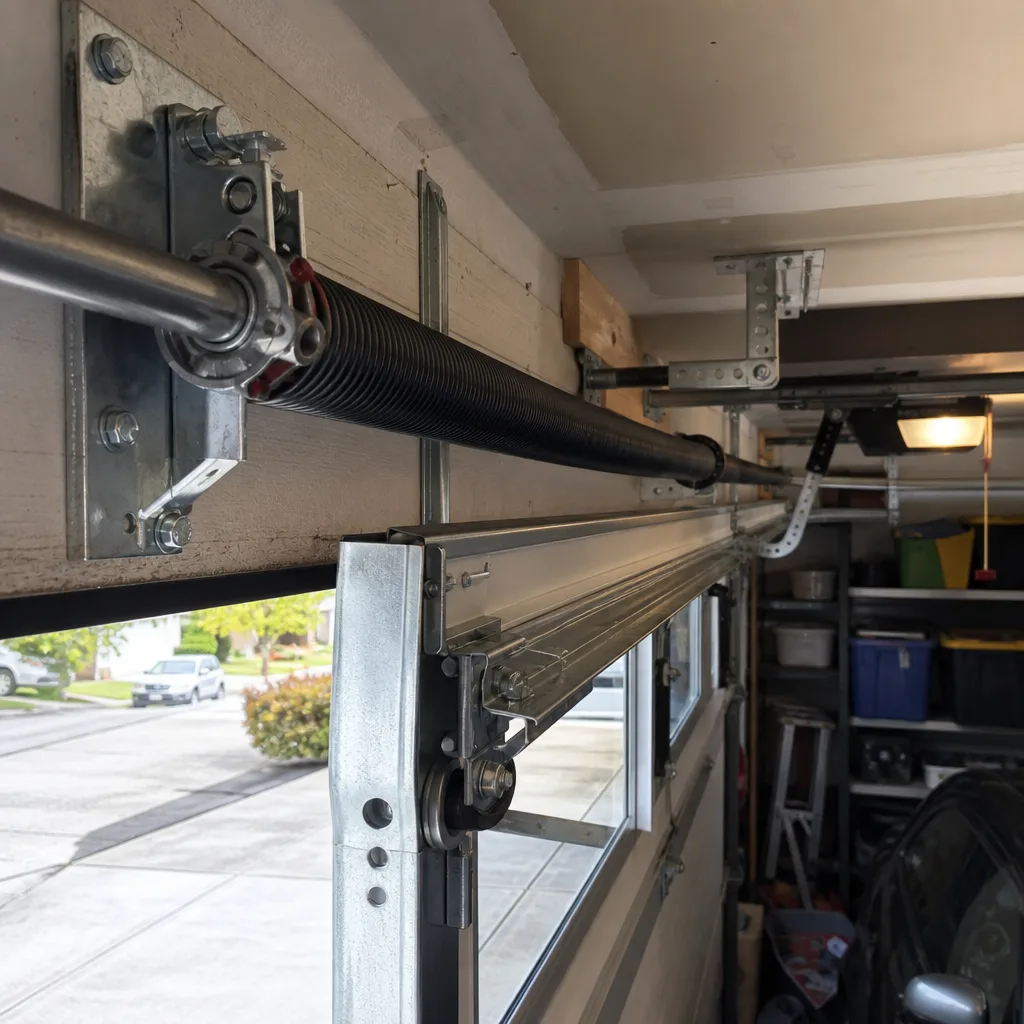
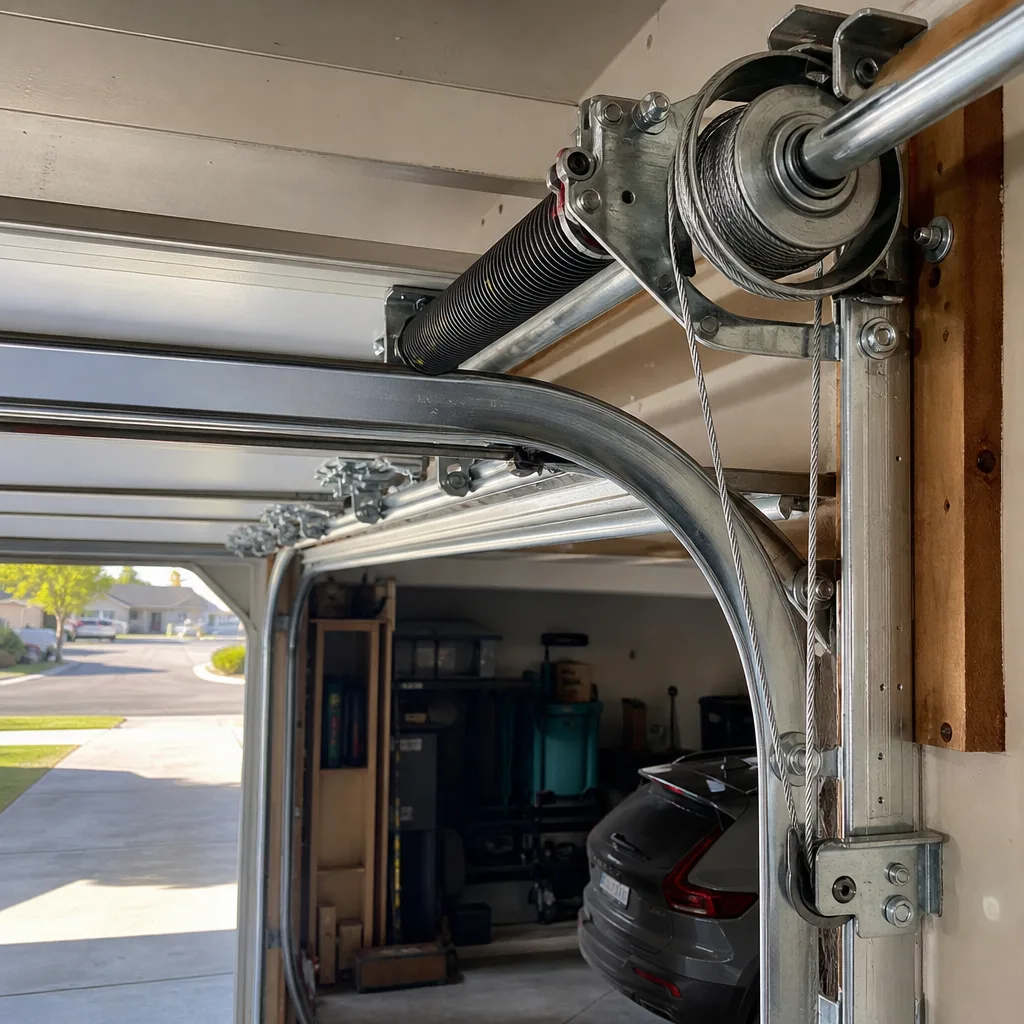
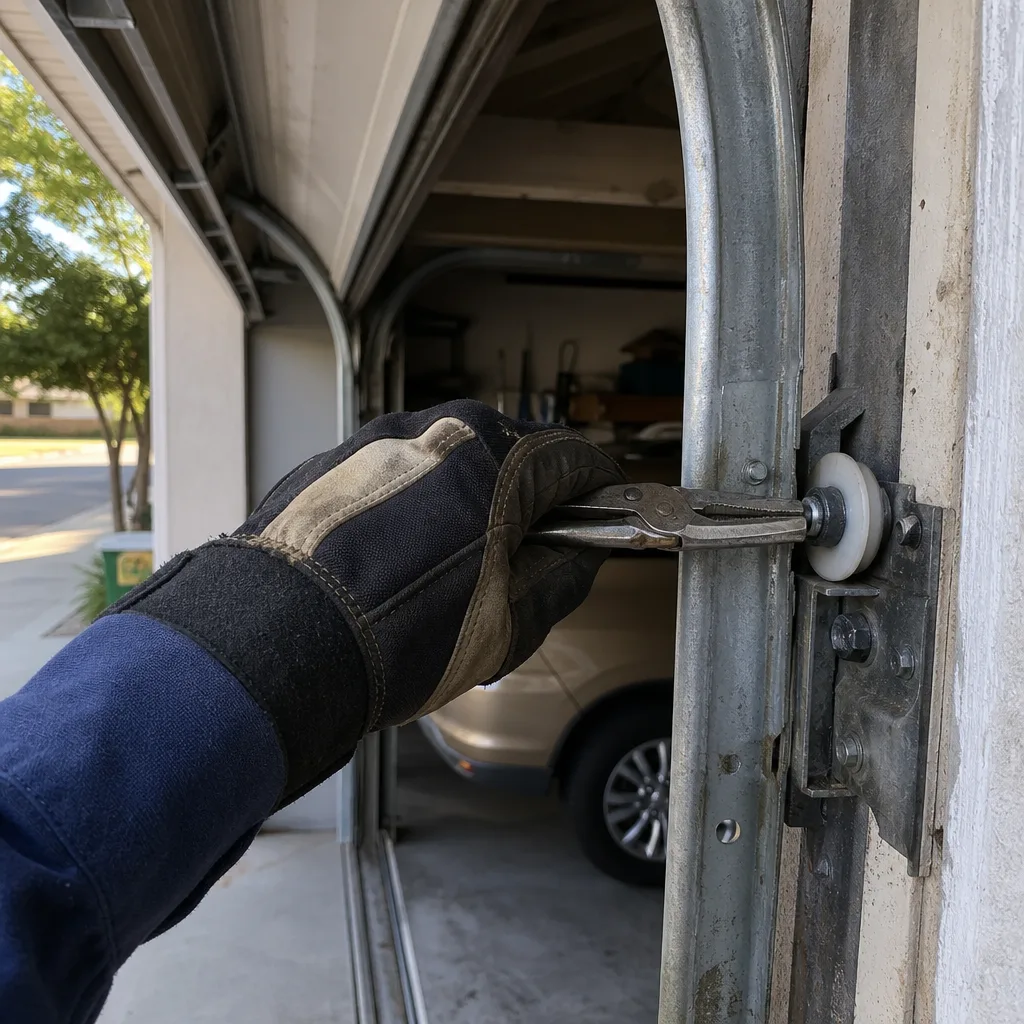
- Inspect the torsion spring for gaps or separation. Look at the coil above the door header. A healthy spring has coils that sit tight against each other when the door is closed. Gaps wider than a quarter-inch between adjacent coils indicate spring fatigue. In our experience across Hayward’s Jackson Triangle, Fairway Park, and Burbank neighborhoods, springs showing this gap pattern fail within 60-90 days of first appearance. Photograph any gap with your phone for comparison next month.
- Check cable condition where it wraps around the bottom drum. Fraying appears as unwound strands sticking out perpendicular to the cable’s main line. Any fraying means the cable is compromised. Do not operate the door. A snapped cable under load can whip with lethal force.
- Examine roller wheels in the track. Steel rollers develop flat spots or wobble. Nylon rollers crack at the wheel-to-stem junction. Either condition causes the door to shudder during travel and accelerates track wear. In Hayward’s older homes near downtown, we see more steel roller corrosion from decades of salt air exposure.
- Look at hinge pivot points for elongation. The holes where hinge leaves connect should be round. Oval-shaped holes mean the hinge is worn and the door sections are no longer held square. This misalignment stresses the opener trolley and the upper section hinges.
- Test the manual release handle. Pull the red handle to disengage the opener trolley from the door. It should move smoothly and re-engage with a firm push upward. If the handle is stuck or the trolley won’t re-engage, the carriage assembly or limit switch may need adjustment.
Document anything unusual with dated photos. When you call Garage Door Repair in Hayward, these photos let us quote accurately before dispatching.
The Correct Lubricant for Every Component
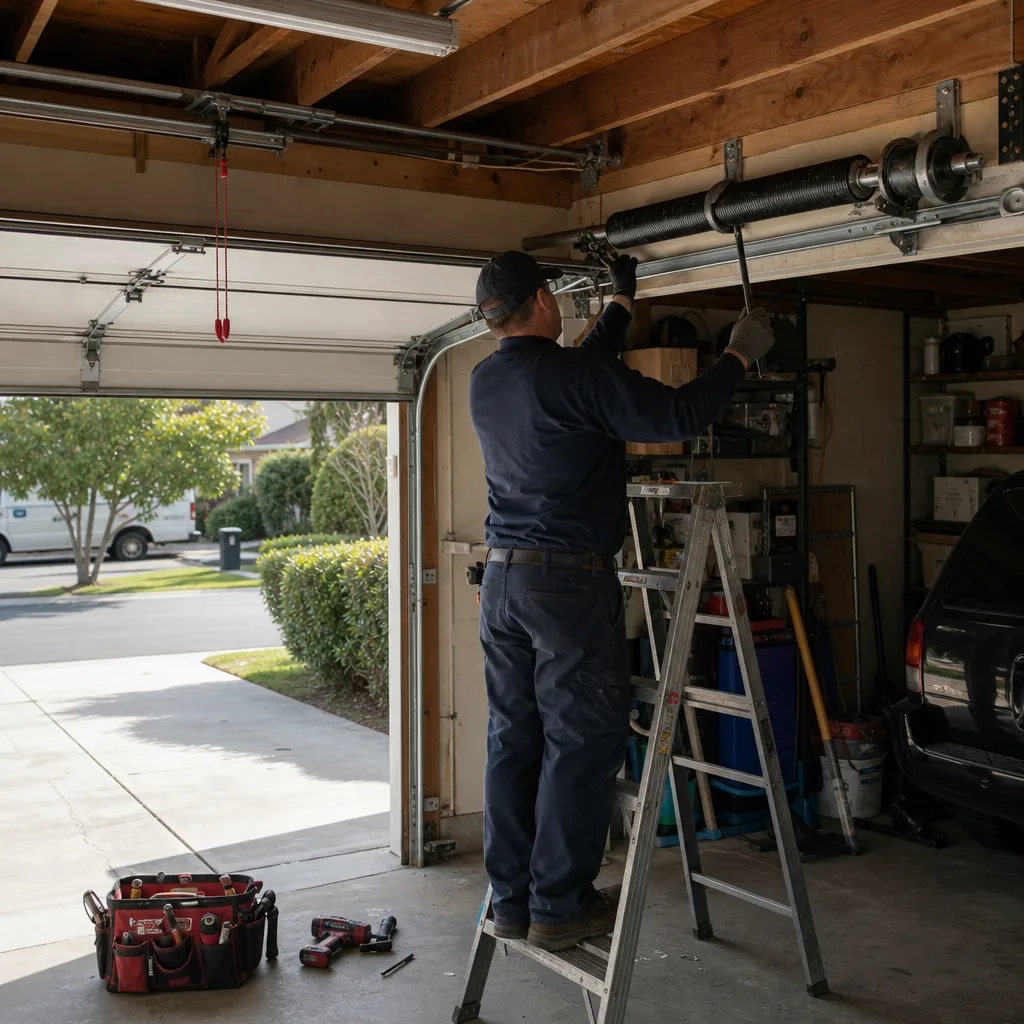
Product selection matters more than frequency. Using the wrong lubricant damages components and voids some manufacturer warranties on LiftMaster and Chamberlain opener chains.
Rollers and Hinges: White Lithium Grease
Use a spray white lithium grease, not general-purpose lubricant. Apply a thin film to the roller wheel bearings and hinge pivot pins. The door should be closed so springs are relaxed and hinges are in their neutral position. Operate the door twice to distribute. A correctly lubricated hinge moves silently; excess grease attracts dust and hardens into abrasive paste within six months in Hayward’s dusty summer conditions.
Weatherstripping: Silicone Spray
The rubber or vinyl seal at the door bottom and between sections dries and cracks. Silicone spray restores flexibility without petroleum-based swelling. Apply to a clean cloth first, then wipe the stripping. Direct spray oversaturates and drips onto the floor. In Hayward, where UV exposure is moderate but consistent, this prevents the stripping from becoming brittle and losing its seal against wind-driven rain.
Opener Chain or Belt: Manufacturer-Specified Lubricant
Genie screw-drive openers require their specific low-temperature lubricant. LiftMaster and Chamberlain belt drives need no lubrication; the belt is self-lubricating. Chain drives use white lithium on the chain, wiped clean of excess. Check your opener manual; using the wrong product degrades the belt or causes chain slap.
Torsion Springs: Nothing, Unless You’re a Technician
This is where most homeowners go wrong. Torsion springs are under constant torque, even when the door is closed. They do not need lubrication for function. Some manufacturers apply a light factory coating of specific spring grease to prevent corrosion between coils. Adding WD-40, motor oil, or general spray lubricant strips this coating, attracts grit, and accelerates corrosion. If your spring looks dry or shows surface rust, that’s a technician’s call. Spring grease application requires partial unwinding of the spring to access between coils safely.
Tracks: No Lubricant
The track is a guide, not a bearing surface. Lubricant in the track collects dust and causes roller slippage. Clean tracks with a dry cloth only. If you see black residue buildup, that’s normal roller wear; wipe it out.
The Three-Point Balance Test
A balanced door reduces opener strain and prevents premature component failure. This test takes two minutes and requires no tools beyond a working garage door opener and your hands.
Test 1: Static Balance at Mid-Travel
Close the door. Disconnect the opener using the manual release handle. Lift the door manually to waist height, approximately four feet off the ground, and release it. A balanced door stays in position or drifts less than six inches in either direction. If it slams closed, the springs are under-tensioned. If it races open, they’re over-tensioned. Both conditions stress the opener and cables.
Test 2: Effort to Lift From Closed
With the opener still disconnected, lift the door from fully closed. It should require moderate, even pressure through the full travel. If you feel a sudden heaviness in the first twelve inches, the spring torque is insufficient for the door weight. If the door feels heavier on one side, a spring may be fatigued asymmetrically. We see this frequently in Hayward’s two-car garages with Clopay or Amarr steel doors where one of two torsion springs has failed silently.
Test 3: Smooth Travel Without Binding
Raise and lower the door manually through full travel. It should move smoothly without catching, grinding, or requiring extra force at any point. Binding at the horizontal curve usually means track misalignment or worn rollers. A door that binds forces the opener to compensate, burning out the motor or stripping the nylon gears in the gear housing.
If any test fails, do not reconnect the opener. The opener is not designed to overcome spring deficiency. Call for professional adjustment. Torsion spring tension adjustment requires winding bars inserted into the cone while the spring is under load; improper technique causes serious injury or death. The Consumer Product Safety Commission documents hundreds of emergency room visits annually from DIY spring work.
Testing Safety Systems and Auto-Reverse
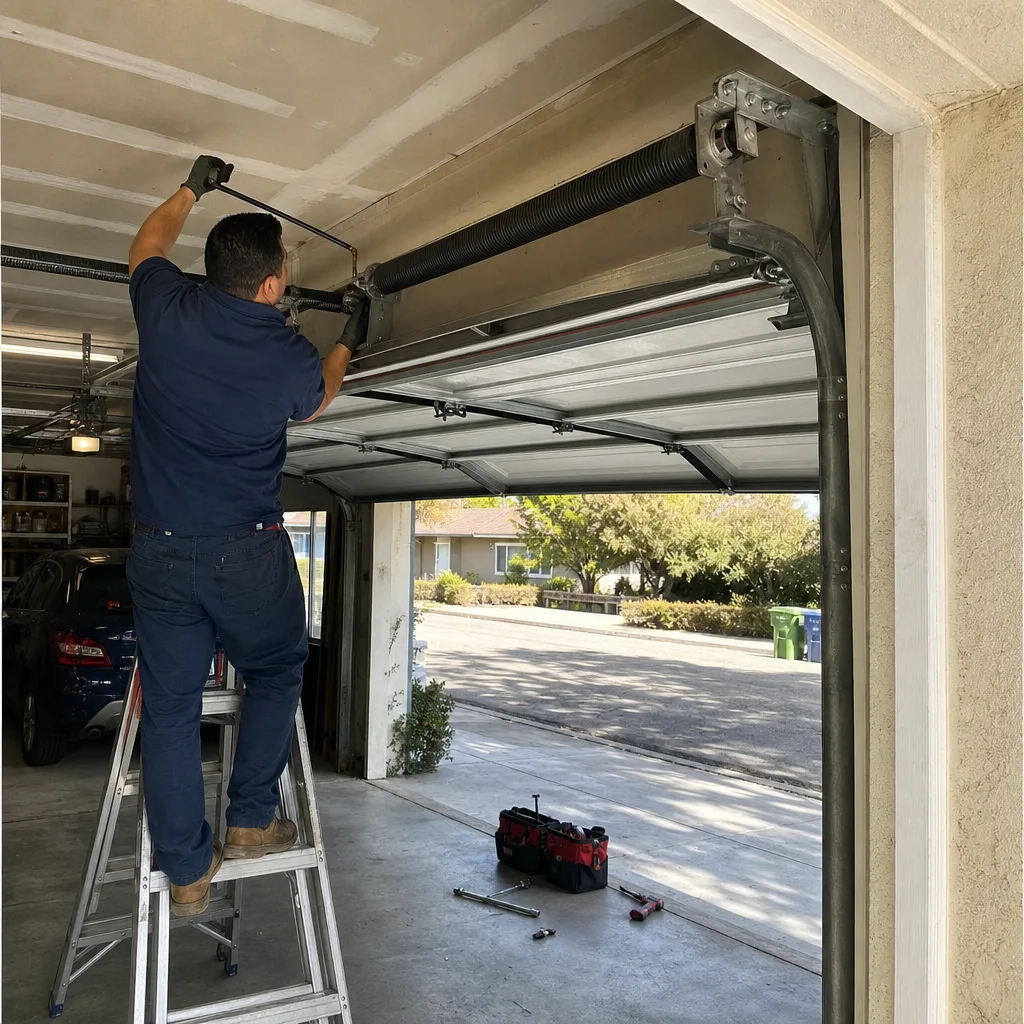
Modern openers have two independent safety systems. Both must function for the door to be considered safe.
Photo-Eye Reversal Test
The two infrared sensors mounted four to six inches above the floor on each track create an invisible beam across the door opening. Close the door using the remote. As it descends, pass a broom handle through the beam. The door must reverse immediately upon beam interruption. If it continues down, the sensors are misaligned, dirty, or failed.
Clean the lenses with a dry cloth first; Hayward’s combination of dust and coastal moisture films the lenses. If cleaning doesn’t restore function, check the LED indicators. Both sensors should show steady lights when aligned. Blinking or off indicates wiring or alignment issues. Do not bypass photo-eyes; federal law mandates their function since 1993.
Contact Reversal Test
Close the door. As it nears the floor, place a solid object like a 2×4 flat on the ground centered under the door. The door must reverse on contact with the object. If it doesn’t, the close-force setting on the opener logic board is too high. This adjustment is accessible on the opener motor unit, but we recommend technician adjustment because setting it too low causes nuisance reversal on cold mornings, and too high creates crushing force.
Manual Release Function
Verify the red handle disengages the trolley when pulled and re-engages with a firm upward push. In a power outage or opener failure, this is your only way to operate the door. If the handle is inaccessible or stuck, the release mechanism needs service.
Maintenance Frequency Table
| Interval | Tasks | Why This Frequency |
|---|---|---|
| Monthly | Visual spring, cable, roller, hinge inspection; manual release test; photo-eye lens cleaning | Catches fatigue before failure; Hayward’s temperature swings accelerate metal stress cycles |
| Semi-Annual (April and October) | Lubricate rollers, hinges, weatherstripping; run three-point balance test; test both safety systems | Pre-winter and pre-summer preparation; aligns with seasonal humidity changes that affect wood door swelling and metal contraction |
| Annual | Professional inspection including spring torque measurement, opener force setting verification, track alignment check, full hardware torque verification | Technician-grade tools measure what visual inspection cannot; identifies emerging issues before emergency failure |
The semi-annual schedule aligns with Hayward’s climate pattern: April, before the dry season stresses weatherstripping; October, before winter rains test door seals and metal components contract in cooler temperatures.
What Homeowners Can Do Safely vs. What Requires a Technician
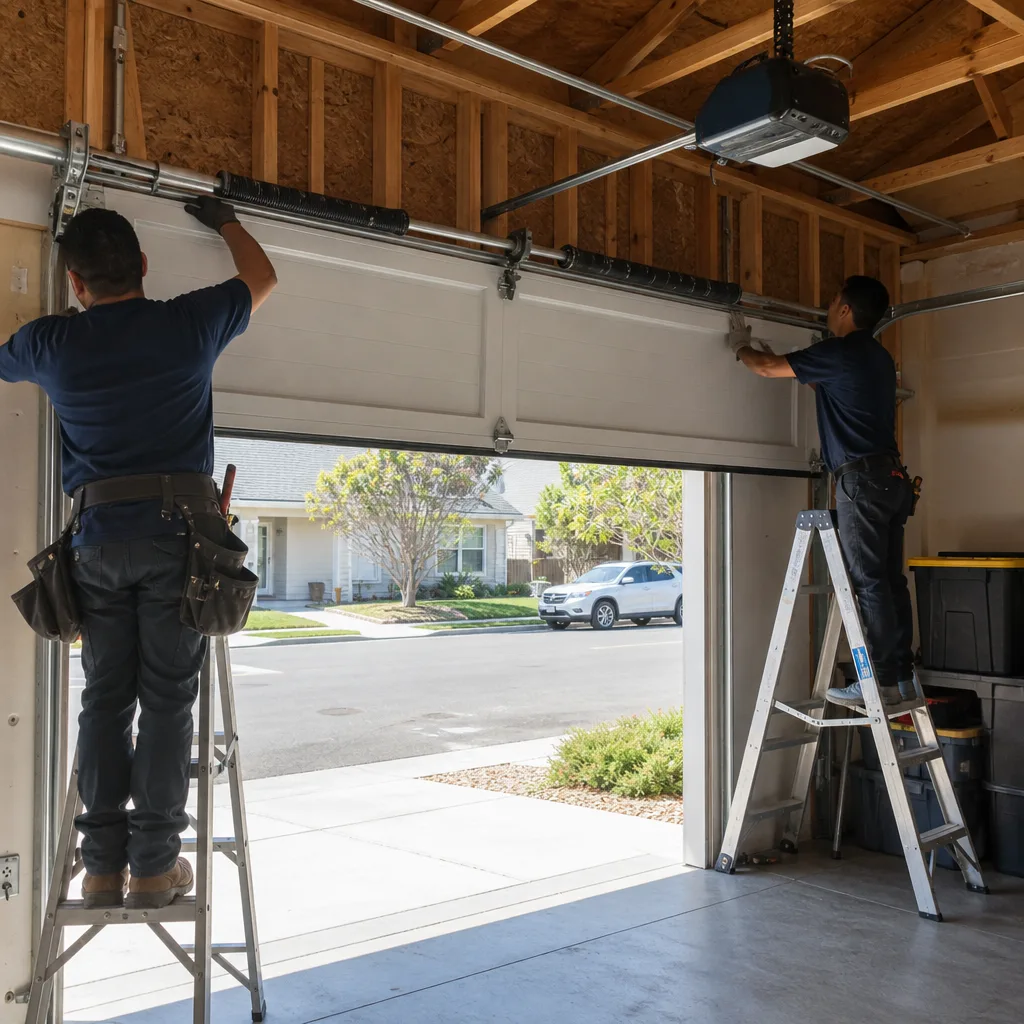
The boundary is clear: if the component stores mechanical energy, a licensed technician handles it.
Homeowner-Safe Tasks
- Visual inspection of all components
- Lubrication of rollers, hinges, and weatherstripping with correct products
- Photo-eye cleaning and alignment verification
- Track cleaning with dry cloth
- Manual release testing
- Three-point balance test (observation only; no adjustment)
- Opener light bulb replacement
- Remote battery replacement and reprogramming per manufacturer instructions
Technician-Required Tasks
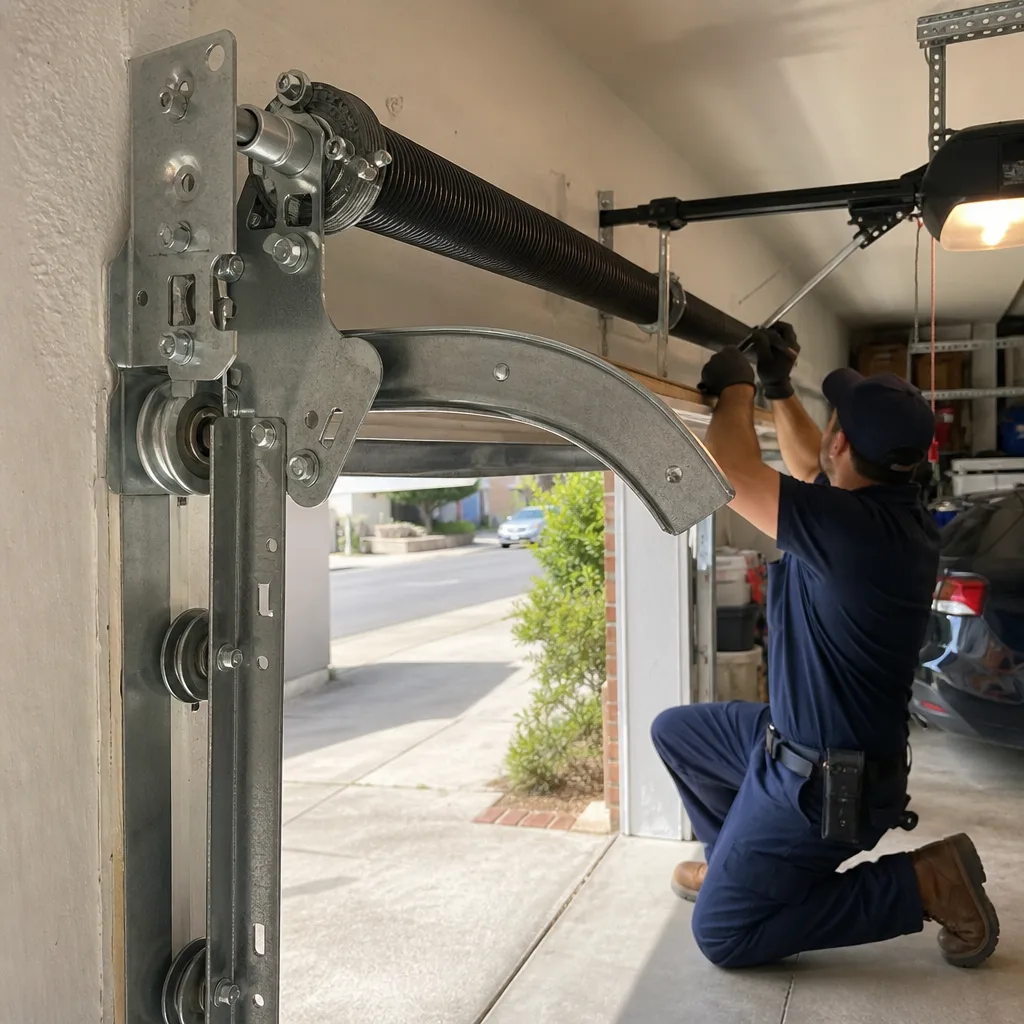
- Torsion spring tension adjustment or replacement. Springs are wound to 10,000+ foot-pounds of torque. Winding bars must be inserted and removed in a specific sequence while the spring is under load. The injury risk is not theoretical; we have documented cases in our Servo Garage Doors Hayward home service records of homeowners attempting this with screwdrivers or pliers, resulting in emergency room visits for facial lacerations and finger fractures.
- Cable unwinding or re-winding. Cables are under matched tension to the springs. A slipped cable whips unpredictably when tension releases.
- Opener force setting adjustment. The logic board controls motor current draw and travel limits. Incorrect settings damage the door or create safety hazards.
- Track realignment or replacement. Track geometry is measured to 1/16-inch tolerance. Improper alignment causes binding and premature failure.
- Bottom bracket replacement. The bottom brackets attach the lifting cables to the door. They are under spring tension even with the door closed.
Our Garage Door Installation in Hayward team sees the aftermath of DIY bracket replacement attempts several times per year. The bracket fails under load, the door drops, and the repair cost doubles because the impact damages adjacent sections.
Documenting Component Condition Before Calling for Service
A documented photo record changes how your service call proceeds. It is also the foundation of how Servo operates; Clause 4 of The Haven Standard requires our technicians to photograph the failed component before quoting a replacement. You can prepare the same documentation before we arrive.
- Photograph the full door from inside and outside. Include the model sticker if visible, usually on the interior side of the bottom section or the track.
- Take close-ups of any visible damage. Spring gaps, cable fraying, roller cracks, hinge elongation. Use your phone’s timestamp feature.
- Record the door behavior. A ten-second video of the door operating captures sounds and movement patterns that static photos miss. Grinding, shuddering, or asymmetric travel are diagnostic.
- Note the opener model and manufacture date. This is on the motor unit label. LiftMaster, Chamberlain, and Genie have different diagnostic flash codes and component availability.
- Document previous service dates and what was done. If you have invoices, photograph them. Knowing a spring was replaced in 2019 tells us the cycle life rating and whether the matching spring is due.
When you call (510) 330-2488 with this documentation, we can often quote a firm price range before dispatching. Written price before any work starts is Clause 1 of The Haven Standard. No exceptions.
How Hayward’s Climate Affects Your Garage Door
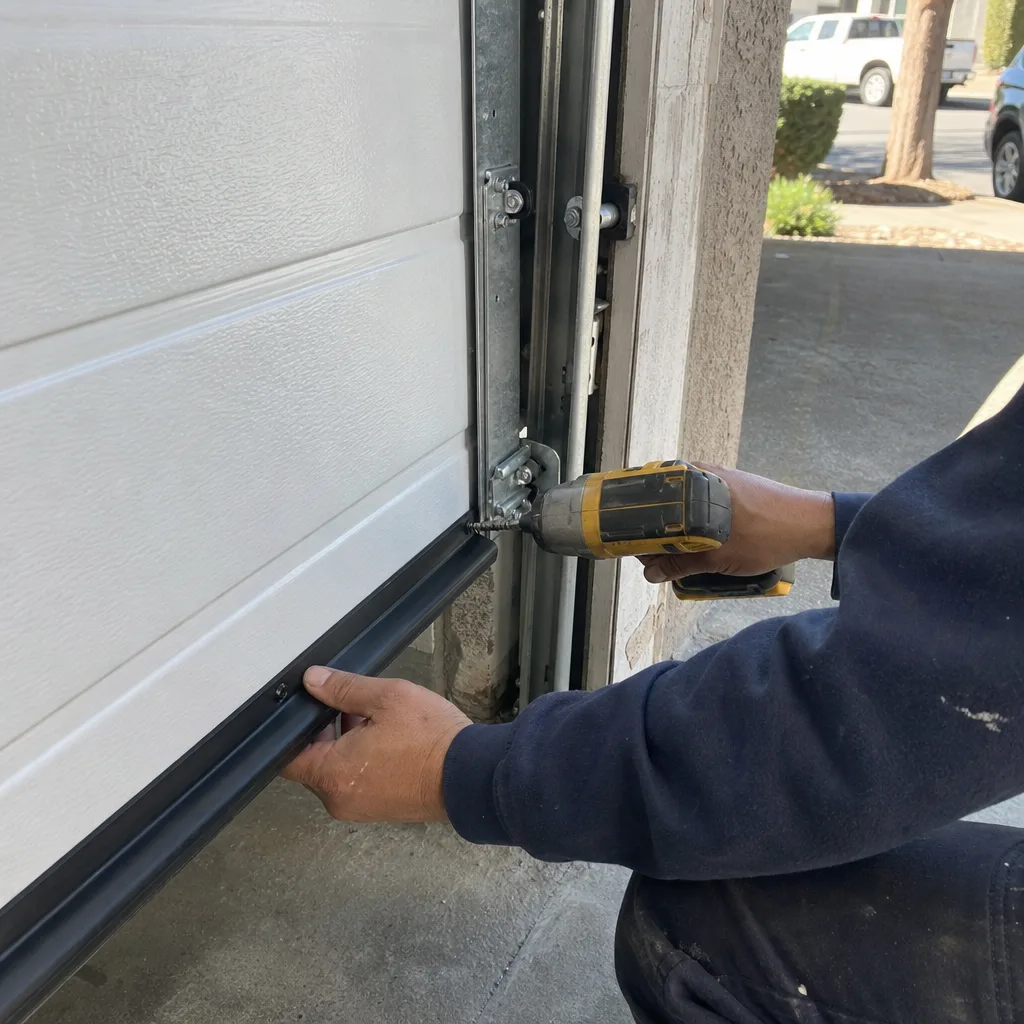
Hayward’s location at the eastern edge of San Francisco Bay creates specific maintenance considerations that inland California homeowners don’t face.
Marine layer moisture. Morning fog from May through October deposits moisture on metal components. This accelerates surface rust on torsion springs and bottom brackets. The rust itself isn’t immediately dangerous, but it indicates the protective coating is degrading. We see more spring replacements in Hayward’s flatland neighborhoods, closer to the bay, than in the hills toward Cal State East Bay.
Temperature swing magnitude. A typical January day in Hayward ranges from 42°F overnight to 58°F afternoon. That 16-degree swing causes metal expansion and contraction. Over a year, that’s thousands of stress cycles. The three-point balance test catches spring fatigue early because the door’s weight relative to spring torque changes as the metal fatigues.
Wind exposure. Hayward’s position in the Hayward Pass corridor channels afternoon winds. Doors facing west or southwest experience more pressure on the weatherstripping seal and more racking stress on the frame. Check the stop molding and jamb seal more frequently if your garage faces this direction.
Soil conditions. Parts of Hayward, particularly near the old marshlands in the southern part of the city, have expansive clay soils. Garage slabs shift seasonally. Track mounting brackets loosen as the slab moves. Annual professional inspection includes checking these fasteners with a torque wrench; homeowner visual inspection won’t catch a bracket working loose.
Common Mistakes to Avoid
- Using WD-40 on torsion springs. It’s a solvent that strips protective coatings and attracts dust. We’ve photographed the corroded result on dozens of Hayward service calls.
- Lubricating the track. The track guides rollers; it doesn’t need lubrication. Grease in the track causes roller slippage and collects abrasive grit.
- Ignoring a door that fails the balance test. Running an opener on an unbalanced door burns out the motor or strips the nylon gears. A $200 opener repair becomes a $600 opener replacement.
- Adjusting opener force settings to compensate for a heavy door. This masks spring failure and creates a crushing hazard. Fix the springs, not the symptom.
- DIY spring replacement with online tutorial videos. Videos rarely show the safety equipment or the specific spring configuration for your door weight. The injury statistics are not abstract.
- Skipping maintenance on a new door. Warranty coverage on Raynor, Clopay, and Amarr doors requires documented maintenance. Neglect voids protection you paid for.
- Calling for service without documentation. Vague descriptions lead to wider quote ranges. Photos narrow the estimate and align expectations.
When to Call a Professional
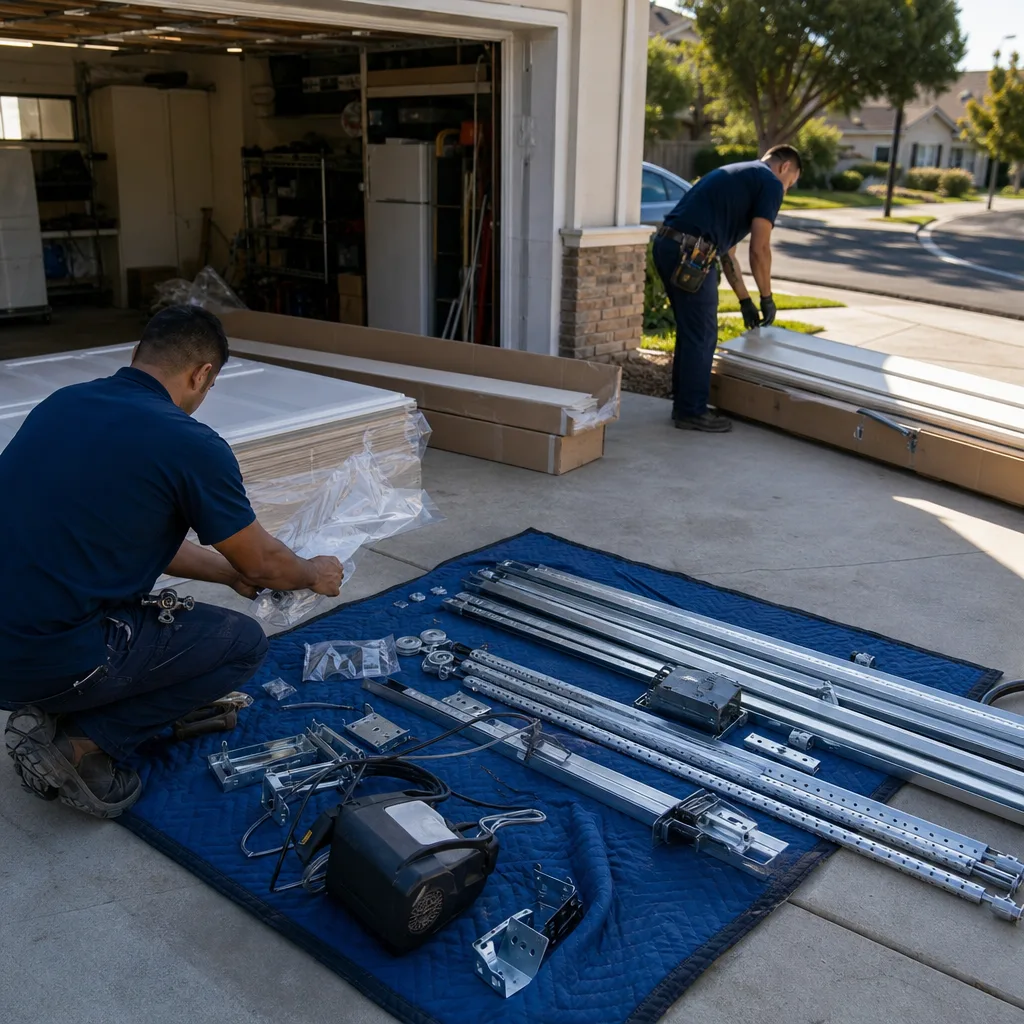
Call when a spring shows gaps, a cable frays, the door fails any balance test, safety systems don’t function, or you hear grinding or popping during operation. These are not maintenance items; they are Garage Door Warning Signs: A Hayward Homeowner’s Reference Guide.
For routine annual inspection, professional service includes spring torque measurement with a calibrated winding bar, opener force verification with a force gauge, track alignment to manufacturer specification, and hardware torque verification with a calibrated wrench. These measurements require tools most homeowners don’t own and training to interpret.
Servo Garage Doors Hayward offers free estimates in Hayward. Call (510) 330-2488. A live person answers, including overnight and holidays. You’ll receive a named technician, an on-the-way text with photo, and a flat written price before any work starts. The documented photo record of findings and completed work is included, tracing back to the founding rule that the customer sees the failed part before anyone quotes a replacement.
Frequently Asked Questions
Professional annual maintenance in Hayward typically runs $89-$149 for a standard residential door, depending on door size and number of springs. This includes the full inspection, balance test with measurement, safety system verification, lubrication with correct products, and hardware torque check. Repairs found during maintenance are quoted separately with a flat written price before any additional work. Call (510) 330-2488 for an exact quote; estimates are free.
Homeowners can safely perform monthly visual inspections, correct lubrication, photo-eye cleaning, and the three-point balance test for observation. Spring tension adjustment, cable work, opener force settings, and bottom bracket service require a licensed technician due to stored mechanical energy and documented injury risk. The boundary is energy storage, not complexity.
Lubricate rollers, hinges, and weatherstripping every six months in Hayward, in April and October. The marine layer moisture and temperature swings accelerate wear compared to drier inland climates. More frequent lubrication attracts dust and creates paste; less frequent allows corrosion and drying.
A failing torsion spring shows visible gaps between coils when the door is closed, typically a quarter-inch or wider. You may also hear a loud bang when it breaks, or the door becomes suddenly heavy to lift manually. A broken spring is visually obvious: a clear separation in the coil, often with the two ends separated by several inches. Do not operate the door; the opener is not designed to lift full door weight.
No. Servo’s written price is flat and final before work starts, per Clause 1 of The Haven Standard. The estimate you approve is the invoice you pay. The only exception is if you authorize additional work beyond the original scope, documented in a revised written quote. This is why we ask for photos before dispatching; it lets us quote accurately from the start.
Yes. Our technicians stock torsion springs, cables, rollers, hinges, and opener components for LiftMaster, Chamberlain, Genie, and major door brands. For Garage Door Opener Repair & Installation in Hayward, we carry logic boards, gear housings, and safety sensors. Specialty or discontinued parts may require next-day ordering, but we quote this upfront with timeline and price before you decide.
The Bottom Line
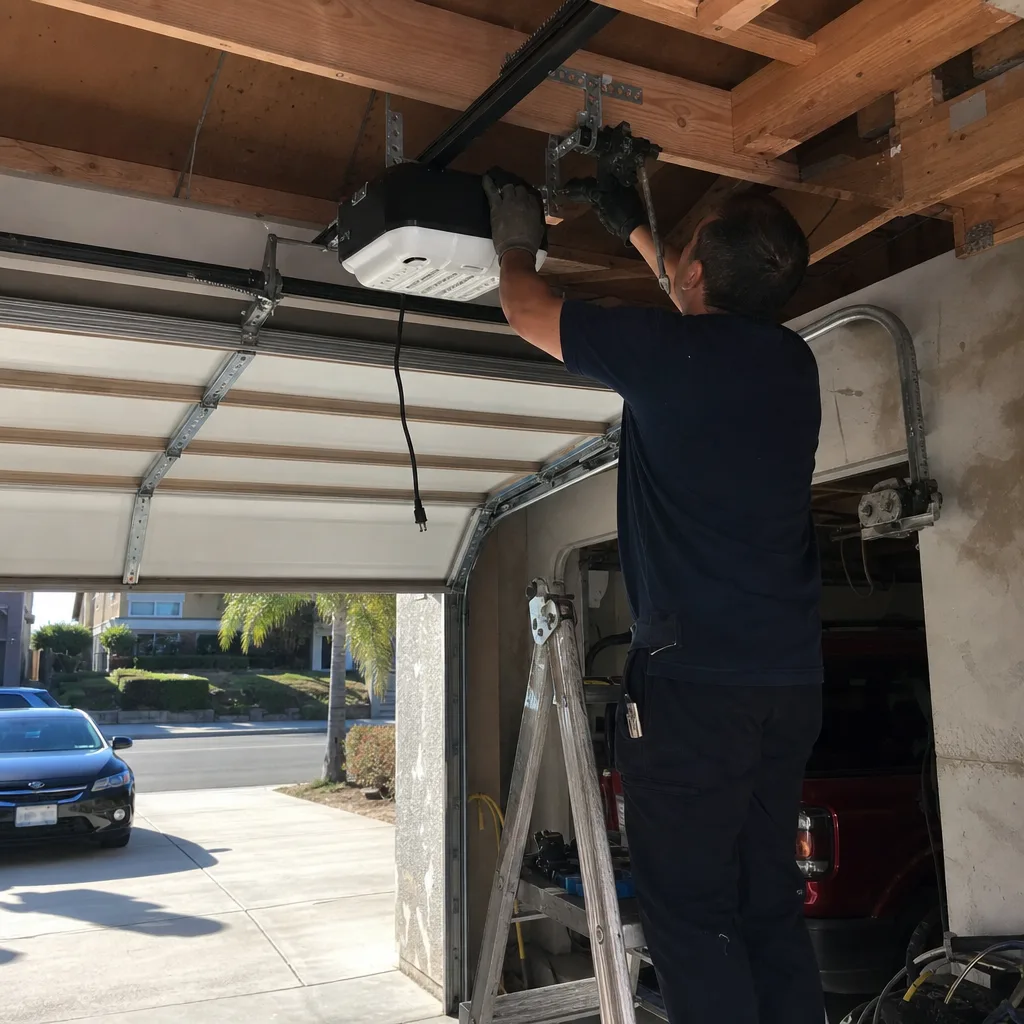
Proper garage door maintenance in Hayward is specific, measurable, and bounded by safety. Use white lithium grease on rollers and hinges, silicone spray on weatherstripping, nothing on springs. Run the three-point balance test every six months. Document what you see with dated photos. Know which tasks are yours and which require a technician with training and tools. The cost of preventive maintenance is a fraction of emergency repair or premature replacement. And when you do call, demand written price before work starts and a documented record when the technician leaves. For more guides & resources, explore our blog. Anything less is a guess.
Written by Marcus Deller, Owner at Servo Garage Doors Hayward, serving Hayward since 2015.