
Last updated September 21, 2026
Full 25-point door and opener safety check with every visit - springs, cables, rollers, tracks, and your LiftMaster or Chamberlain opener included
You get a price before we start. It does not change when the truck arrives.
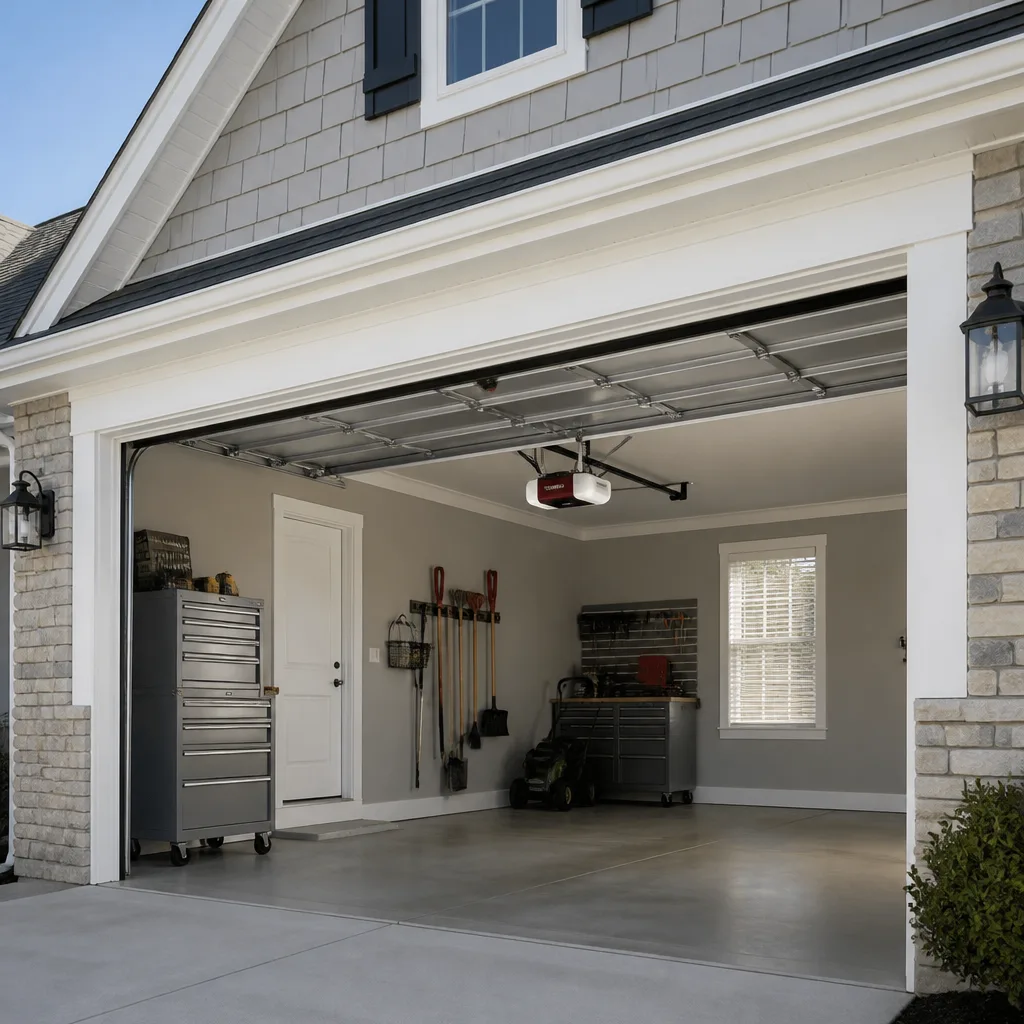
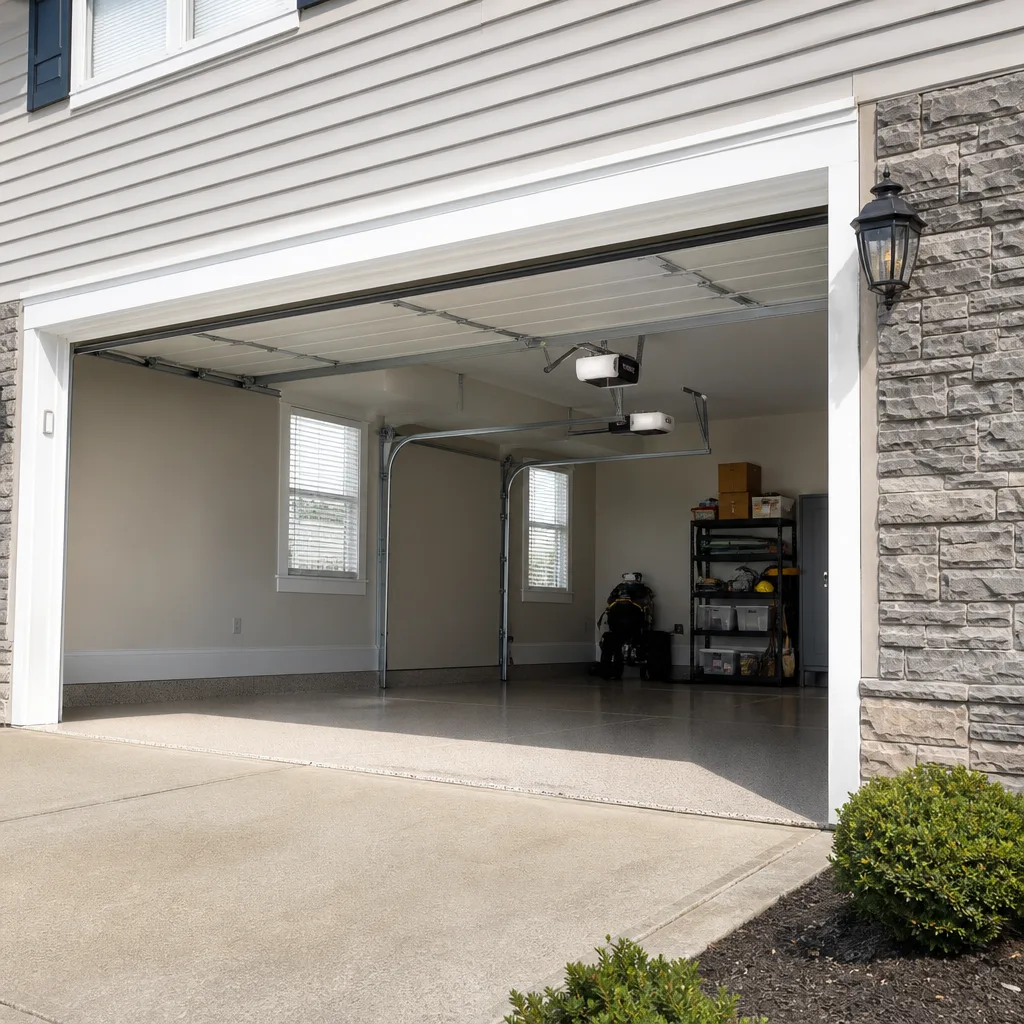
 Before
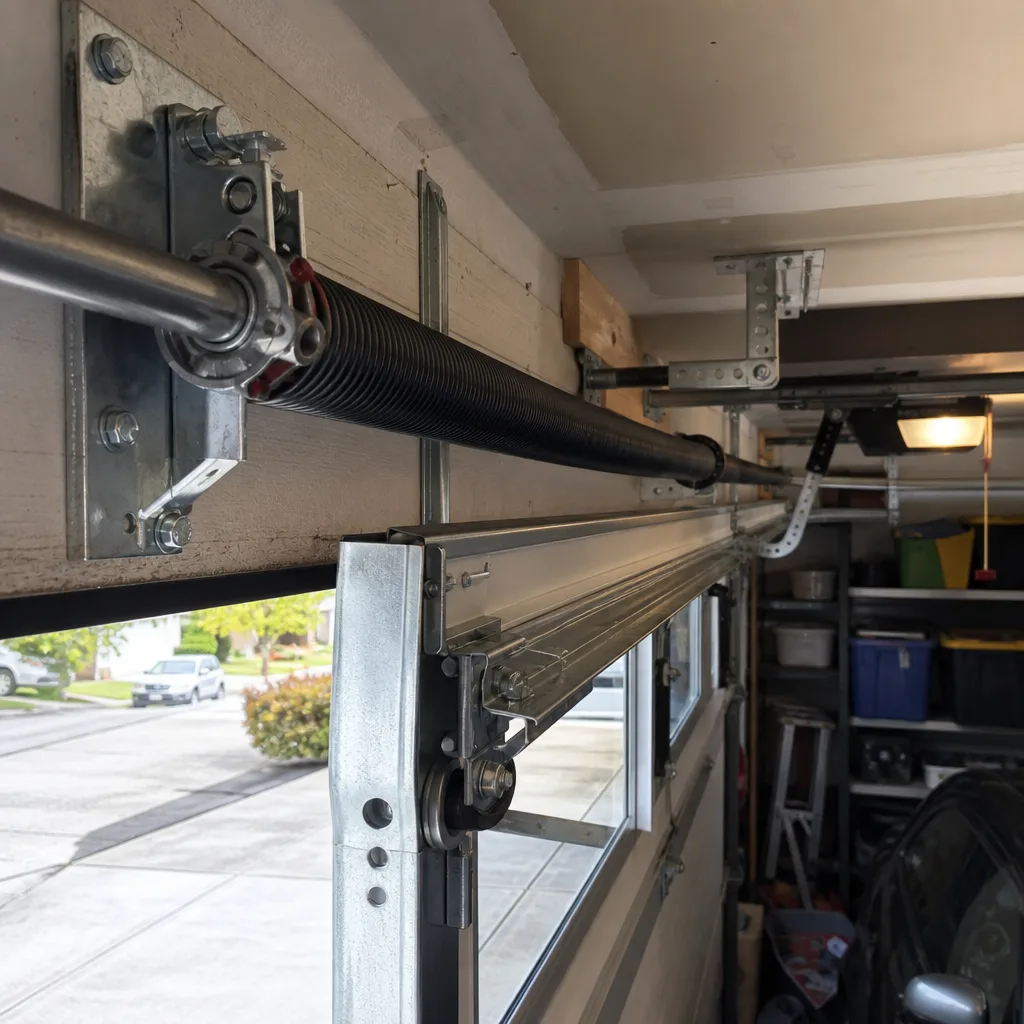 After
After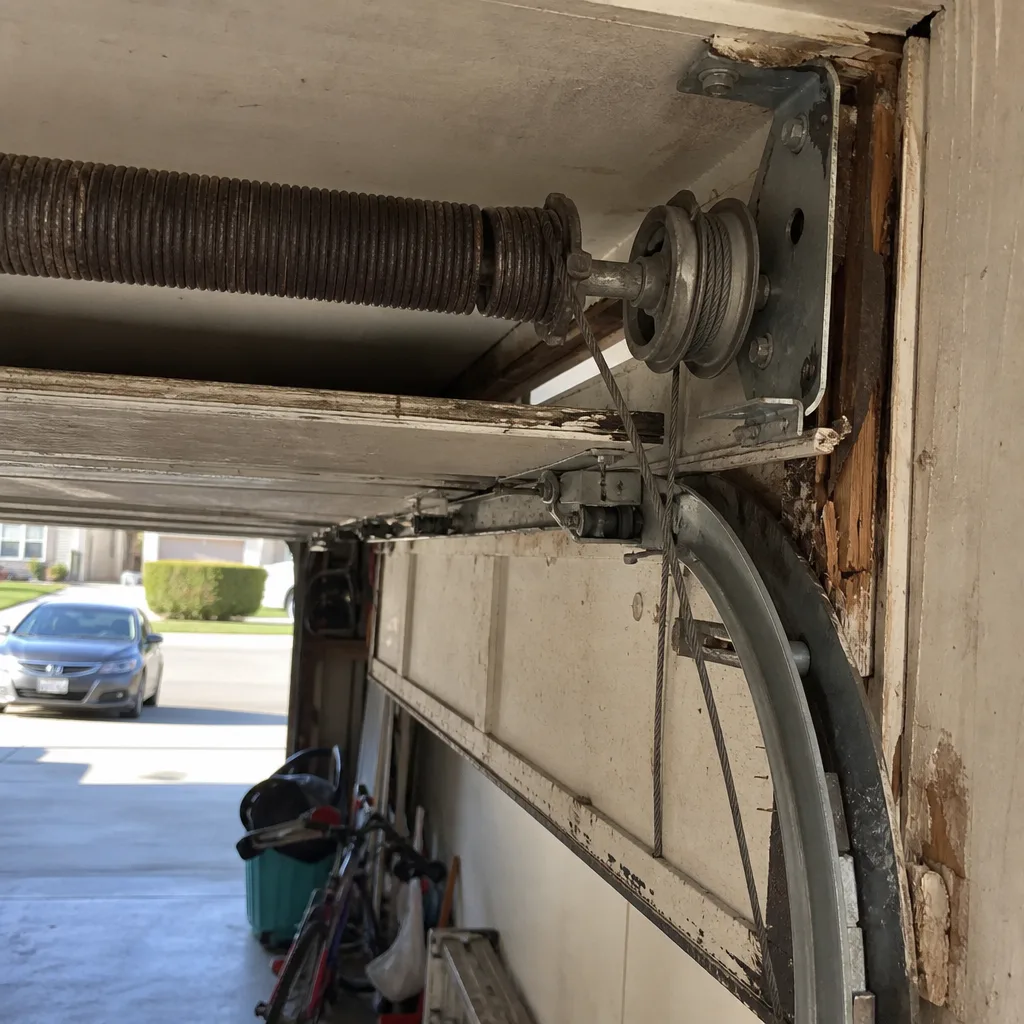 Before
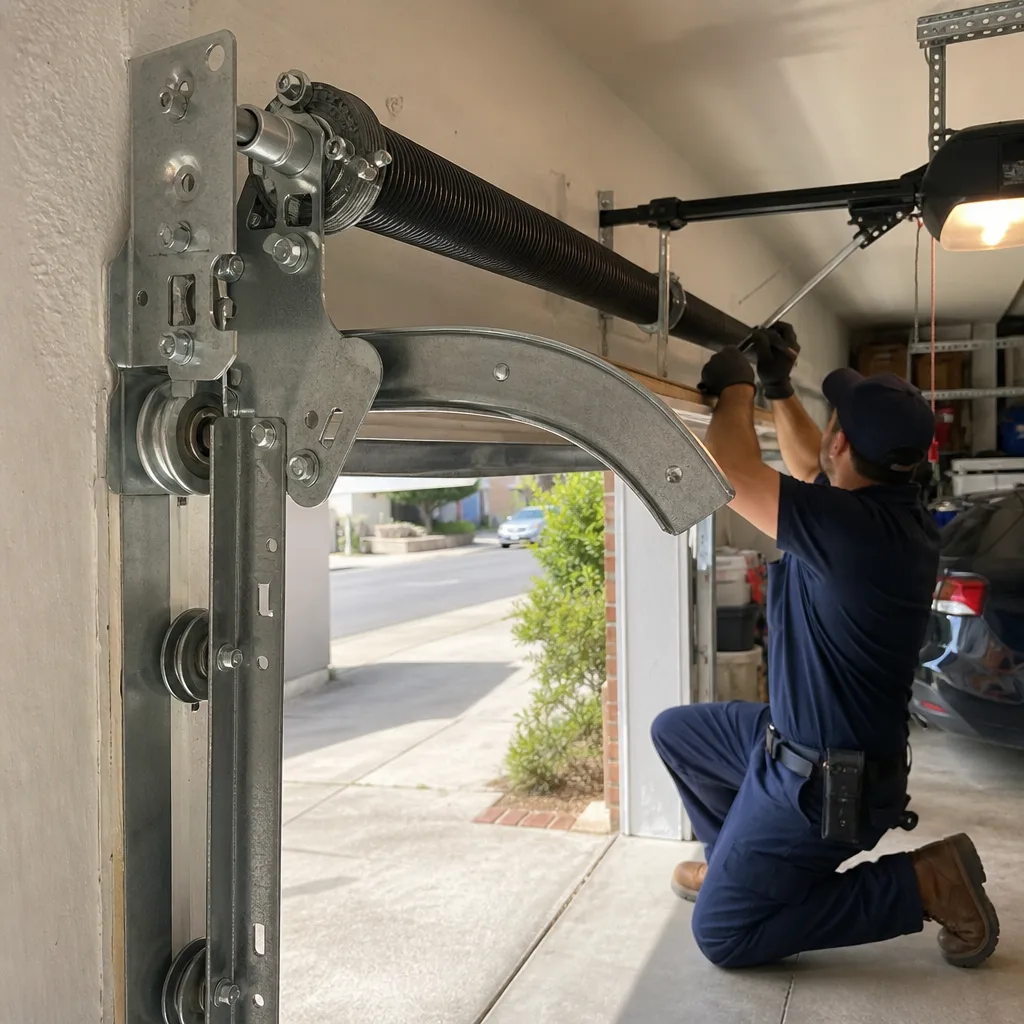 After
After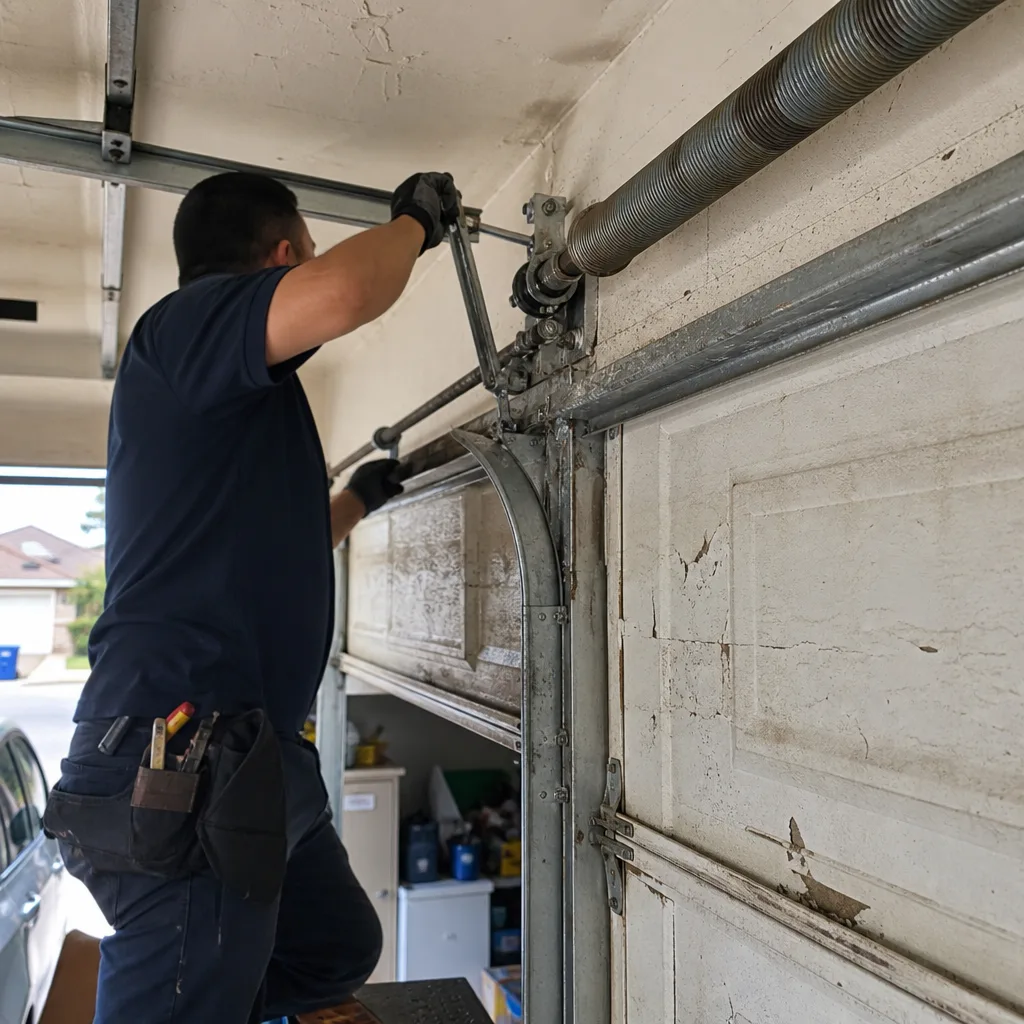 Before
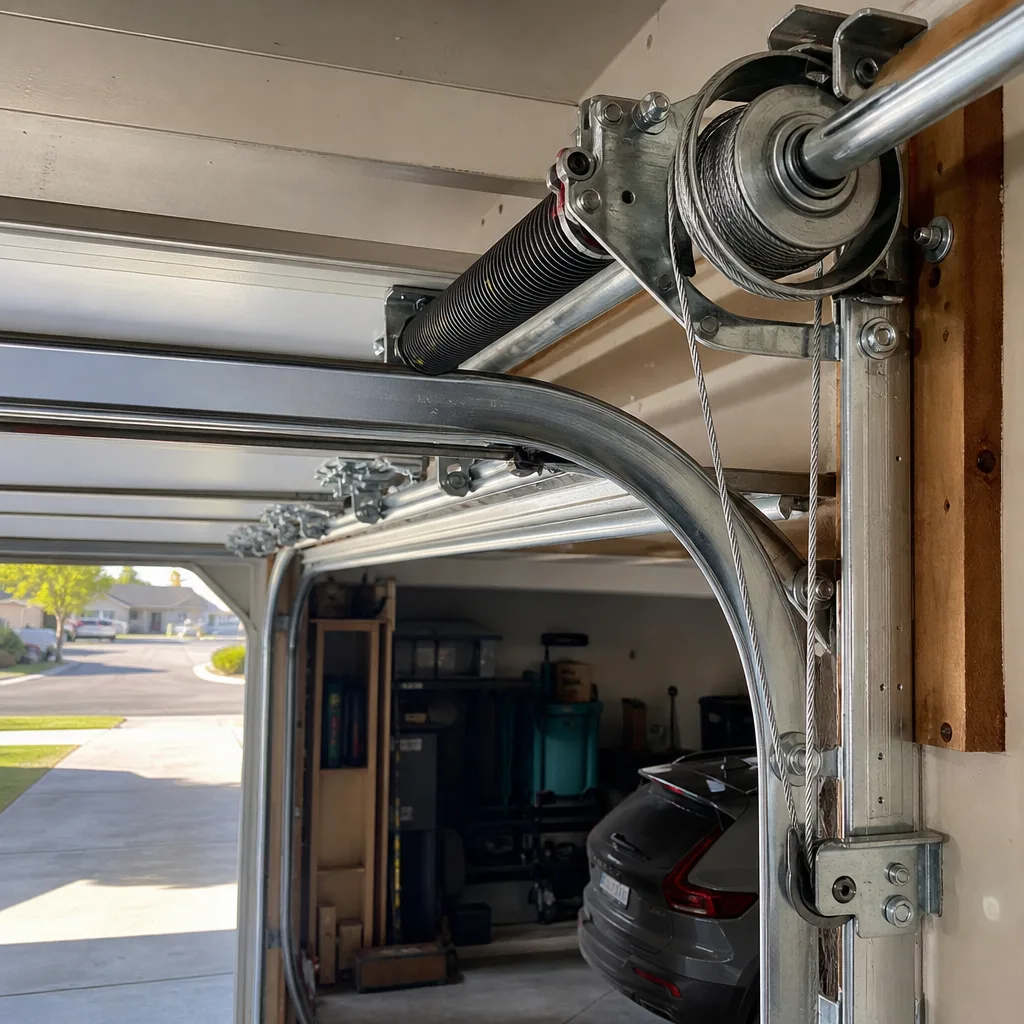 After
AfterDIY vs Professional Garage Door: The Hayward Homeowner’s Decision Guide
A homeowner who confidently replaces a light switch, a faucet, and a ceiling fan should still not adjust torsion spring tension. A 200-pound door’s spring stores roughly two foot-pounds of torque per coil, and the nearest trauma center to most Hayward zip codes is Washington Hospital - a fifteen-minute ride. In this guide, we’ll show you exactly which garage door repairs are genuinely safe for an attentive homeowner and which ones require a licensed technician, with the component-by-component split that most more guides & resources gloss over. You’ll learn the actual tool and parts costs at Hayward suppliers versus professional pricing, how California contractor law affects your warranty and insurance, and the single test that decides any repair scenario in under ten seconds.
Quick Answer
Most Hayward homeowners can safely handle weatherstripping, sensor alignment, remote programming, and roller replacement on extension-spring doors. Any repair involving torsion spring tension, cable replacement, or header bracket mounting requires a licensed technician under California law and presents genuine injury risk. The dividing line is simple: if the component is under tension or under load when the door is closed, it’s a professional job.
Table of Contents
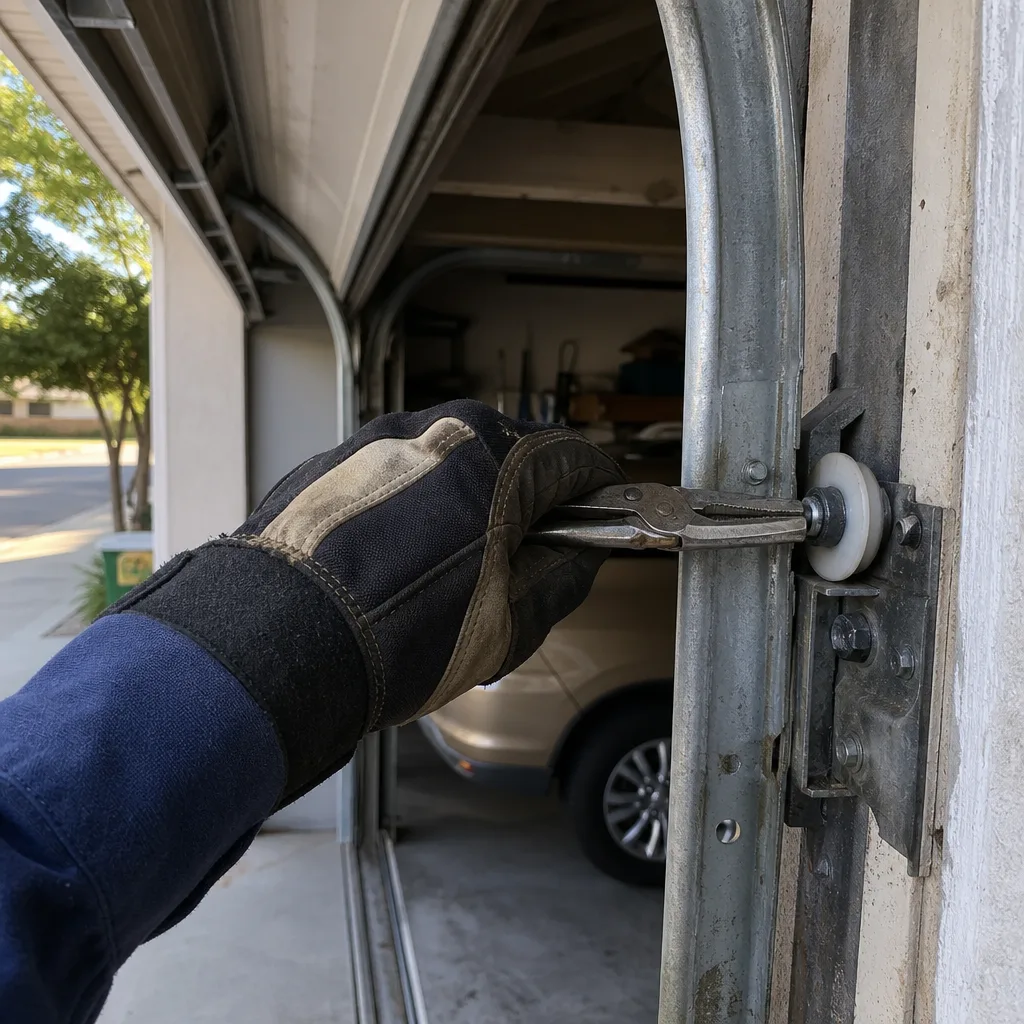
- The Component-by-Component Safety Split
- What the CPSC Injury Data Actually Shows
- Tool and Parts Costs: Hayward DIY vs Professional
- California Contractor Law, Warranties, and Your Insurance
- The Single Test for Any Repair Scenario
- Safe DIY Repairs: Step-by-Step
- Common Mistakes to Avoid
- When to Call a Professional
- Frequently Asked Questions
 Before
 After
AfterThe Component-by-Component Safety Split
Garage door systems break down into three zones: the operator (motor and controls), the door panels and hardware, and the counterbalance system (springs and cables). Each zone carries a different risk profile, and the difference matters more than most homeowners realize.
Safe for Attentive Homeowners
These components carry no stored mechanical energy when the door is in the closed position:
- Weatherstripping replacement. The vinyl or rubber seal along the bottom and sides of the door simply slides into a retainer or fastens with screws. No tension, no load. A Hayward homeowner can buy 16-foot replacement bottom seal at local suppliers for $15-$30.
- Photo-eye sensor alignment. The two infrared sensors near the floor tell the opener if something blocks the door’s path. When they blink or the door reverses randomly, they’re usually misaligned or dirty. Cleaning the lenses and adjusting the wing nuts until both LEDs show steady green takes ten minutes. No tools beyond a rag.
- Remote and keypad programming. Chamberlain, Genie, and most major brands use a learn button on the motor unit. Press, hold, press the remote button. The manual - or the manufacturer’s YouTube channel - covers the sequence. This is electronics, not mechanics.
- Roller replacement on extension-spring doors. Extension springs run parallel to the horizontal tracks and stretch to counterbalance the door. When the door is fully open, these springs are under tension; when closed, they are not. On a closed door, a homeowner can remove one roller at a time from its hinge, swap it, and reinsert it. Standard nylon rollers cost $4-$8 each at Hayward hardware suppliers. Steel rollers with ball bearings run $12-$18.
- Lubrication of hinges, rollers, and tracks. Silicone-based garage door lubricant, applied sparingly to moving parts every six months, prevents wear. Avoid WD-40 - it attracts dust and gums up in Hayward’s dry summer heat.
Requires a Licensed Technician
These components store enough energy to cause serious injury:
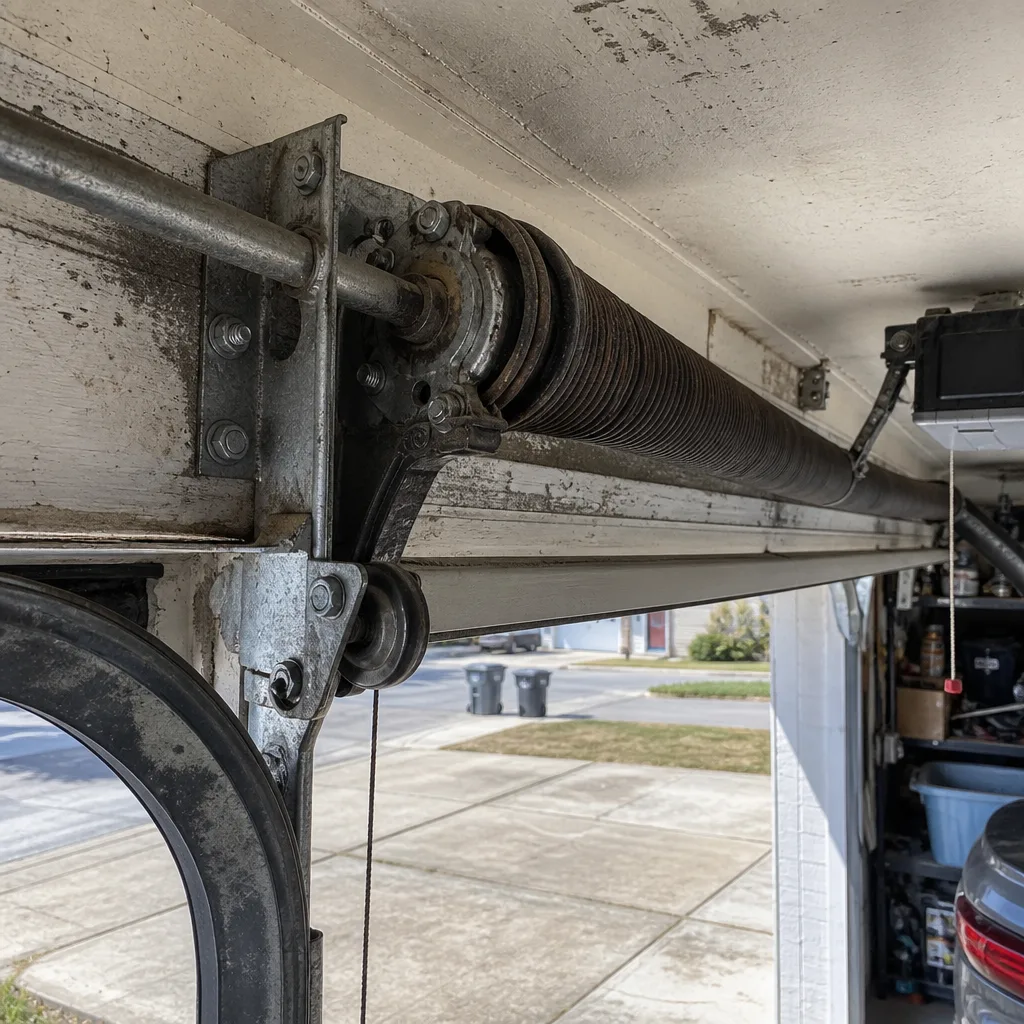
- Torsion spring winding and unwinding. Torsion springs sit on a steel shaft above the door and twist to counterbalance the door’s weight. A standard 16-foot wide door in Hayward’s 1960s ranch-style homes often uses a pair of springs with 10,000+ cycles of stored energy. Winding bars must be inserted into the winding cone while tension is adjusted. The bars can slip, the cone can fracture, or a miscalculation can release the full torque. This is not a strength issue - it’s a physics issue. The force doesn’t care about your confidence level.
- Cable replacement. The lift cables attach to the bottom brackets and wind around drums at the ends of the torsion shaft. Even with the springs “unwound,” residual tension and the door’s weight create pinch and snap hazards. Cables fray from Hayward’s coastal humidity and salt air, especially in homes near the San Francisco Bay shoreline, but replacement requires releasing and resetting spring tension.
- Header bracket and spring anchor plate mounting. These brackets attach to structural framing above the door and bear the full load of the counterbalance system. Improper lag bolt depth, missed studs, or wrong bracket specification can cause catastrophic failure. California’s Title 24 building code and manufacturer installation instructions specify minimum fastener engagement - a detail most homeowners don’t verify.
- Bottom bracket replacement on torsion-spring doors. The bottom brackets connect the lift cables to the door and are under constant load from the cables. Special tools and knowledge of cable routing are required to release tension safely.
In our experience across Hayward’s neighborhoods - from the older homes in Jackson Triangle to the newer builds in South Hayward - the most dangerous assumption is that “I’ve done other home repairs, so this is similar.” It isn’t. The energy storage makes it a different category entirely.
What the CPSC Injury Data Actually Shows
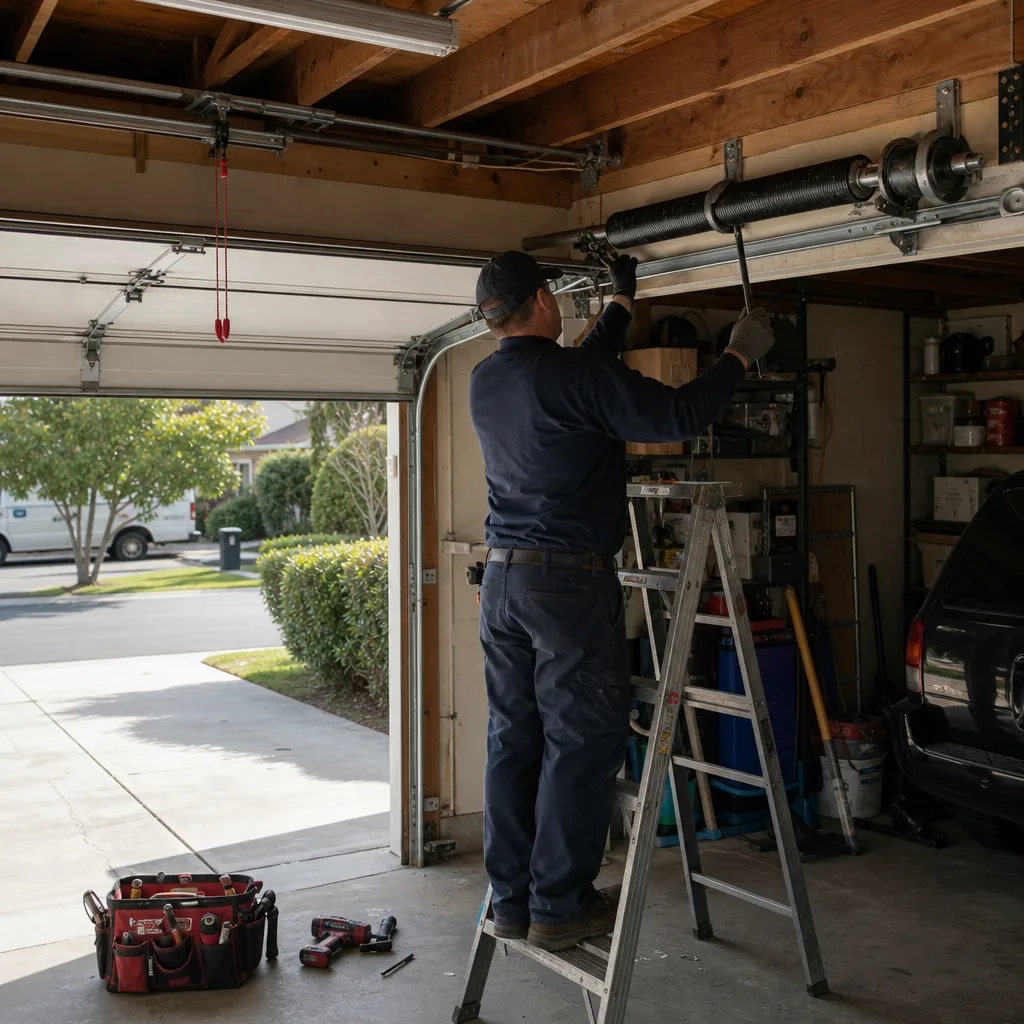
The U.S. Consumer Product Safety Commission tracks emergency room visits from garage door-related injuries. The data is specific enough to guide real decisions, not just generate fear.
From 2017 through 2022, the CPSC’s National Electronic Injury Surveillance System (NEISS) recorded an estimated 20,000+ garage door injuries annually nationwide. The breakdown by component is revealing:
- Fingers caught in sections or hinges: Roughly 40% of injuries, mostly among children but including adults attempting panel repairs. These are crush injuries from the door’s weight, not spring energy.
- Spring-related injuries: Approximately 15% of cases, but disproportionately severe - lacerations, fractures, and ocular trauma from flying winding bars or broken spring fragments. The CPSC notes that spring injuries often involve homeowners who “were attempting repair or adjustment.”
- Falling door incidents: About 20%, typically from failed cables, broken springs, or improper installation of openers. A 200-pound door falling from the open position generates significant impact force.
- Opener and electrical injuries: 15%, including shocks and entrapment from malfunctioning auto-reverse features.
- Miscellaneous: 10%, including ladder falls and tool-related injuries during installation.
The critical insight from this data is not that garage doors are inherently dangerous. It’s that the severity gradient is steep. Finger injuries from hinges are painful and inconvenient. Spring injuries send people to trauma centers. The component split we outlined above tracks almost exactly onto this severity divide.
In Hayward specifically, Washington Hospital’s emergency department sees a seasonal spike in spring-related injuries during October and November, when homeowners attempt pre-winter maintenance on doors that have been cycling through hot, dry summers. The metal fatigue from thermal cycling - expansion in 90-degree Hayward afternoons, contraction in 50-degree nights - catches up with older springs right when homeowners decide to “take a look.”
We don’t cite this data to alarm anyone. We cite it because it defines the line. The CPSC data, combined with our own documentation from 18,000+ garage doors made right since 2015, confirms the same component split: energy storage determines risk, and risk determines whether DIY is appropriate.
Tool and Parts Costs: Hayward DIY vs Professional
An honest cost comparison requires naming actual numbers, not vague “savings.” Here’s what we’ve found from local Hayward suppliers and our own parts inventory. For a deeper dive, see our Garage Door Cost Breakdown: The Hayward Homeowner’s Reference for 2026.
DIY-Appropriate Repairs
| Repair | Parts Cost (Hayward Retail) | Tools Needed | Professional Installed Price |
|---|---|---|---|
| Bottom weatherstripping (16 ft) | $15-$30 | Utility knife, screwdriver | $85-$140 |
| Nylon roller set (10 rollers) | $40-$80 | Socket wrench set | $150-$250 |
| Photo-eye sensor pair | $35-$65 | Screwdriver, level | $120-$180 |
| Remote control (universal) | $25-$45 | None | $65-$95 (programming included) |
| Silicone lubricant, 11 oz | $8-$12 | None | Included in maintenance visit |
The savings on these items are real and meaningful. A homeowner who replaces their own weatherstripping and rollers, and keeps the system lubricated, can spend under $150 in parts versus $300-$500 in professional labor and markup. The work is straightforward, the risk is minimal, and the documentation - photos of the old and new components - is easy to generate for your own records.
Professional-Required Repairs
| Repair | Parts Cost (Trade Wholesale) | Specialized Tools Required | Professional Price (Hayward Market) |
|---|---|---|---|
| Torsion spring pair (standard cycle) | $60-$120 | Winding bars, vice grips, winding cone tools, torsion spring calculator | $180-$340 |
| Lift cable pair | $25-$50 | Cable puller, locking pliers, spring tension release protocol | $150-$280 |
| Bottom bracket replacement (torsion system) | $30-$60 | Same as above plus door support/jacking system | $180-$320 |
| Header bracket re-mount | $15-$30 (bracket only) | Structural assessment, lag bolt torque specifications, stud finder | $140-$220 |
The parts-to-labor ratio here is different. On a torsion spring replacement, the spring itself might cost $80 wholesale, but the professional price of $180-$340 reflects: the technician’s training and licensing, the specialized tools (winding bars alone run $40-$80 for a proper set, and using screwdriver substitutes is how injuries happen), the liability insurance, the warranty backing, and the documented photo record that traces to Clause 4 of The Haven Standard.
The honest calculation: on DIY-appropriate repairs, you save 50-70% doing it yourself. On professional-required repairs, you might save $100-$150 in labor by attempting it yourself, but you spend $100-$200 on tools you’ll use once, assume full injury risk, void any manufacturer warranty, and likely create a documentation gap that affects your home insurance if something fails later.
For Hayward homeowners in neighborhoods like Fairway Park or the Hayward Hills, where home values run higher and insurance scrutiny is tighter, that documentation gap matters more than the immediate cash savings.
California Contractor Law, Warranties, and Your Insurance
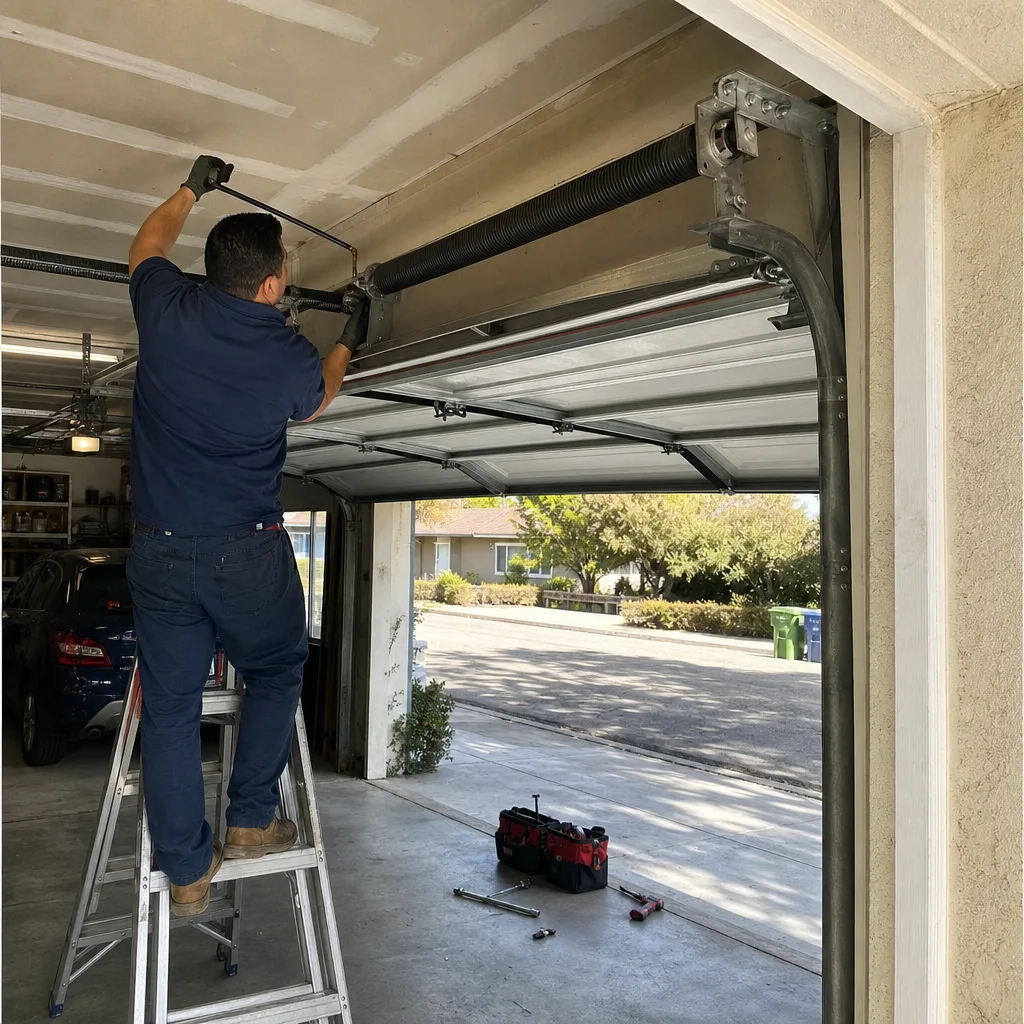
California’s Contractors State License Board (CSLB) draws a sharp line between homeowner work and contractor work, and that line affects your legal and financial exposure more than most guides explain.
What Homeowners Can Legally Do
Under CSLB regulations, a homeowner can perform any construction, repair, or alteration work on their own single-family residence without a contractor’s license. This includes garage door work of any type. The exemption is personal: it applies to the owner of the property, not to tenants, not to family members acting on the owner’s behalf, and not to the owner of a multi-unit building.
The exemption is also narrow in its protections. It allows you to do the work; it does not protect you from the consequences of doing it wrong.
Where the Law Becomes Relevant
Unlicensed handymen. This is where most Hayward homeowners stumble. A handyman who advertises on Nextdoor or Craigslist and offers to “fix your garage door cheap” is performing work that requires a C-61/D-28 (Garage Door and Gate) specialty license if the job value exceeds $500 in labor and materials. Many don’t have it. If they injure themselves on your property, your homeowner’s insurance may deny coverage for an unlicensed contractor’s claim. If their work fails and damages your vehicle or injures someone, you may face subrogation from your own insurer for hiring an unqualified person.
Manufacturer warranties. Clopay, Amarr, and other major door manufacturers specify in their warranty documents that “installation by other than a factory-authorized or licensed dealer voids this warranty.” This applies to the door panel warranty, not just the installation. A homeowner who installs their own Clopay door and has a panel delamination issue in year three has no warranty claim. A professionally installed door of the same model carries the full warranty.
Opener warranties. Chamberlain and Genie opener warranties similarly require “professional installation” for full coverage. The homeowner who installs their own Chamberlain B6753T and has a logic board failure may find the warranty limited to parts-only, with labor excluded, or voided entirely depending on the specific model terms.
Homeowner’s insurance. Standard HO-3 policies cover sudden and accidental damage but exclude damage from “faulty, inadequate, or defective” work. A garage door that falls due to improper spring installation, damaging your car and the door itself, may be denied under both the workmanship exclusion and the maintenance exclusion. We’ve seen this in Hayward claims where the insurer requested installation documentation and found none.
Permit requirements. Hayward’s building department, following California Building Code Title 24, does not require a permit for garage door replacement on existing openings in single-family homes. For full details, read our guide to Garage Door Permits, Codes & Inspections in CA: What You Need to Know. New construction, structural header modifications, or electrical work for new opener circuits do require permits. A homeowner doing their own work should verify whether their specific project triggers permit requirements; unpermitted work that should have been permitted can block future sales or trigger insurance issues.
The legal landscape favors informed choice, not blanket prohibition. A homeowner who does their own weatherstripping and sensor alignment is fully within their rights, fully protected, and fully responsible for doing it correctly. A homeowner who hires an unlicensed handyman for spring work has transferred the risk without transferring the liability. A licensed, insured professional carries both the skill and the legal backing that makes the warranty and insurance chain intact.
The Single Test for Any Repair Scenario
After eighteen thousand doors, we’ve distilled the decision to one question:
Is this component under tension or under load when the door is in the closed position?
Apply it to any scenario:
- Close the door fully.
- Identify the component you’re considering repairing or replacing.
- Ask: if this component failed or was removed right now, with the door closed, would it move suddenly, release stored energy, or allow the door to drop?
If yes, it’s a professional job. If no, and you have the basic tools and attention to detail, it’s potentially DIY-appropriate.
Examples:
- Weatherstripping: Door closed, weatherstripping removed. Nothing moves. DIY-appropriate.
- Photo-eye sensor: Door closed, sensor removed. Nothing moves. DIY-appropriate.
- Extension spring (door open): Door open, spring stretched. Under tension. Professional - but note that extension springs on a closed door are relaxed, making roller replacement safe.
- Torsion spring (any position): Wound on the shaft, under torque whether the door is open, closed, or halfway. Professional.
- Lift cable: Connected to bottom bracket and drum, under load from door weight even when “balanced” by springs. Professional.
- Header bracket: Bears the reaction force of the counterbalance system. Failure drops the spring assembly. Professional.
This test works because it identifies stored energy, not complexity. A garage door opener’s logic board is complex electronics, but replacing it involves unplugging the unit and swapping a board - no stored energy, no professional requirement (though warranty considerations apply). A torsion spring is mechanically simple - a coiled steel rod - but the energy storage makes it categorically different.
In Hayward’s climate, this test has a seasonal application. Summer heat expands metal; winter contraction increases brittleness. A spring that passes a visual inspection in June may show micro-cracking by October. The test doesn’t change, but the probability of a “yes” answer increases with door age and thermal cycling.
Safe DIY Repairs: Step-by-Step
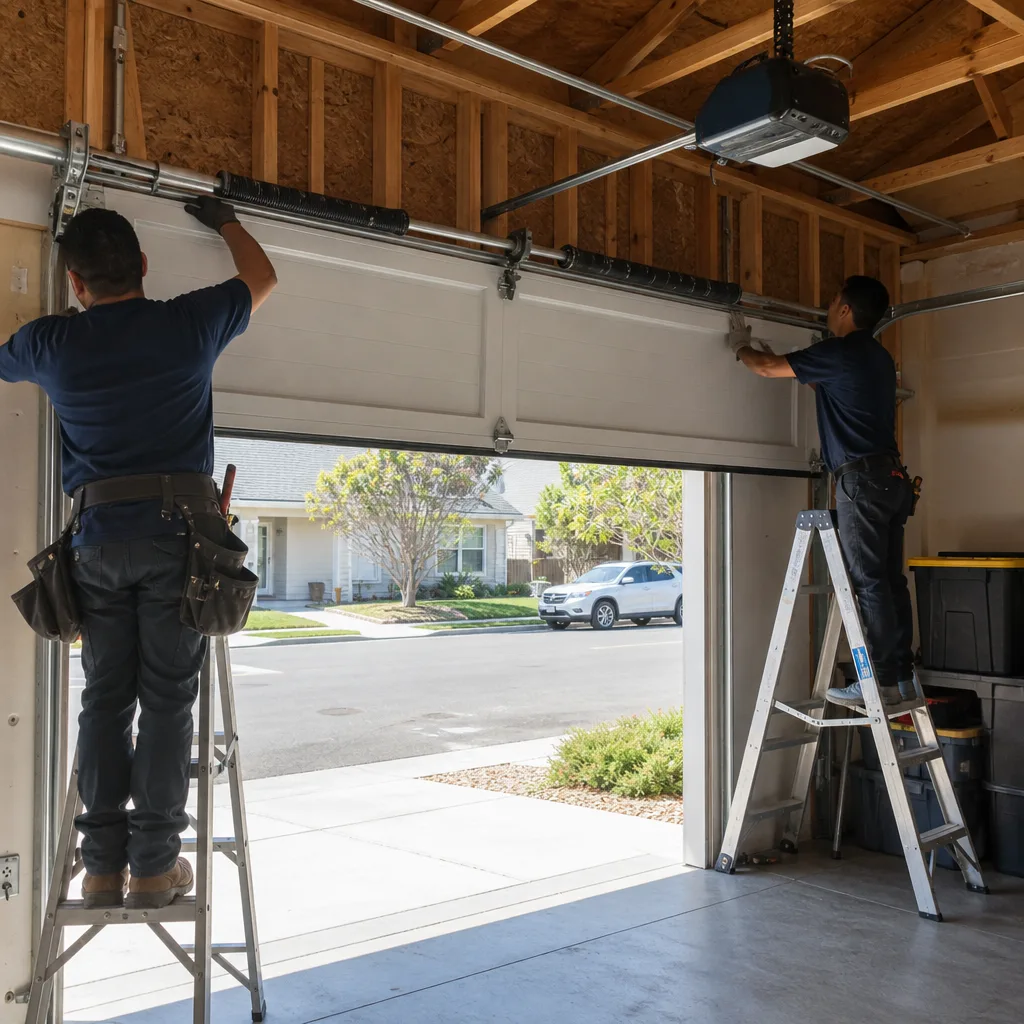
For the repairs that pass the single test, here’s how to do them correctly. These procedures assume a standard sectional steel door with extension springs or a torsion-spring door where you’re working only on non-tension components. For a printable version, see our Garage Door Repair Maintenance Checklist for Hayward Homeowners.
Weatherstripping Replacement
- Close the door and engage the manual lock if present.
- Remove the old seal by pulling from one end or unscrewing the retainer channel.
- Measure the exact width of the door, not the opening. A 16-foot door may measure 15 feet 10 inches; cut the new seal to fit.
- For T-style or bulb-style seals, slide into the retainer from one end, working slowly to avoid kinking.
- For nail-on or screw-on seals, position with the door fully closed so the seal compresses slightly against the floor.
- Test: the door should close without binding, and the seal should block light when viewed from inside with the garage dark.
Hayward-specific note: Bottom seals deteriorate faster on west-facing doors due to afternoon UV exposure. In the Hayward Hills, where elevation increases UV intensity, expect 2-3 year seal life rather than the 4-5 years typical in shaded or east-facing installations.
Photo-Eye Sensor Alignment
- Locate the two sensors, one on each side of the door track, typically 4-6 inches above the floor.
- Check the LED indicators. One may show green (sending), the other red or blinking (receiving/misaligned).
- Clean both lenses with a dry cloth. Hayward’s dust and occasional coastal fog leave residue that scatters the infrared beam.
- Loosen the wing nuts or adjustment screws on the receiving sensor (the one not steadily green).
- Adjust until the LED shows steady green. Some Genie models require both LEDs green; most Chamberlain systems show one amber, one green when aligned.
- Test the obstruction function: place a box in the beam path and attempt to close the door. It should reverse within 2 seconds or not start.
Roller Replacement (Extension-Spring Doors Only)
- Verify you have extension springs - they run parallel to the horizontal tracks, not across the header.
- Close the door fully. The springs should be relaxed with minimal tension.
- Disconnect the opener using the emergency release cord (red handle).
- Starting with the bottom roller, remove one hinge at a time by loosening the bolts. Support the door section with a clamp or helper if needed.
- Remove the roller from the hinge, insert the new roller, and reattach the hinge.
- Move to the next roller. Never remove more than one hinge’s fasteners at a time - the door sections are connected by hinges for a reason.
- Re-engage the opener and test cycle the door manually first, then with the motor.
Critical safety note: if you discover your door has torsion springs during this process - the spring sits on a shaft above the door - stop immediately. Do not proceed with roller replacement. The bottom brackets are under cable load even with the door closed.
Common Mistakes to Avoid
- Using the wrong winding tool for torsion springs. We’ve seen homeowners use screwdriver shafts, socket extensions, and even crowbars as winding bar substitutes. These are not hardened steel, not the correct diameter, and not designed to withstand torsional load. A proper winding bar is 1/2-inch solid steel, 18 inches long, inserted fully into the winding cone. Anything else is gambling with the specific injury type that sends people to Washington Hospital.
- Replacing only one spring on a two-spring system. Torsion springs are matched for cycle life and torque. Installing one new spring with one old spring creates imbalance, strains the opener, and often fails within months. In Hayward, where many homes built in the 1970s and 1980s still have original single-spring systems that were later upgraded to doubles, we’ve documented multiple cases where partial replacement led to opener trolley carriage failure within six months.
- Ignoring the door weight when selecting extension springs. Extension springs are color-coded by weight capacity. A homeowner who buys “the same size” without weighing the door or checking the color code may install a spring rated for 120 pounds on a 180-pound door. The door won’t stay open, the opener strains, and the new spring fails prematurely from overextension.
- Disconnecting the opener without securing the door. The emergency release cord frees the door from the opener trolley, but a door with weak or broken springs can crash down when released. Always verify spring condition before pulling the release, and never stand directly under the door when testing manual operation.
- Neglecting to test the auto-reverse after any work. California law (SB 969, 2018) requires all garage door openers to have a functional auto-reverse and battery backup. After any sensor, opener, or door work, test the auto-reverse with a 2×4 laid flat in the door path. The door should reverse on contact. In Hayward, where many rental properties undergo tenant turnover, we’ve found auto-reverse failures are the most common code violation during move-out inspections.
- Hiring unlicensed help for “just the dangerous part.” A homeowner replaces rollers, then hires a handyman to “just adjust the spring a little.” This combines the worst of both approaches: the homeowner has no warranty, the handyman has no license, and the work is undocumented. Either do the full job yourself (only the safe components) or hire a CSLB-licensed professional for the complete repair.
When to Call a Professional
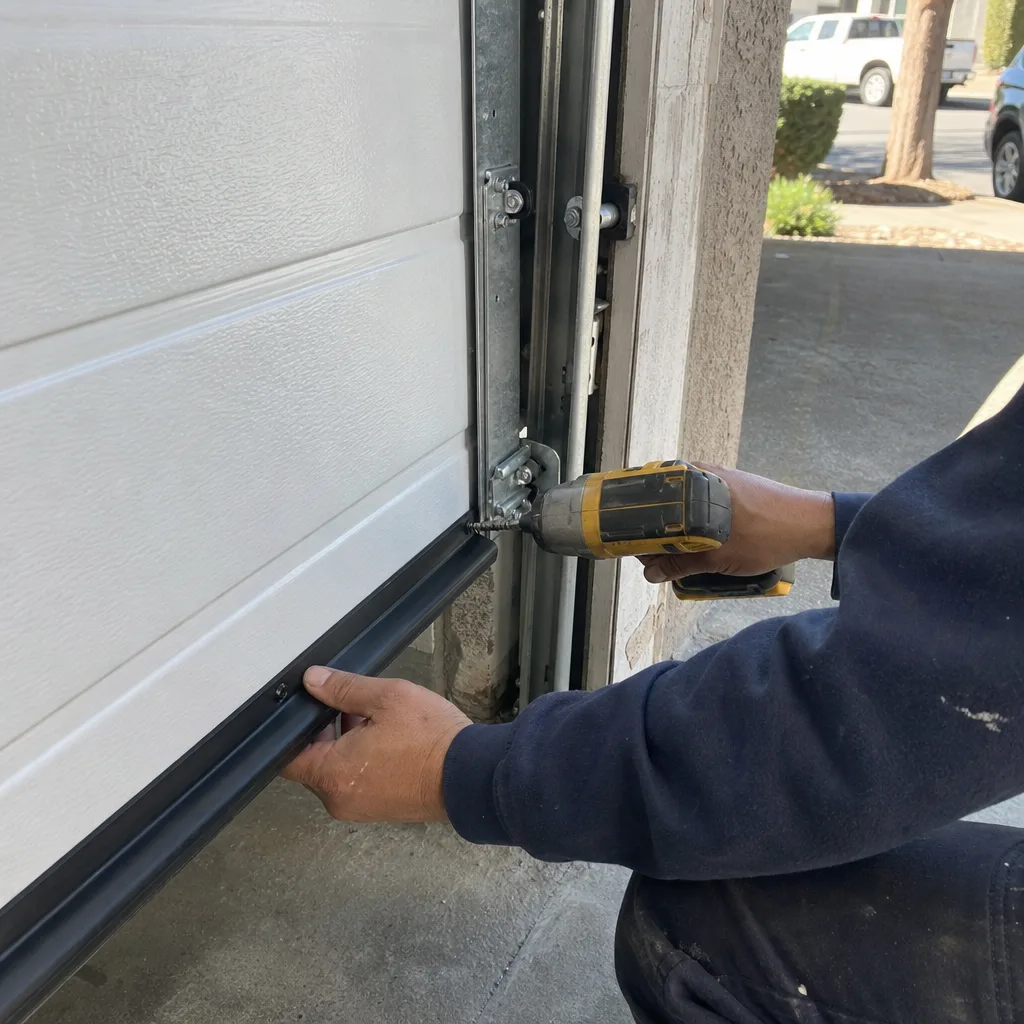
Call a licensed technician when the single test answers “yes” - any component under tension or load with the door closed. Also call when: the door is crooked in the opening (indicates cable or spring imbalance); the opener strains but the door doesn’t move (possible broken spring with the opener fighting the dead weight); you hear a loud bang from the garage and the door won’t open (classic torsion spring failure); or you’ve received a written estimate from another company and want a free second opinion with documentation.
Servo Garage Doors Hayward offers free estimates in Hayward - call (510) 330-2488. Every visit includes a documented photo record of what we find and what we do, with a flat, written price and scope before any work starts, per Clause 1 of The Haven Standard. Our technicians are background-checked, uniformed, and carry the C-61/D-28 license on every job.
Frequently Asked Questions
Torsion spring replacement in Hayward typically runs $180-$340 for a standard cycle spring pair, including parts, labor, and warranty. Extension spring replacement is usually $140-$260. The exact price depends on spring size, cycle rating (10,000 vs. 25,000 cycles), and whether the door requires two springs or one. We quote a flat, written price before any work starts - call (510) 330-2488 for an exact estimate, which is free.
Yes, if you’re comfortable with basic electrical work and structural mounting. An opener replacement involves removing the old unit, installing a new header bracket into solid framing, mounting the motor unit, connecting the rail and trolley, and wiring to an existing outlet. No spring work is involved. However, Chamberlain and Genie warranties require professional installation for full coverage, and California’s SB 969 requires battery backup on all new opener installations. If your existing opener lacks battery backup, a DIY replacement of the same model may not comply with current code for a home sale or rental.
Standard policies exclude damage from faulty workmanship or inadequate maintenance. If your DIY repair fails and damages your vehicle, the door itself, or injures someone, coverage is likely denied. If a licensed professional’s work fails, their liability insurance and your policy’s completed operations coverage typically apply. The documentation from a professional repair - photo records, written scope, invoice - also supports your claim if unrelated damage occurs later. For Hayward homeowners in higher-value properties, this documentation chain is worth more than the labor savings.
Look above the door. Torsion springs are mounted horizontally on a steel shaft directly above the door opening, usually one or two springs with winding cones at each end. Extension springs are mounted on either side of the door, parallel to the horizontal tracks, stretching and contracting as the door moves. If you see a coiled spring above the door, you have torsion springs and should not attempt any repair involving that system. If you see stretched springs alongside the tracks, you have extension springs - safer for limited DIY work when the door is closed.
Local suppliers stock parts for all major brands. We service and source for LiftMaster, Chamberlain, Genie, Clopay, Amarr, Wayne Dalton, Craftsman, and Raynor. For DIY repairs, generic rollers, weatherstripping, and sensors are widely available at Hayward hardware stores. Brand-specific parts like Clopay’s low-headroom track kits or Genie’s Intellicode logic boards may require special order or dealer purchase. If you’re unsure whether a generic part fits your door, bring the old component to the supplier for matching.
DIY-appropriate repairs take 30 minutes to 2 hours depending on your experience and tool access. Professional torsion spring replacement typically takes 45-90 minutes, including safety checks, spring calibration, and documentation. In Hayward, we complete most same-day spring repairs within two hours of arrival, including the photo record and written warranty delivery. Installation of a new door or opener is scheduled, not same-day, and takes 3-5 hours including removal, disposal, and testing.
You should receive: a written invoice with itemized parts and labor; a written warranty with terms and duration; and evidence of what was found and what was done. At Servo Garage Doors Hayward, Clause 4 of The Haven Standard requires the technician to photograph the failed component before quoting replacement, and the customer receives the documented photo record as part of every visit. This is not optional - it’s how we started in 2015, and it’s how we work today. If your contractor provides none of this, you have no proof of what was actually replaced if the repair fails.
The Bottom Line
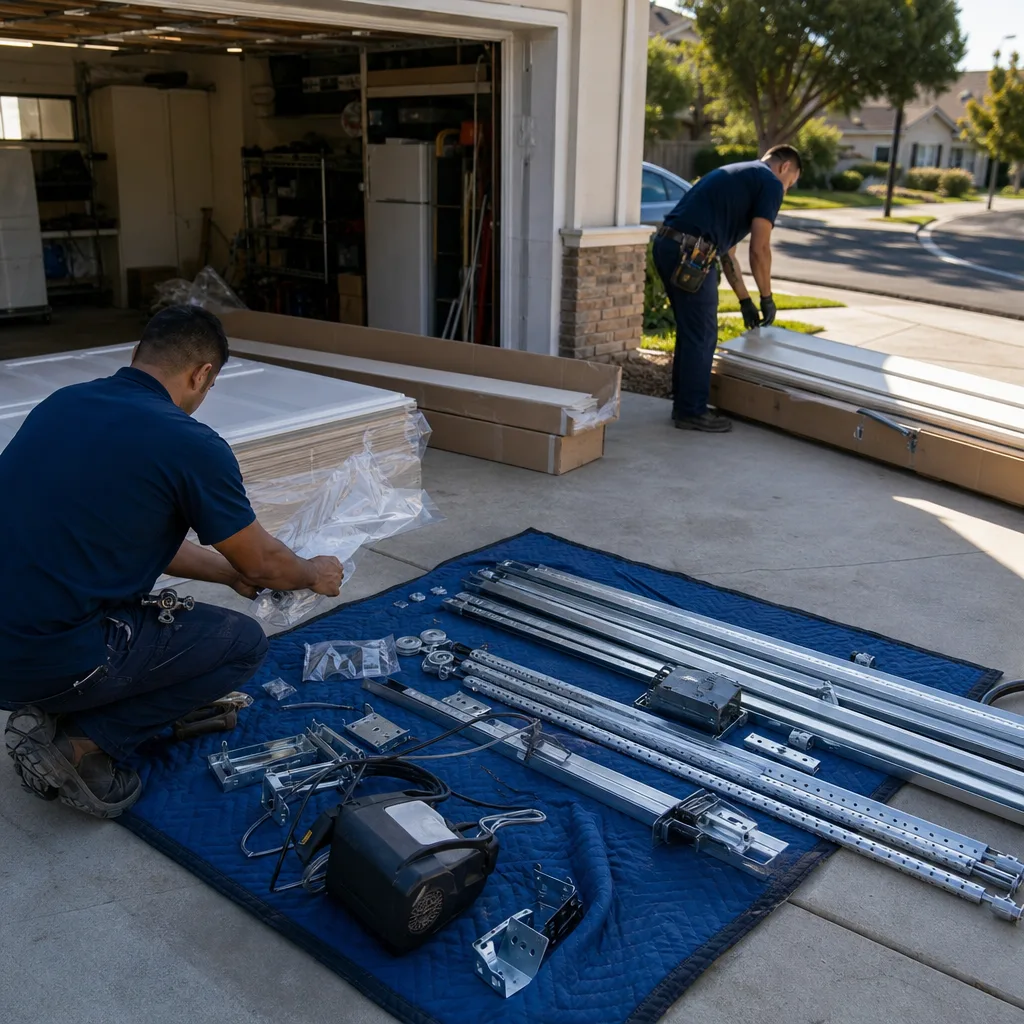
The DIY-versus-professional decision for garage doors is not about your skill level or your budget. It’s about stored mechanical energy and the specific components that contain it. Weatherstripping, sensors, remotes, and extension-spring rollers pass the single test and offer genuine savings for attentive homeowners. Torsion springs, cables, header brackets, and bottom brackets fail the test and require a licensed technician with proper tools, insurance, and documentation.
In Hayward’s climate of thermal cycling, coastal humidity, and high UV exposure, the age and condition of your door system matters as much as the repair type. A component that looks manageable may be closer to failure than it appears. The CPSC data, the California contractor licensing framework, and our own documentation from 18,000+ repairs all point to the same conclusion: know the line, respect the energy, and choose the path that leaves you with both a working door and a paper trail.
If you’re uncertain whether your specific repair passes the single test, or if you’ve received an estimate from another company and want a free second opinion with documentation, call Servo Garage Doors Hayward at (510) 330-2488. We’ll assess what you have, show you what we find, and quote a flat, written price before any work starts.
Written by Marcus Deller, Owner at Servo Garage Doors Hayward, serving Hayward since 2015.