
Last updated September 21, 2026
Full 25-point door and opener safety check with every visit - springs, cables, rollers, tracks, and your LiftMaster or Chamberlain opener included
You get a price before we start. It does not change when the truck arrives.
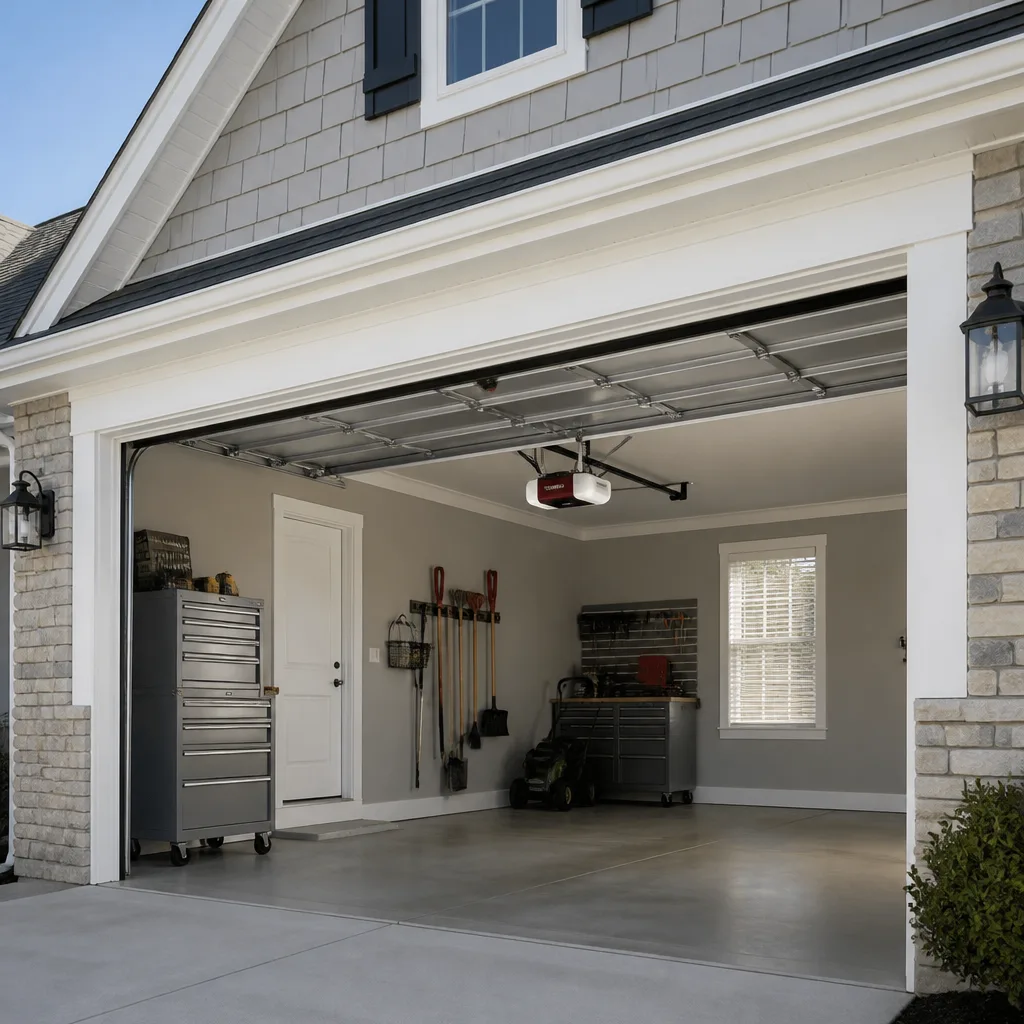
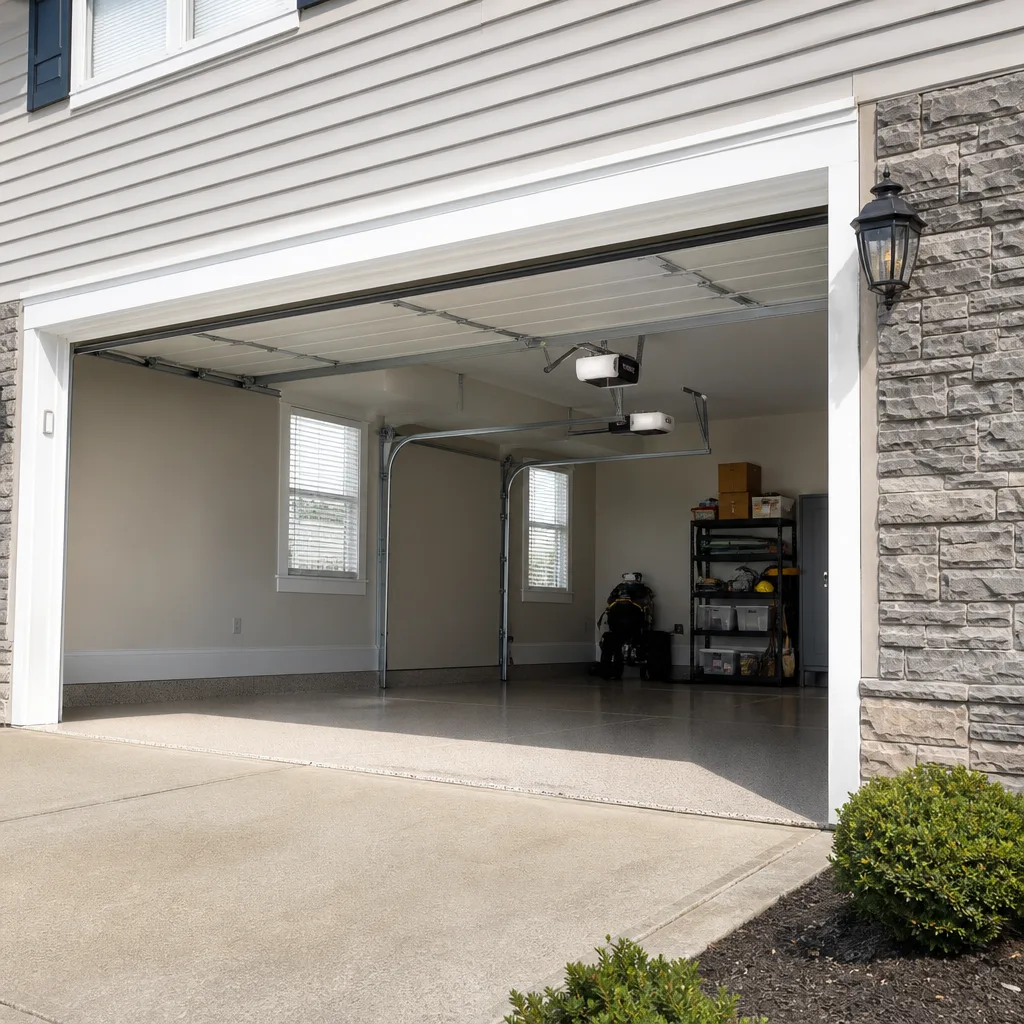
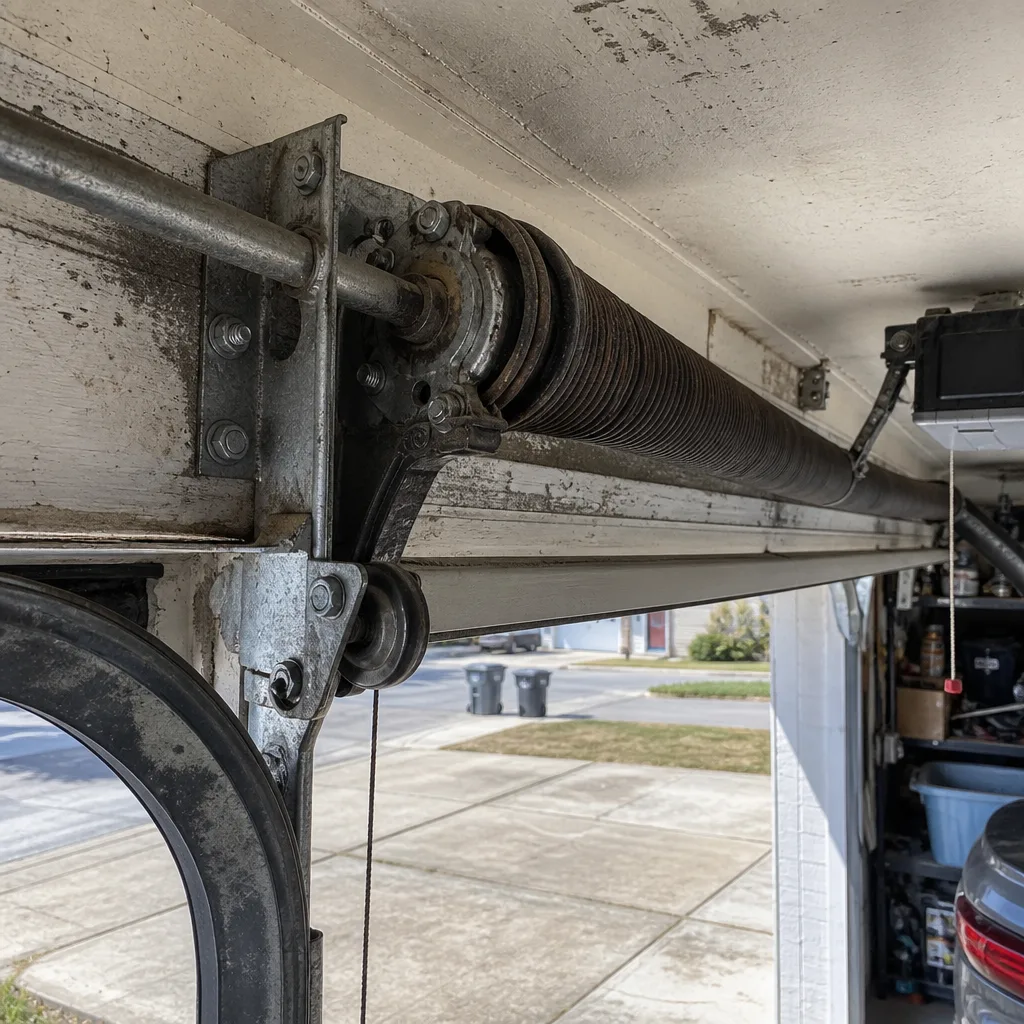 Before
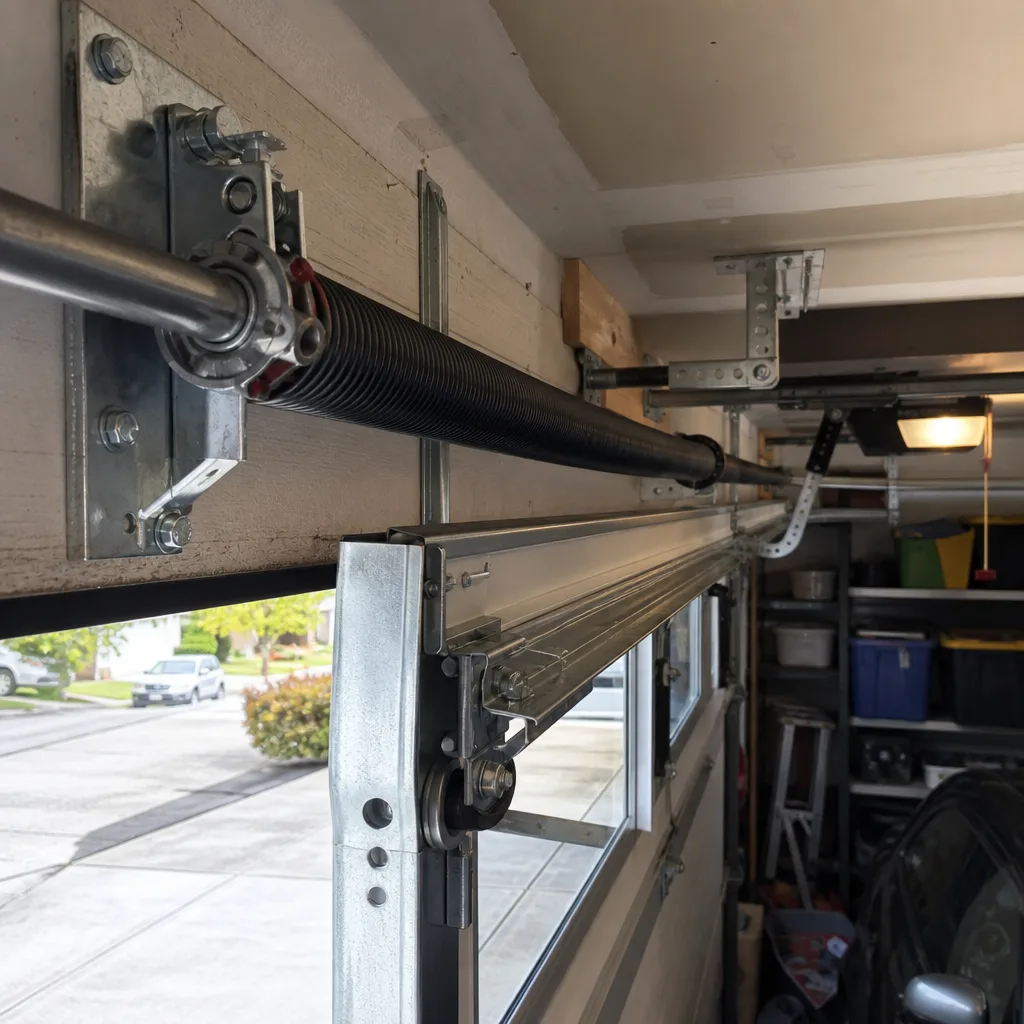 After
After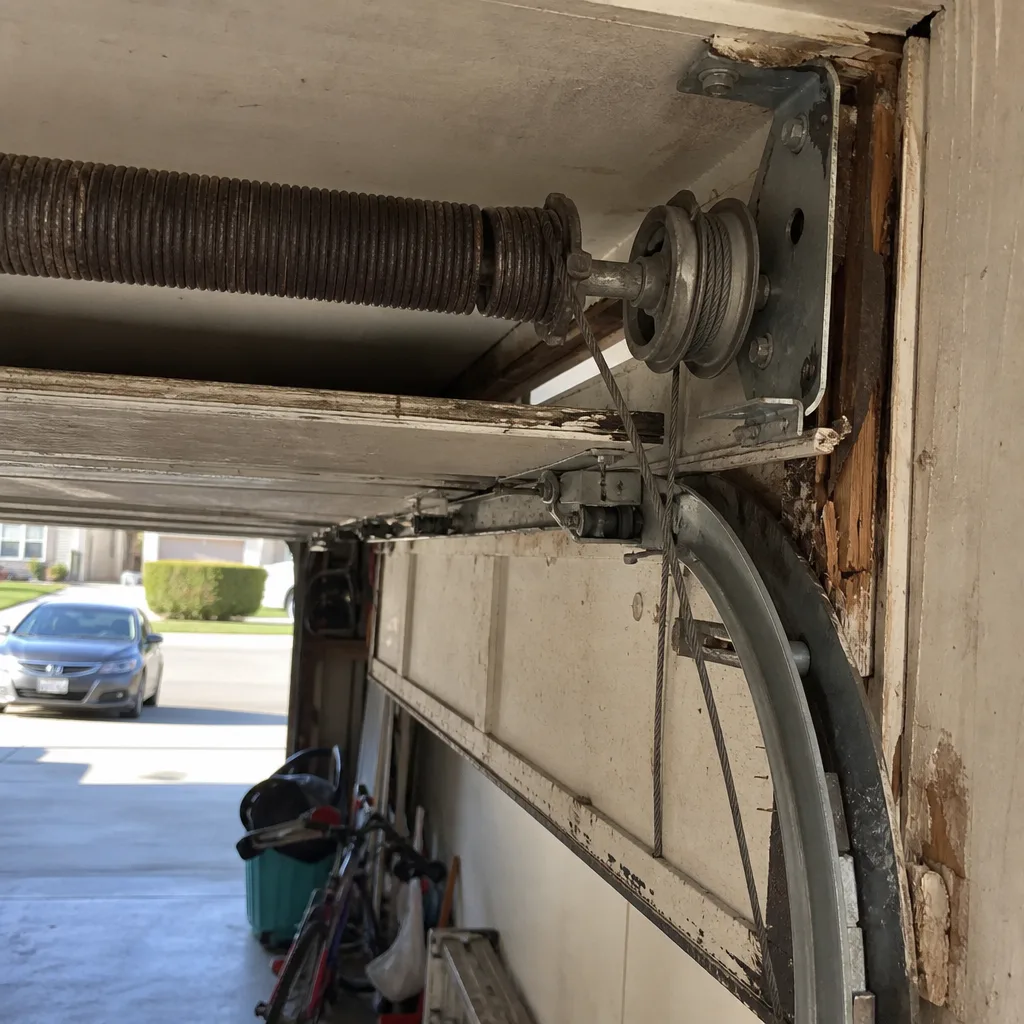 Before
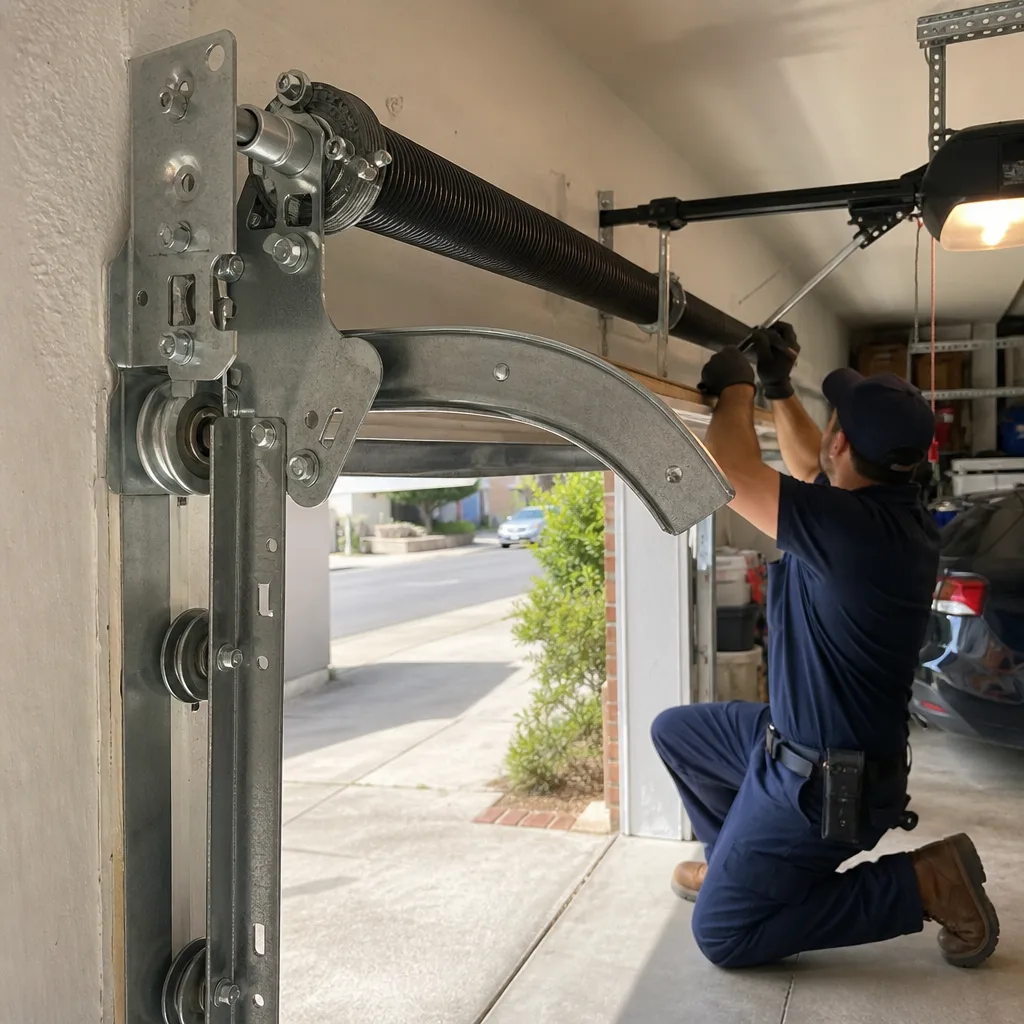 After
After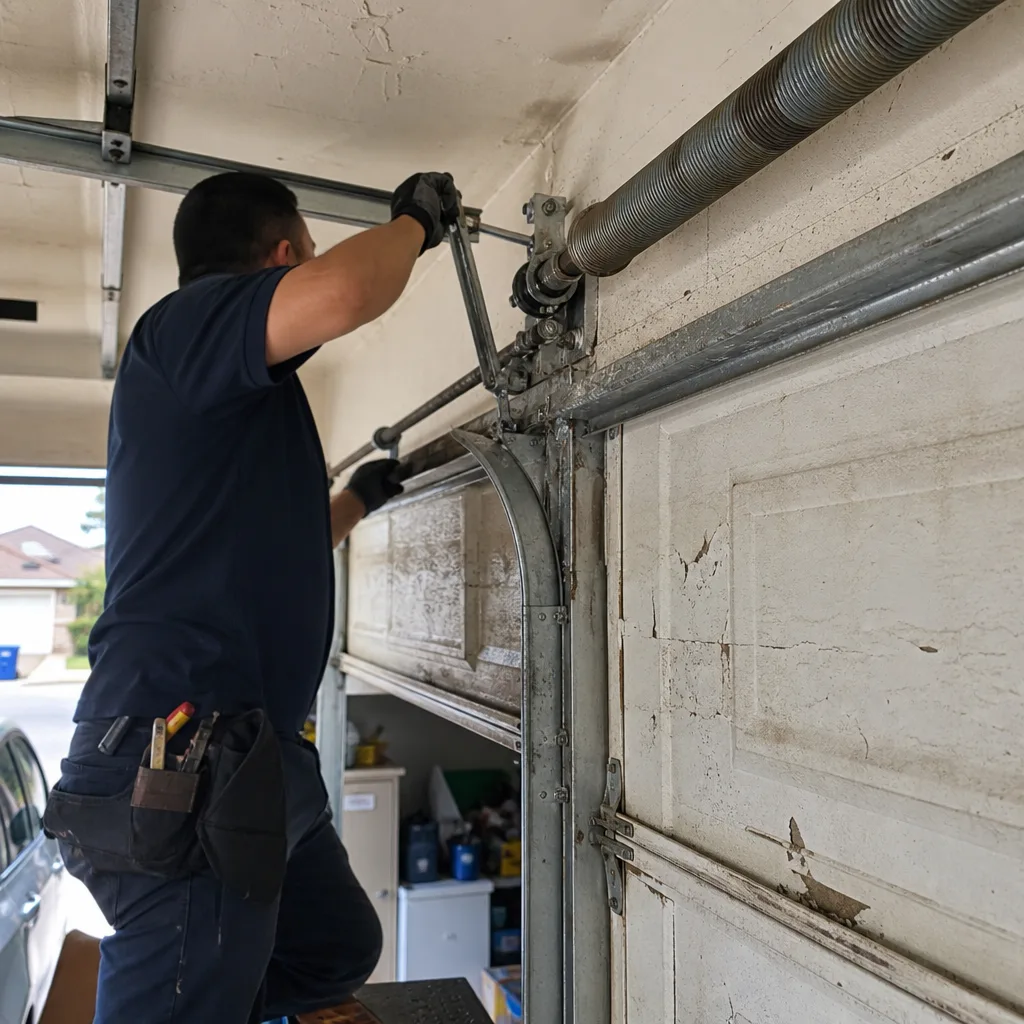 Before
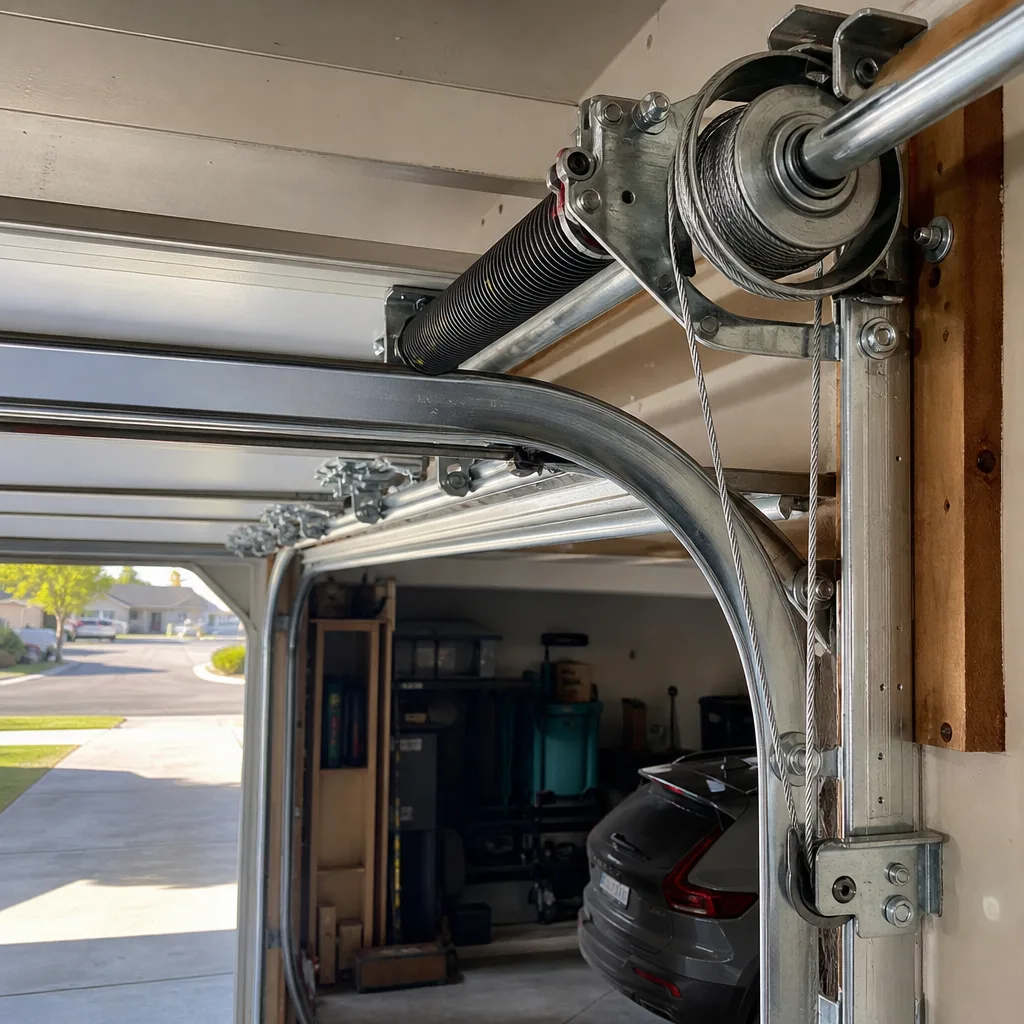 After
AfterThe Complete Guide to Garage Door in Hayward
Most garage door guides start with panel styles and color swatches. They skip the part where a seized $4 nylon roller snaps a $380 torsion spring because it froze mid-cycle on a January morning in the Hayward Hills. In our experience, that failure chain accounts for more emergency calls in Hayward than broken openers, off-track doors, and panel damage combined. This guide maps every component in your garage door system, what it costs when it fails, and how Hayward’s fog-belt climate and post-war housing stock make certain failures more likely than others.
Quick Answer
A garage door in Hayward is a mechanical system of 12 to 15 interdependent components, each with a documented service life, failure mode, and replacement cost. In Hayward’s coastal climate, galvanized hardware corrodes faster than powder-coated steel, nylon rollers absorb moisture and crack in winter, and torsion springs in uninsulated garages average 8 to 12 years versus 15+ in drier inland climates. A full system replacement on a typical Hayward ranch home runs $1,800 to $3,400 for a standard 16-by-7-foot steel sectional door, complete with hardware, opener, and permit-ready installation.
Table of Contents
- Anatomy of a Garage Door System: Component by Component
- How Hayward’s Fog Belt Climate Affects Your Door
- Sectional, Tilt-Up, and Roll-Up: What Works in Hayward Homes
- What Every Part Costs to Replace in Hayward
- Common Failure Chains and How to Spot Them Early
- How to Read a Garage Door Quote in Hayward
- Maintenance That Actually Extends Service Life
- Hayward Permits, Codes, and What Triggers Them
 Before
 After
AfterAnatomy of a Garage Door System: Component by Component
A garage door system is not a door. It is a counterbalanced lifting mechanism with a door attached. Understanding this distinction prevents the most expensive mistake we see in Hayward: replacing a perfectly good door panel when the real problem is a fatigued spring or a worn cable drum.
Here is every component that matters, what it does, and what its typical service life looks like in the Bay Area.
Torsion Spring System
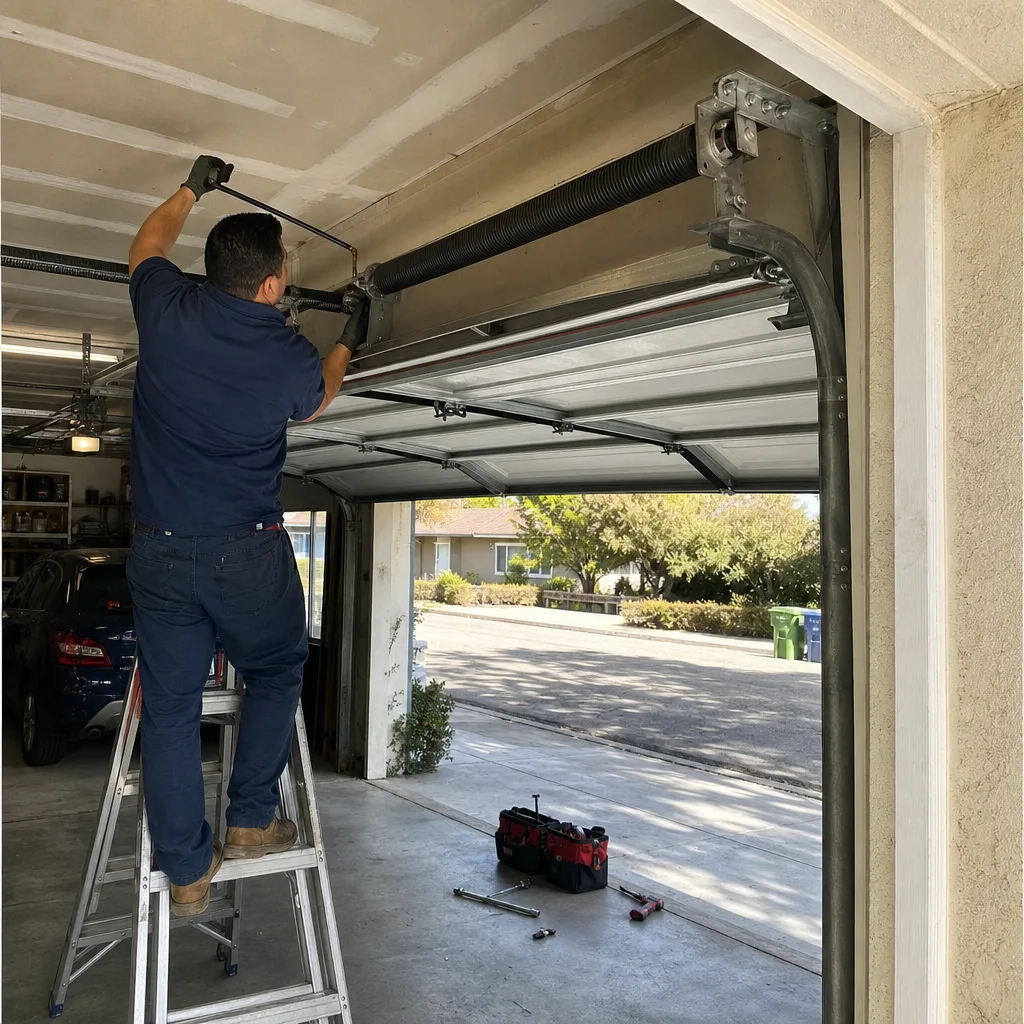
The torsion spring is a coiled steel shaft above the door header that stores mechanical energy. When the door closes, the spring winds tight. When it opens, the spring unwinds and lifts the door’s weight. A standard 16-by-7-foot steel door in Hayward weighs 150 to 200 pounds; without the spring, your opener would fail in months.
Torsion springs are rated in cycles - one open and one close. A standard spring is 10,000 cycles. At four cycles per day, that’s roughly 7 years. In Hayward, we see shorter lifespans in uninsulated garages where morning condensation accelerates surface corrosion. A rust-pitted spring can fail at 6,000 cycles without warning.
Replacement cost in Hayward: $180 to $340 for a standard single spring, $280 to $480 for a dual-spring system on heavier doors. This includes the spring, winding cones, and labor. We do not recommend DIY replacement; for a deeper look at this choice, see our DIY vs Professional Garage Door: The Hayward Homeowner’s Decision Guide. Torsion springs store lethal energy and require proper winding bars and training.
Extension Springs and Safety Cables
Older Hayward homes, particularly pre-1980 ranches in the Jackson Triangle and South Hayward, may still have extension springs mounted parallel to the horizontal tracks. These stretch and contract to lift the door. They are less precise than torsion springs and more dangerous when they fail, since a broken extension spring can become a projectile.
Safety cables run through the center of extension springs to contain them if they break. If your Hayward home still has extension springs without safety cables, this is a safety upgrade we recommend regardless of apparent condition.
Replacement cost: $140 to $260 for the pair, including safety cables if not present.
Cables and Cable Drums
Lift cables attach to the bottom corners of the door and wrap around drums at the ends of the torsion shaft. When the spring turns the shaft, the drums wind the cables and raise the door. Cables fray from abrasion against misaligned tracks and from corrosion at the bottom loop where they sit in track residue.
In Hayward’s humid months, we see cable corrosion accelerated in garages with poor ventilation, particularly in the flatlands near the bay where fog lingers until midday.
Replacement cost: $85 to $160 for cable replacement, $120 to $220 if drum replacement is also needed.
Rollers and Hinges
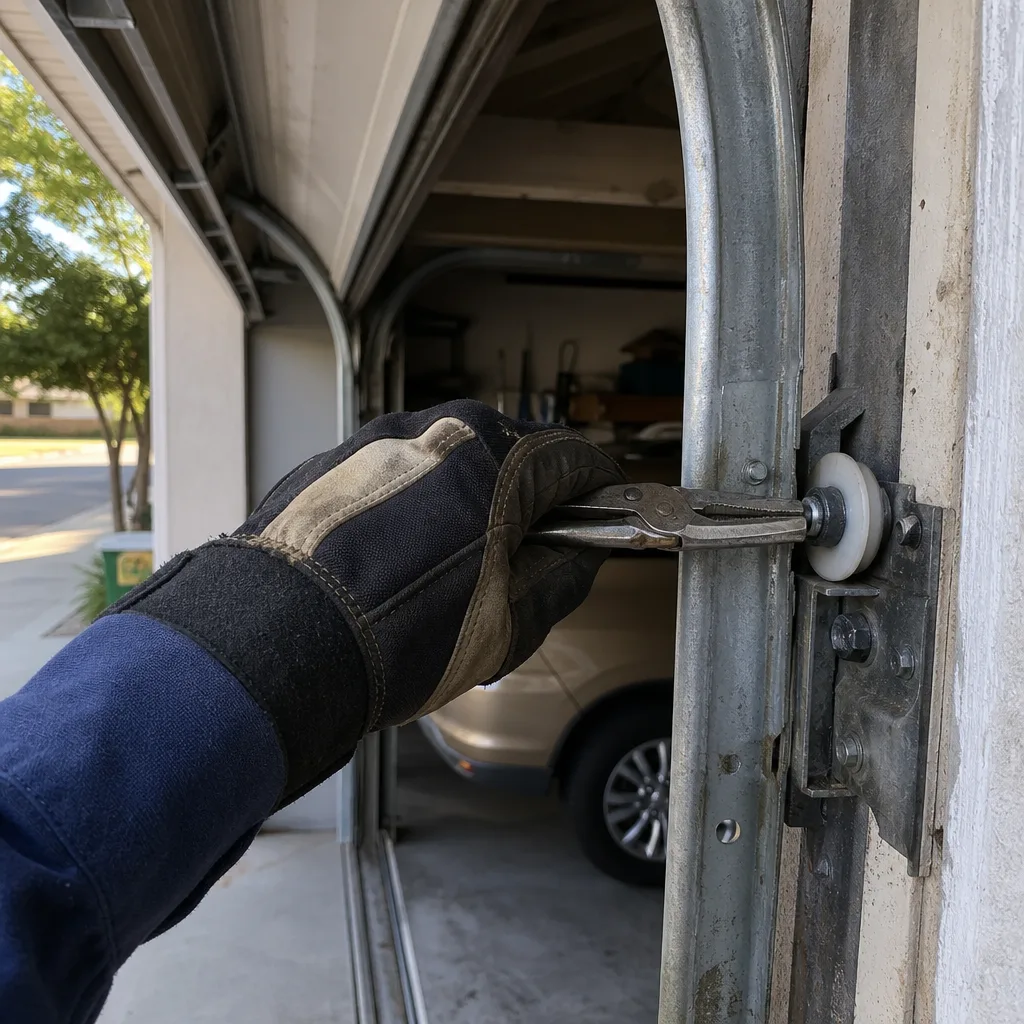
Rollers ride inside the vertical and horizontal tracks and carry the door’s weight during operation. Nylon rollers with sealed bearings are standard on quality doors; steel rollers are older and noisier. Hinges connect door sections and allow the door to bend around the track curve.
The critical detail: a seized roller forces the opener to work harder, which strains the spring, which eventually fails. In Hayward, nylon rollers absorb atmospheric moisture, swell slightly, and then crack when temperatures drop below 40°F. We’ve replaced rollers in January that measured intact in October.
Replacement cost: $8 to $15 per roller for standard nylon, $18 to $28 for heavy-duty sealed bearing rollers. Hinges run $12 to $22 each. A full 10-roller replacement on a standard door: $140 to $280.
Tracks and Track Hardware
The vertical track guides the door from closed to the curved transition; the horizontal track carries it back into the garage. Track brackets mount to the wall and ceiling joists. In Hayward’s older homes with post-and-beam garage ceilings or modified carports, track alignment issues are common because the original structure was not designed for modern door loads.
Track replacement cost: $220 to $400 for a standard two-car door, including realignment and hardware.
Garage Door Opener
The opener is an electric motor that drives a trolley along a rail, connected to the door by an arm. It does not do the heavy lifting; the spring does. The opener’s job is control and assistance. Chain-drive openers are durable but loud; belt-drive is quieter; screw-drive is rare now. Wall-mounted jackshaft openers, which attach beside the door and eliminate the ceiling rail, work well in Hayward homes with low ceilings or overhead storage.
Modern openers include safety sensors, a logic board (the computer), and a limit switch that tells the motor when to stop. The logic board is vulnerable to power surges, which are not uncommon in Hayward during winter storms.
Opener replacement cost: $380 to $720 installed for a standard belt-drive unit with Wi-Fi and battery backup. Jackshaft models run $580 to $980.
Safety Sensors and Photo Eyes
The two small boxes near the floor on either side of the door emit an invisible beam. If the beam breaks while the door is closing, the opener reverses. Misalignment, dirt, or spider webs in the sensor housing cause more “my door won’t close” calls in Hayward than actual opener failures.
Sensor replacement cost: $65 to $120.
Weatherstripping and Bottom Seal
The vinyl or rubber seal at the door’s bottom blocks water, debris, and rodents. In Hayward, UV exposure degrades vinyl faster than EPDM rubber. A failed bottom seal lets water pool at the door’s base, which corrodes the bottom panel and the lower track hardware.
Replacement cost: $45 to $85 for the seal itself, $85 to $140 if the retainer channel also needs replacement.
How Hayward’s Fog Belt Climate Affects Your Door
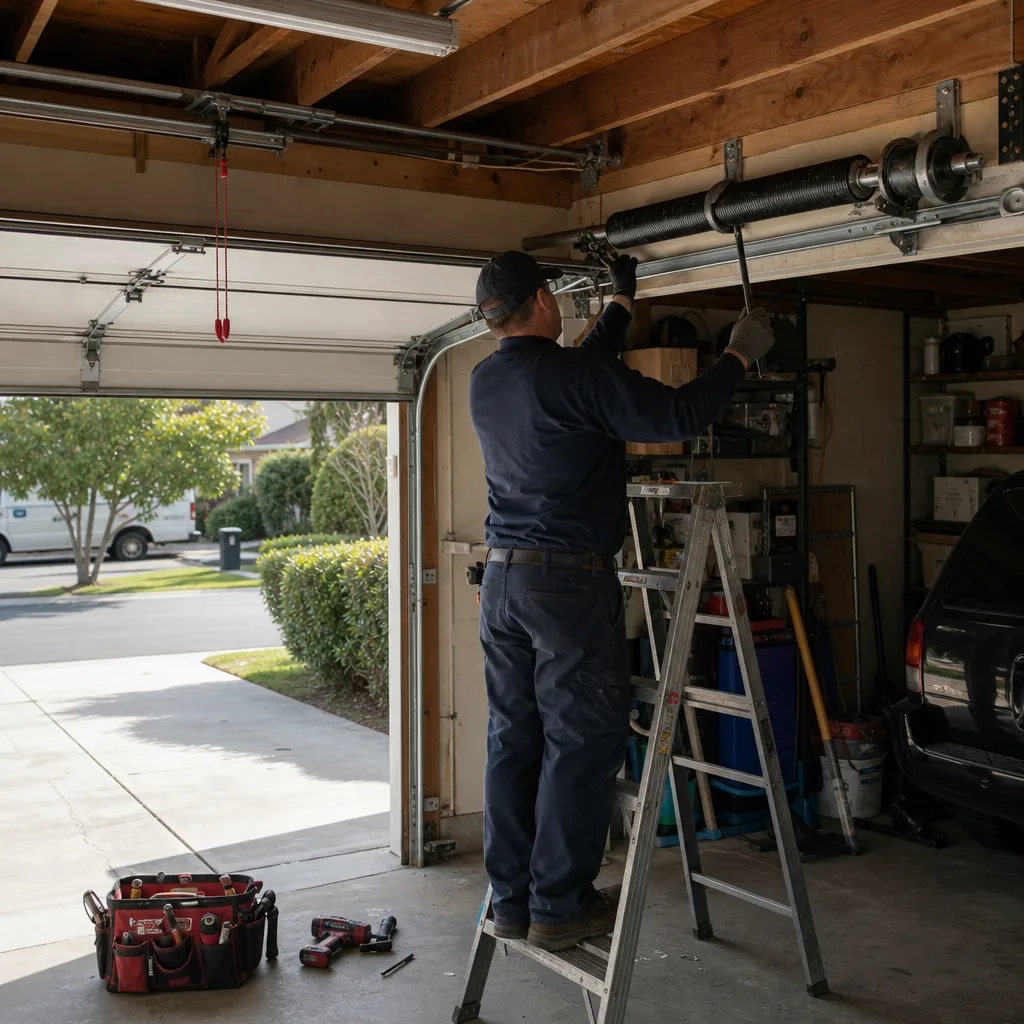
Hayward sits in the eastern reach of the Bay Area’s marine layer. Summer mornings often start at 55°F with 85% humidity. That moisture does not behave the same on every material.
Galvanized Hardware: The Hidden Cost
Galvanized steel hardware - springs, cables, track brackets - carries a zinc coating that protects against rust. In dry climates, galvanized hardware lasts 15 to 20 years. In Hayward’s persistent humidity, especially in garages without ventilation, we’ve measured galvanic corrosion advancing 30% faster than inland benchmarks. The zinc sacrifices itself first; once it’s depleted, the steel beneath rusts rapidly.
This is why we specify powder-coated or stainless hardware for coastal-adjacent Hayward installations, even when it adds $80 to $140 to the parts cost. The alternative is replacing a spring at year 8 instead of year 12.
Nylon vs. Steel Rollers in Humid Garages
Nylon rollers are quieter and standard on most modern doors. But nylon is hygroscopic; it absorbs water vapor and becomes brittle in cold snaps. In Hayward’s flatlands near the bay, we replace cracked nylon rollers every winter. Steel rollers do not absorb moisture, but they require periodic lubrication and are louder. For garages without climate control, we often recommend sealed-bearing steel rollers or high-density polyethylene alternatives.
Aluminum Panels: Light but Not Immune
Aluminum does not rust, which makes it attractive for coastal climates. But aluminum panels dent more easily than steel, and the alloy used in budget aluminum doors fatigues at hinge points over time. In Hayward’s wind-prone hills, particularly around Castro Valley Boulevard and the Palisades, we’ve seen aluminum panel distortion from sustained pressure against misaligned tracks.
Powder-Coated Steel: The Practical Middle
Powder-coated steel panels, properly galvanized beneath the coating, offer the best durability-to-cost ratio for Hayward. The powder coat blocks moisture contact with the galvanized substrate. Brands like Amarr and Wayne Dalton offer multi-layer powder systems rated for coastal exposure. We specify these for Hayward installations unless the customer specifically needs aluminum’s weight savings for an oversized custom door.
Sectional, Tilt-Up, and Roll-Up: What Works in Hayward Homes
Hayward’s housing stock is dominated by post-war ranch homes, 1960s split-levels, and 1980s subdivisions. Each era built garages with different clearances, and the door type must match the structure.
Sectional Doors: The Default for Modern Hayward
Sectional doors are the panels that bend around a track curve and rest parallel to the ceiling when open. They fit standard 7-foot or 8-foot ceiling heights and require 12 to 18 inches of headroom above the door opening for the track curve and opener rail.
Most Hayward homes built after 1970 have adequate headroom for sectional doors. In the Glen Eden and Santa Clara neighborhoods, where 1950s ranches were built with 6-foot-8 garage openings and minimal headroom, sectional doors still work with low-headroom track kits that compress the curve radius.
Typical installed cost in Hayward: $1,200 to $2,400 for a standard 16-by-7 steel sectional with standard opener. See our Garage Door Cost Breakdown: The Hayward Homeowner’s Reference for 2026 for detailed line-item pricing.
One-Piece Tilt-Up Doors: The Legacy Problem
Pre-1960 Hayward homes, particularly in the Jackson Triangle and near downtown, sometimes have one-piece tilt-up doors. These are a single slab that pivots outward and up on side-mounted jambs. They require significant driveway clearance and are heavy to operate manually.
Tilt-up doors are obsolete. Replacement parts are scarce. The hardware is not compatible with modern openers. We generally recommend converting to a sectional door, which requires reframing the opening and installing a new header and track system. This is a $2,400 to $4,200 project in Hayward, but it eliminates the ongoing maintenance burden of obsolete hardware.
Roll-Up Doors: Commercial and Specialty Residential
Steel roll-up doors coil around a drum above the opening. They require minimal headroom and side room, making them useful for Hayward’s narrow detached garages and ADU conversions. Residential roll-up doors are less common but appropriate where space is constrained. Insulated roll-up models work well for converted garage studios in Hayward’s growing ADU market.
Typical installed cost: $1,800 to $3,200 for a residential insulated roll-up.
What Every Part Costs to Replace in Hayward
Below is a structured reference for component replacement costs in the Hayward market. These ranges reflect our documented pricing as of 2024 and include labor. They assume a standard residential two-car door; single-car and oversized doors vary.
| Component | Typical Cost Range | Service Life in Hayward Climate |
|---|---|---|
| Torsion spring (single) | $180 - $340 | 8 - 12 years |
| Torsion spring (dual system) | $280 - $480 | 8 - 12 years |
| Extension spring pair with safety cables | $140 - $260 | 7 - 10 years |
| Lift cables (pair) | $85 - $160 | 10 - 15 years |
| Cable drums (pair) | $120 - $220 | 15 - 20 years |
| Nylon rollers (10, standard) | $140 - $280 | 5 - 8 years |
| Heavy-duty sealed rollers (10) | $280 - $420 | 12 - 15 years |
| Hinges (full set) | $85 - $160 | 15 - 20 years |
| Track system replacement | $220 - $400 | 20+ years |
| Bottom seal and retainer | $85 - $140 | 3 - 5 years |
| Safety sensor pair | $65 - $120 | 10+ years |
| Logic board (opener) | $120 - $220 | 10 - 15 years |
| Full opener replacement (belt drive) | $380 - $720 | 10 - 15 years |
| Full opener replacement (jackshaft) | $580 - $980 | 12 - 15 years |
These are the prices we quote in writing before any work starts, per Clause 1 of The Haven Standard. If a competitor’s written estimate falls outside these ranges significantly, our Free Second Opinion applies; bring the paperwork and we’ll itemize the difference.
Common Failure Chains and How to Spot Them Early
Garage door failures rarely happen in isolation. One component degrades, stresses the next, and the system cascades. Recognizing the early stage saves the later, more expensive stages.
Failure Chain 1: Seized Roller → Spring Fatigue → Spring Break
- A nylon roller absorbs moisture, swells, and binds in the track.
- The opener strains against the increased load, but the spring bears most of the excess.
- The spring cycles accumulate faster than rated because each cycle carries more load.
- The spring fails prematurely, often at an inconvenient hour.
Early sign: The door operates with a rhythmic jerk or visible hesitation at specific points in the travel. This is a roller binding, not a spring problem yet.
Failure Chain 2: Worn Cable → Door Off-Track → Panel Damage
- A lift cable frays at the bottom loop from corrosion.
- The cable snaps under load, usually when the door is partially open.
- The door drops unevenly, pulling out of the vertical track on one side.
- The door panel crimps or bends against the track edge.
Early sign: The door sits slightly crooked when closed, or one cable appears slack when the door is open. Inspect cables monthly; replacement is cheap, panel replacement is not.
Failure Chain 3: Misaligned Track → Roller Wear → Opener Logic Board Failure
- A track bracket loosens from vibration or wall anchor failure.
- The track shifts, increasing roller friction.
- The opener works harder, drawing more current.
- The logic board’s motor driver overheats and fails.
Early sign: The opener light flickers during operation, or the motor hums longer than usual before the door moves. This is electrical stress, not normal operation.
Failure Chain 4: Failed Bottom Seal → Water Intrusion → Bottom Panel Rust
- The bottom seal cracks or detaches.
- Rainwater or irrigation runoff enters the garage.
- The bottom panel’s interior steel skin rusts from the inside out.
- The panel weakens and dents, or the hinge attachment points fail.
Early sign: Visible daylight beneath the closed door, or water staining on the garage floor directly under the door center.
How to Read a Garage Door Quote in Hayward
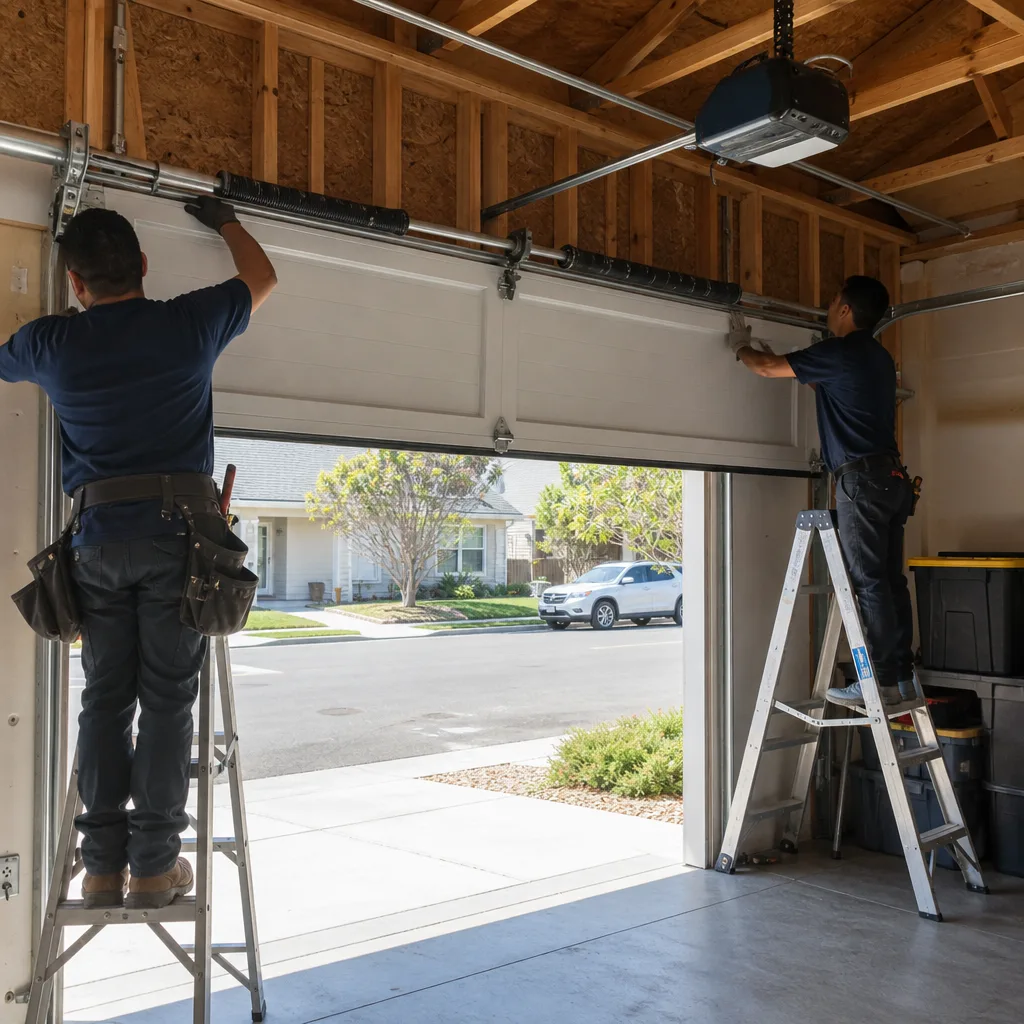
An incomplete quote is a common source of dispute. Here’s what a complete quote should itemize, and what its absence means.
The Minimum Itemization
A legitimate quote for door replacement or major repair should separate:
- Door and panels: Brand, model, gauge (for steel), insulation R-value, and finish warranty.
- Hardware kit: Springs, cables, rollers, hinges, track, and brackets. Specify if galvanized or powder-coated.
- Opener: Brand, drive type, horsepower, and features (battery backup, Wi-Fi, wall mount).
- Labor: Installation, removal, and disposal of the old door.
- Disposal fee: Some Hayward haulers charge separately for steel door recycling; this should be stated.
- Permit and inspection: Required for new door installations in Hayward; not required for repair.
- Tax: California sales tax applies to materials, not labor.
Red Flags in Hayward Quotes
“TBD” or “allowance” for hardware: This means the price will change. Per Clause 1 of The Haven Standard, we do not use allowances; the price is fixed before work starts.
No permit line item on installation: Hayward requires a building permit for new garage door installations. A quote that omits this is either uninformed or planning to skip it. Unpermitted work can complicate home sales and insurance claims.
Single-line “complete system” pricing: Without itemization, you cannot compare quotes or verify what you’re paying for. We itemize every quote down to the roller count.
No disposal specified: A steel door weighs 150 to 250 pounds. Someone must haul it. If disposal isn’t listed, ask who pays.
The Documented-Quote-First Process
Our process, codified in The Haven Standard, eliminates the “we found more damage once we opened it up” scenario. Here’s how it works:
- The technician inspects every component and photographs findings.
- The customer receives the photo record and a written scope with flat pricing.
- The customer approves the scope in writing before work begins.
- If additional issues are found during work, the technician stops, documents, and re-quotes before proceeding.
- The visit closes with a second photo record of completed work and a written warranty.
This is not customer service language. It is Clause 4 of The Haven Standard, and it is how we’ve operated since 2015.
Maintenance That Actually Extends Service Life
Most “garage door maintenance” advice is generic and ineffective. Here is what we document as effective in Hayward’s climate.
Quarterly: Visual Inspection
With the door closed, inspect cables for fraying, rollers for cracks, and hinges for elongation at bolt holes. Look for rust on the bottom 6 inches of the door and track hardware. In Hayward, this takes 5 minutes and catches 70% of preventable failures.
Bi-Annually: Lubrication of Moving Parts
Use a silicone-based lubricant on rollers, hinges, and the torsion spring. Do not use WD-40; it is a solvent, not a lubricant, and attracts dirt. In Hayward’s dusty summer conditions, we see gummed-up hinges from incorrect lubricants.
Apply a light coat to the spring coils, then cycle the door twice to distribute. Wipe excess; accumulated lubricant traps grit.
Annually: Balance Test
Disconnect the opener by pulling the red release cord. Manually lift the door to waist height and release. A properly balanced door stays in place. If it falls, the spring is weak. If it rises, the spring is over-wound. Both conditions strain the opener and accelerate wear.
Safety note: Do not attempt to adjust spring tension yourself. The stored energy is lethal. Call a technician.
Annually: Safety Reversal Test
Place a 2-by-4 board flat on the floor centered under the door. Close the door with the opener. It should reverse on contact. If it does not, the force limit is set too high or the opener is malfunctioning. This is a federal safety requirement; non-reversing openers should be serviced immediately.
As Needed: Track Alignment Check
Tracks should be plumb and parallel, with consistent spacing from the door edge. Check with a level if the door has been hit or if you notice rubbing. Misaligned tracks cause roller failure and, in extreme cases, door collapse.
Hayward Permits, Codes, and What Triggers Them
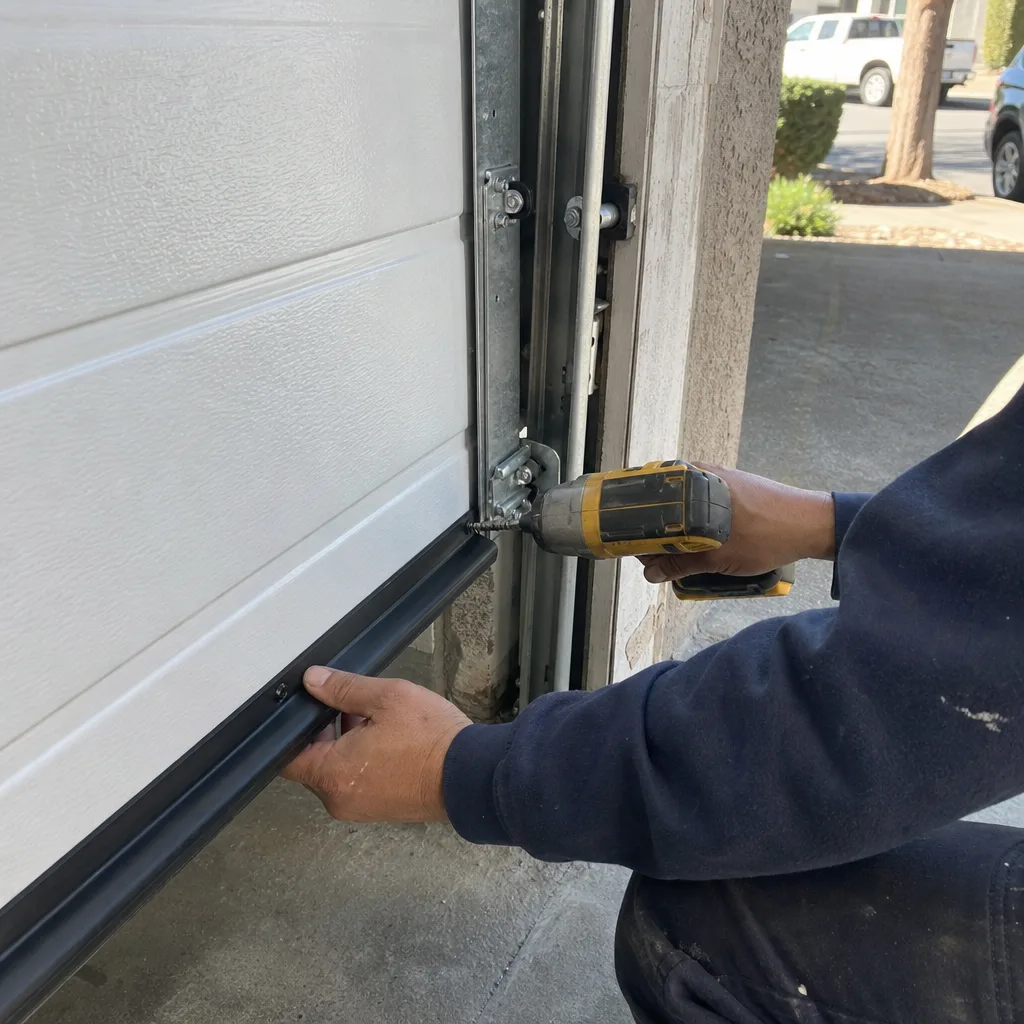
Hayward follows the California Building Code with local amendments. For garage doors, two situations trigger permit requirements.
New Installation or Replacement
A permit is required when a new door is installed in an existing opening or when the opening is modified. This applies to conversions from tilt-up to sectional, size changes, and structural modifications to the header or jambs. The permit ensures wind load compliance and proper egress for attached garages.
Permit cost in Hayward: typically $180 to $320 depending on project value. Inspection is required before final approval. We handle permit submission as part of our installation scope; the permit line item on our quote includes filing, scheduling, and correction of any inspector findings.
Structural Modifications
Widening a garage opening, modifying a load-bearing header, or converting a garage to living space triggers a more extensive permit process. These projects require engineered plans in Hayward and are outside standard door replacement.
What Does Not Require a Permit
Spring replacement, cable replacement, roller replacement, opener replacement, track realignment, and weatherstripping replacement do not require permits. These are classified as repairs, not alterations.
Wind Load and Fire-Rated Requirements
Hayward is in Wind Zone 1 (basic wind speed 85 mph) per ASCE 7-16. Standard residential doors meet this requirement. In the Hayward Hills and other exposed locations, we sometimes specify reinforced track and heavier-gauge doors for added margin.
Attached garages in Hayward require a 20-minute fire-rated door between the garage and living space, if such a door exists. This is a separate interior door, not the garage door itself, but it comes up in home sales and we note it when relevant.
Common Mistakes to Avoid
- Ignoring a noisy door. Grinding, squealing, or rhythmic thumping is not normal aging. It is a component failing in real time. In Hayward’s climate, a noisy roller becomes a broken roller in 2 to 6 months.
- Replacing the opener when the spring is weak. A weak spring forces the opener to overwork. The new opener fails in 18 months and the customer blames the opener brand. Test balance first.
- Buying a door online for self-installation. Online door sellers rarely account for Hayward’s specific headroom, track geometry, or wind load requirements. The “savings” evaporate in modification labor, incorrect parts, and voided warranties.
- Accepting a verbal estimate. Without written itemization, there is no record of what was promised. Per Clause 1 of The Haven Standard, we do not start work without a signed, written scope.
- Neglecting the bottom seal in winter. Hayward’s heaviest rains arrive December through February. A failed seal in October becomes floor damage in January. The seal is cheap; water damage is not.
- Assuming all springs are equal. Springs are specified by wire diameter, inside diameter, and length. A spring that fits physically may be the wrong weight rating. An incorrectly specified spring fails early and can damage the opener. We measure and specify springs by engineering calculation, not visual matching.
- Waiting for total failure. A broken spring traps your car. A broken cable drops the door unevenly and bends a panel. Preventive replacement of fatigued components costs less than emergency service plus panel repair.
When to Call a Professional
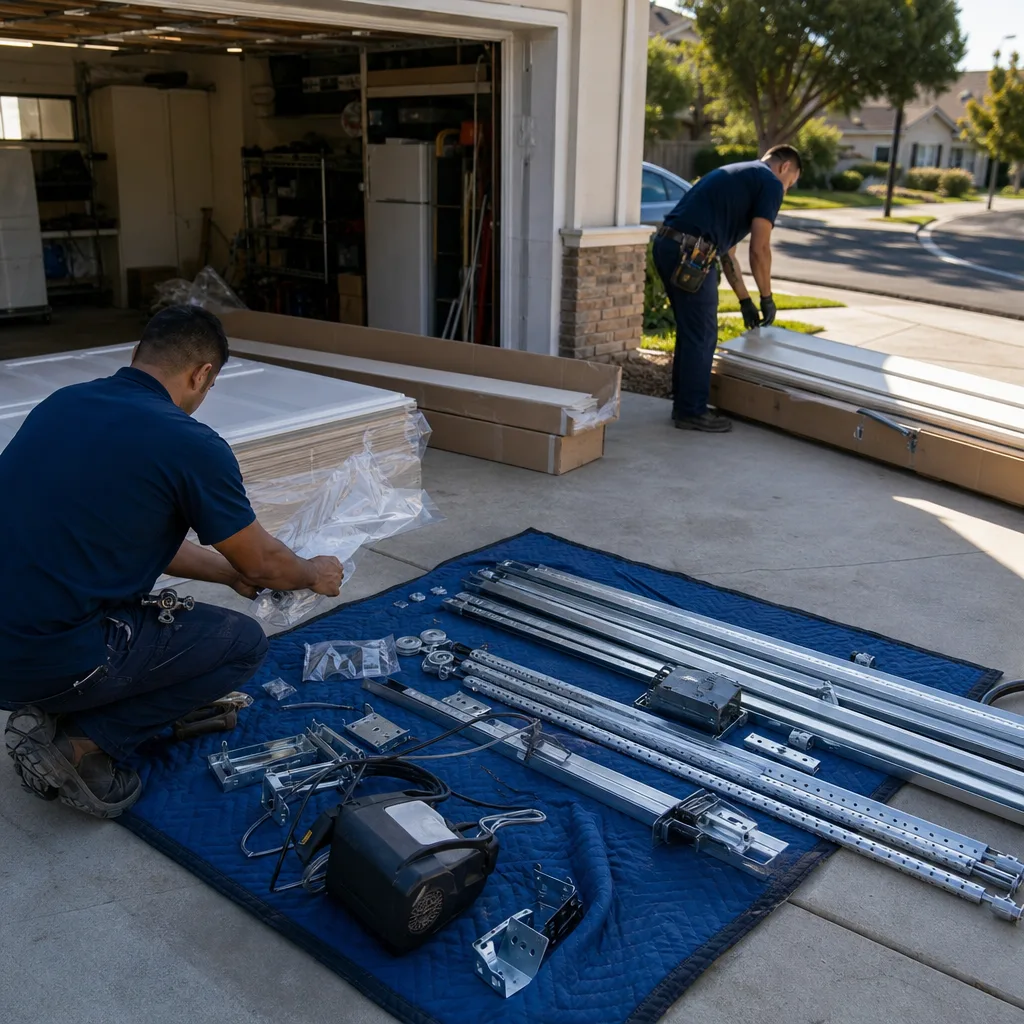
Call a technician if the door is unbalanced, if cables are frayed, if springs show rust or coil separation, if the opener reverses inconsistently, or if the door has left the track. Do not operate a door with a visible broken spring; the opener or remaining spring can fail catastrophically.
For high-tension spring work, cable replacement, or track realignment, the injury risk is genuine. These components store or transmit significant mechanical energy. A trained technician has the winding bars, clamps, and knowledge to control that energy.
Servo Garage Doors Hayward offers free estimates in Hayward. Every visit includes the documented photo record and written pricing before work begins. Call (510) 330-2488 to schedule.
Frequently Asked Questions
A complete replacement of a standard 16-by-7-foot steel sectional door, including hardware, standard belt-drive opener, removal, disposal, and permit, typically runs $1,800 to $3,400 in Hayward. Oversized doors, custom finishes, or jackshaft openers increase the range. We itemize every line before you approve; call (510) 330-2488 for a written estimate at your home.
Standard torsion springs last 8 to 12 years in Hayward’s humid coastal climate, compared to 12 to 15 years in drier inland areas. Uninsulated garages, poor ventilation, and galvanized (rather than powder-coated) hardware accelerate corrosion. We specify hardware for coastal exposure on every Hayward installation.
We do not recommend it. Torsion springs store lethal mechanical energy; improper winding or tool selection causes serious injury or death annually. Even extension springs under tension can become projectiles. A professional technician has the training, winding bars, and safety protocols. Our documented process includes the photo record of the failed part before quoting, per Clause 4 of The Haven Standard.
Noise indicates mechanical distress, not normal operation. Grinding suggests dry or failing rollers. Squealing indicates metal-on-metal contact where lubrication has failed. Rhythmic thumping often means a hinge is elongating or a roller is flat-spotted. In Hayward’s climate, these sounds precede failure by 2 to 6 months. Addressing them early prevents cascade damage to springs and openers.
Yes. The City of Hayward requires a building permit for new garage door installations and opening modifications. Repairs - springs, cables, rollers, openers, and weatherstripping - do not require permits. Our installation quotes include permit filing, scheduling, and inspector coordination.
We service and install all major brands: LiftMaster, Chamberlain, Genie, Craftsman, and Raynor, plus Clopay, Amarr, and Wayne Dalton door systems. Our technicians carry common parts for these brands and can source same-day for less common models.
No. Per Clause 1 of The Haven Standard, the written price and scope are fixed before work begins. If we encounter additional issues during the job, we stop, document with photographs, and present a separate written scope for your approval. We do not proceed with unapproved charges. This is how we’ve operated since 2015.
We answer calls live 24 hours a day, including holidays. Emergency calls in Hayward typically receive same-day response with a named technician and an on-the-way text. Non-emergency appointments are scheduled at your convenience. For emergency service, call (510) 330-2488.
The Bottom Line
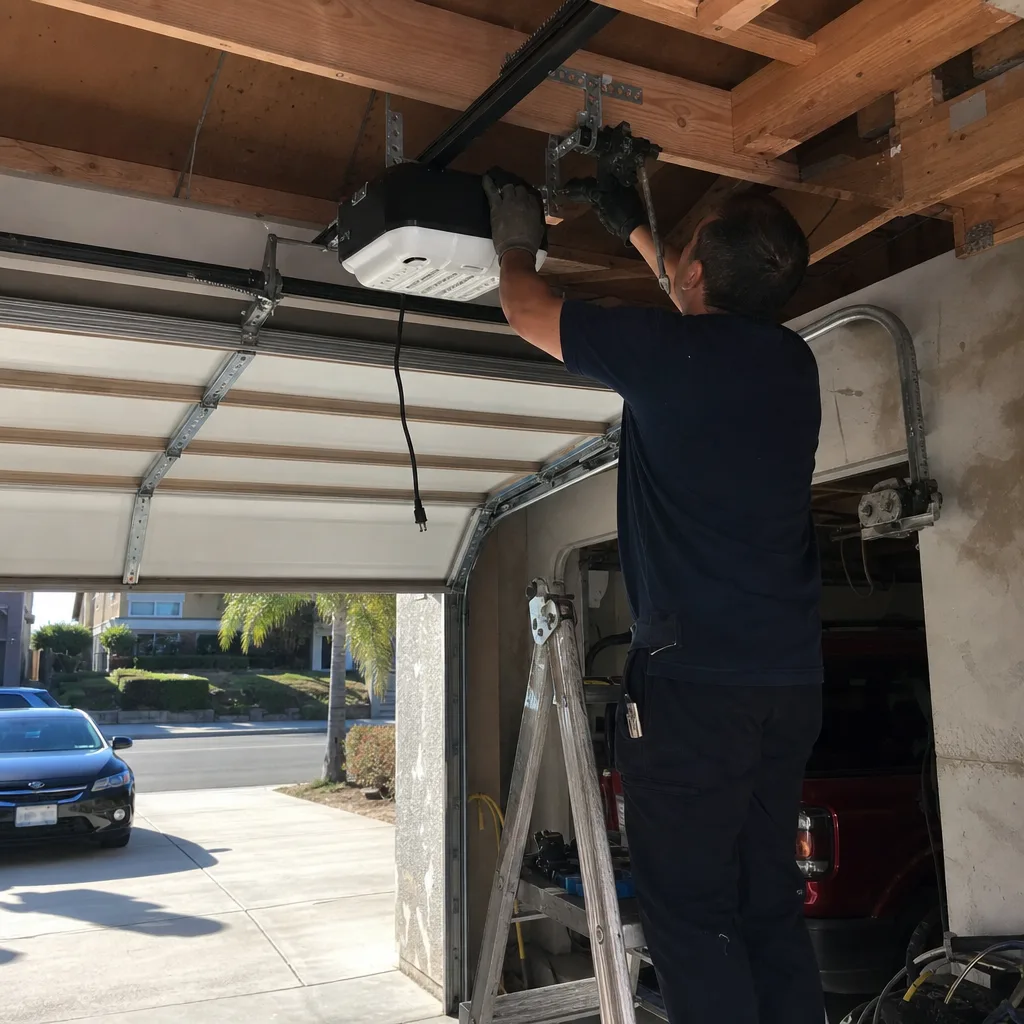
A garage door in Hayward is a system, not a single product. Every component has a service life, a failure mode, and a replacement cost that varies with material quality and local climate. Hayward’s fog-belt humidity accelerates corrosion on galvanized hardware, degrades nylon rollers in cold snaps, and makes ventilation and material specification more important than in drier markets.
The most expensive mistake is treating symptoms instead of systems: replacing an opener when the spring is weak, ignoring a noisy roller until it snaps the spring, or accepting an unitemized quote that hides true costs. The antidote is documentation: itemized quotes, photographed findings, and written warranties. That’s The Haven Standard, and it’s how Servo Garage Doors Hayward has operated since 2015.
For a free estimate with written, upfront pricing, call (510) 330-2488. Every visit includes the documented photo record, and every job is covered by our 365-Day Done Right Promise.
Written by Marcus Deller, Owner at Servo Garage Doors Hayward, serving Hayward since 2015.