
Last updated September 21, 2026
Full 25-point door and opener safety check with every visit - springs, cables, rollers, tracks, and your LiftMaster or Chamberlain opener included
You get a price before we start. It does not change when the truck arrives.
 Before
 After
After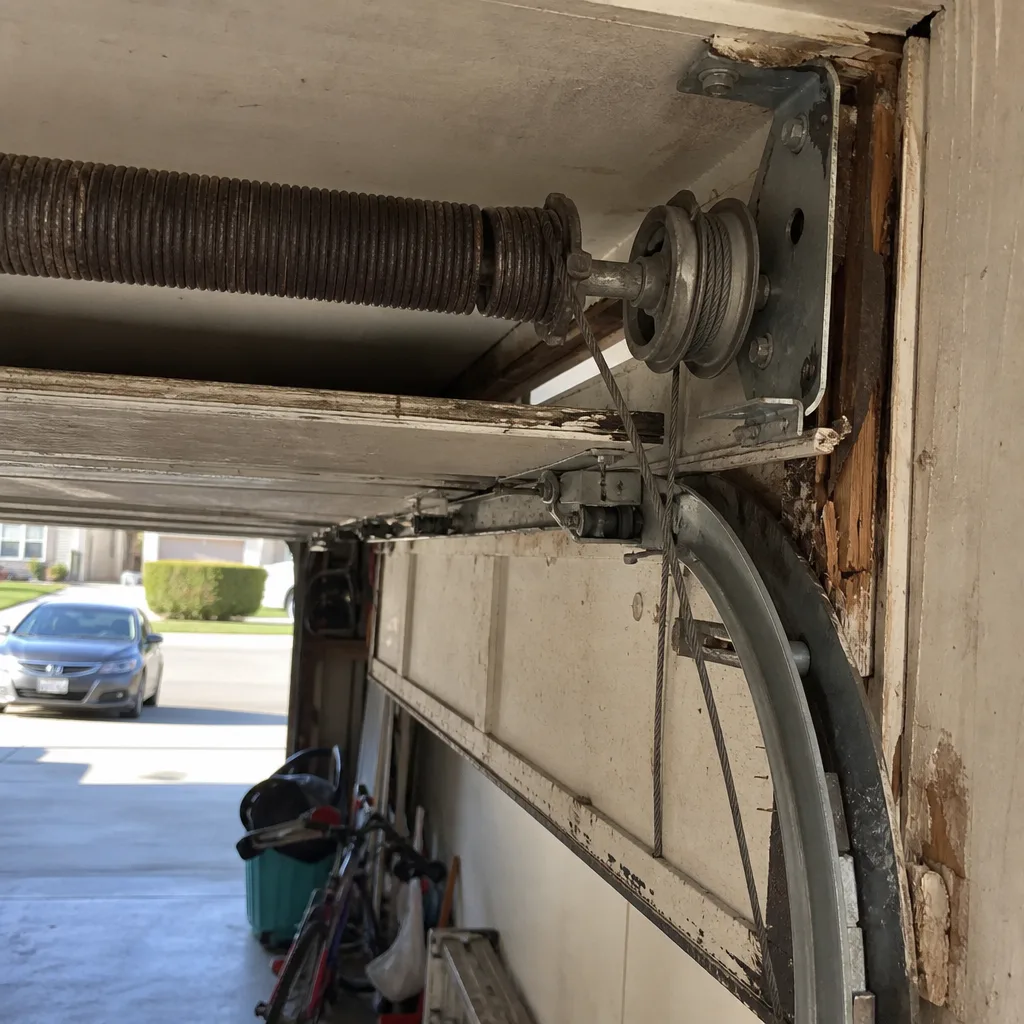 Before
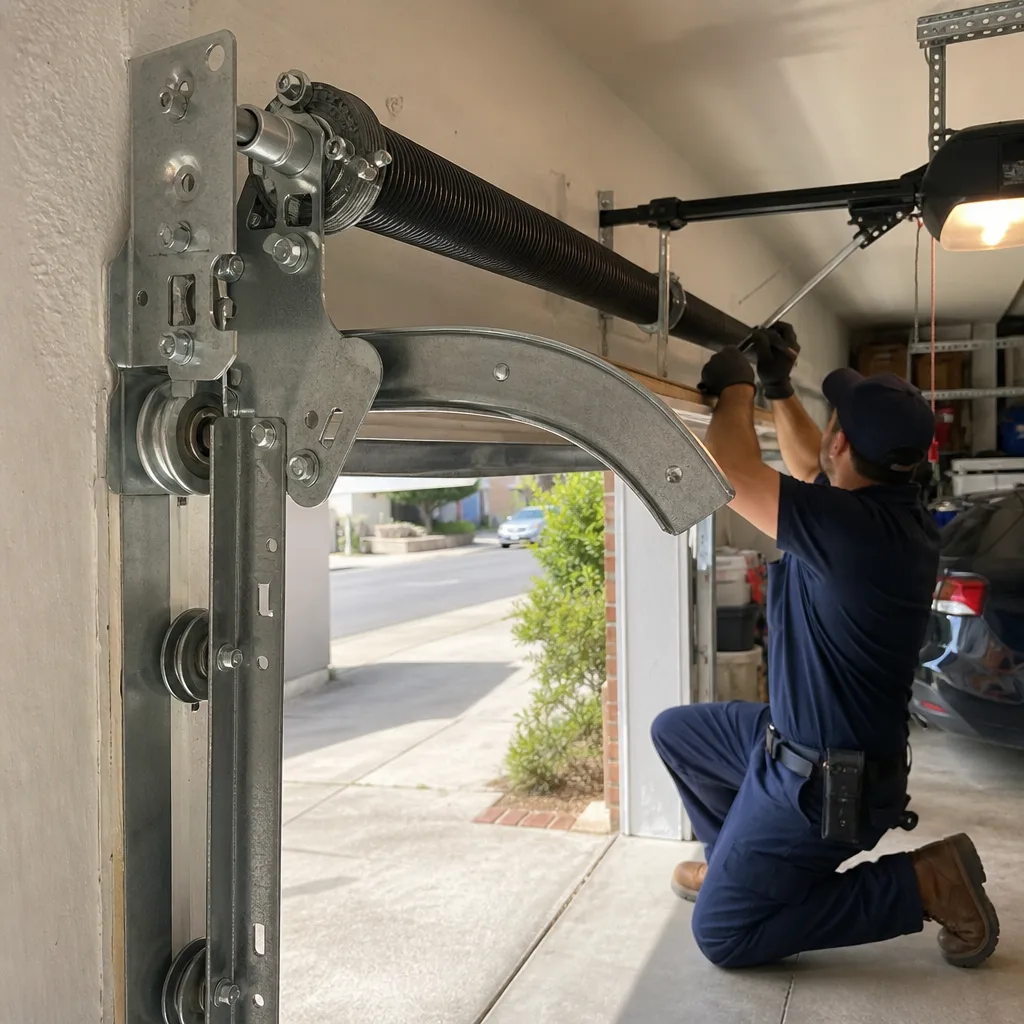 After
After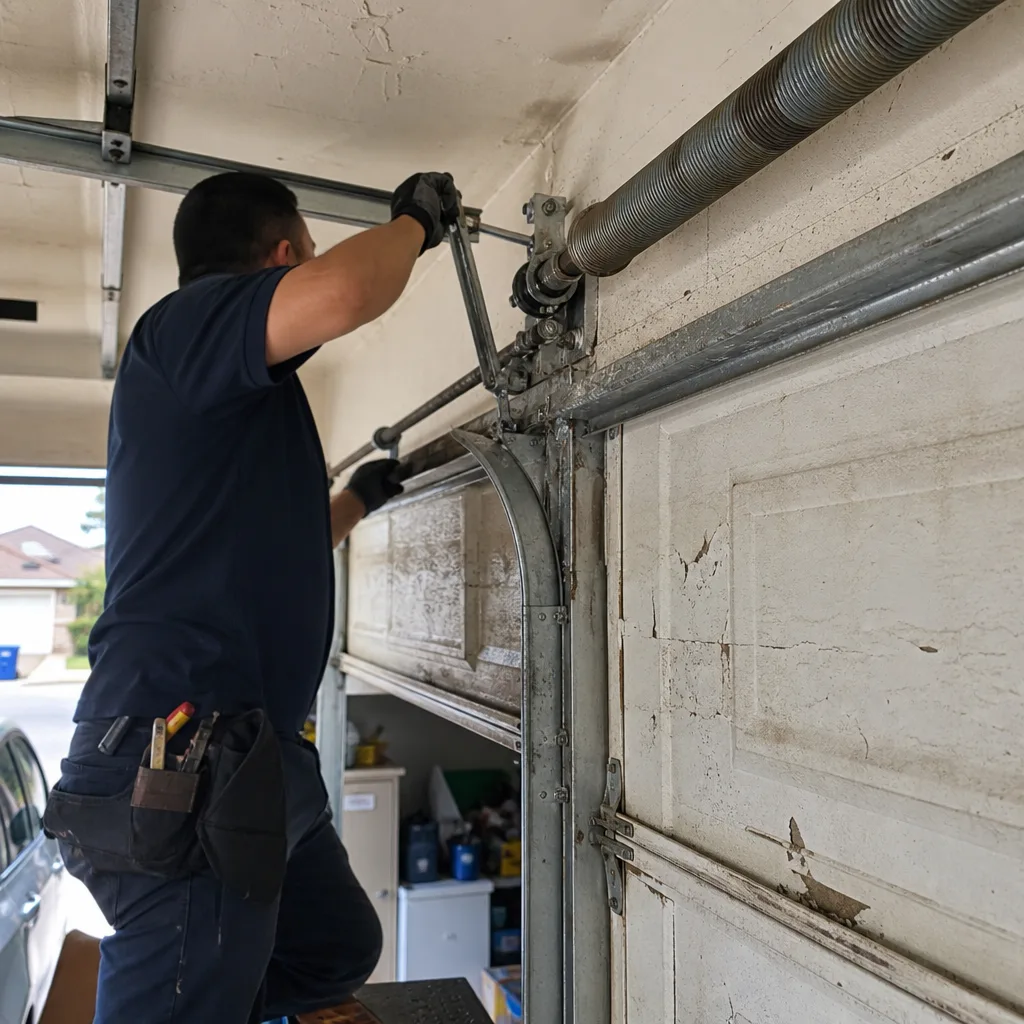 Before
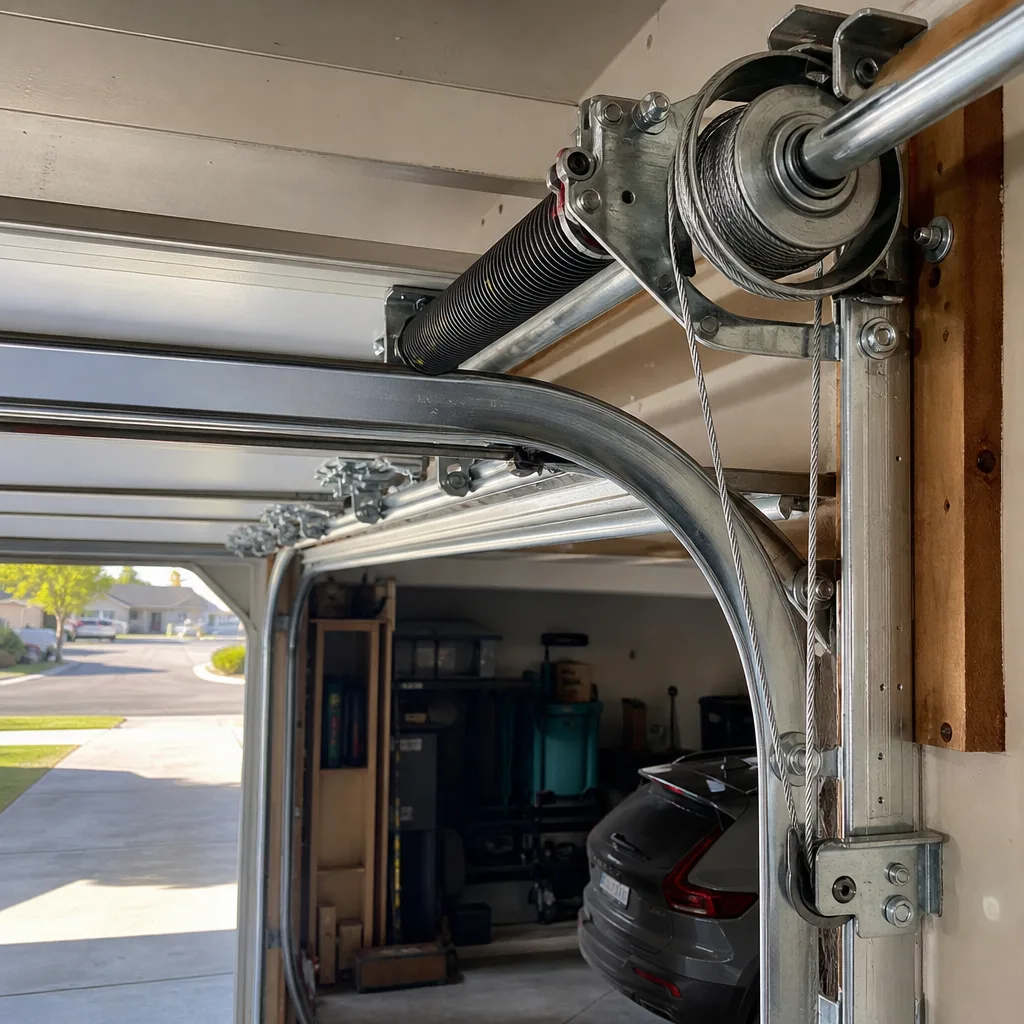 After
AfterSeasonal Garage Door Care for Hayward: Year-Round Homeowner’s Guide
A garage door that operates perfectly in July Hayward heat can bind in its tracks by October when the marine layer returns and the steel contracts. Not because anything broke, but because the track alignment was set for summer expansion. Hayward sits in a unique microclimate zone where the marine fog belt meets inland valley temperatures, creating two distinct weather phases rather than four conventional seasons. In this guide, you’ll learn how that climate pattern actually affects your garage door’s components, what specific measurements to check as temperatures shift, and a maintenance calendar built around Hayward’s real weather rhythm, not a generic template copied from a national brand. For more guides & resources on keeping your door reliable year-round, explore our Hayward-focused library.
Quick Answer
Garage door maintenance in Hayward should follow a two-phase schedule: inspect track alignment and weatherstripping every October when marine fog returns and steel contracts, then check spring tension and lubricate moving parts every May before the dry-heat period begins. Most Hayward homeowners need weatherstripping replacement every three to four years due to coastal humidity, and should verify track gap tolerance stays between 1/8 and 1/4 inch from the door panel as temperatures shift.
Table of Contents
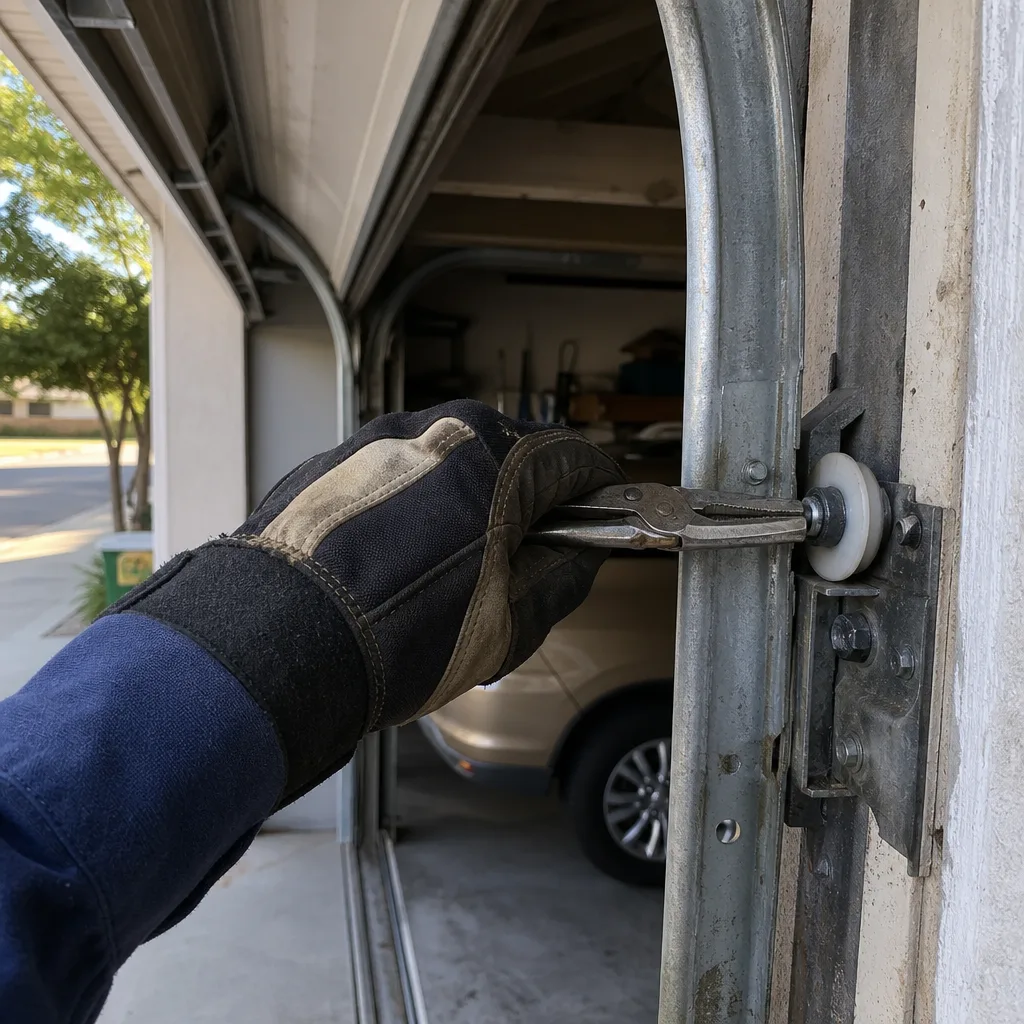
- Hayward’s Two-Phase Climate and What It Does to Your Garage Door
- Summer Dry Period: Expansion, UV, and Dust
- Wet Season: Contraction, Corrosion, and Spring Tension Drift
- Track Gap Tolerance: The Measurement That Prevents Binding
- Weatherstripping Timeline in Coastal Humidity
- Month-by-Month Maintenance Calendar for Hayward
- Spring Tension Drift: Early Warning Signs
- What You Can Check Yourself vs. What Needs a Technician
 Before
 After
AfterHayward’s Two-Phase Climate and What It Does to Your Garage Door
Hayward doesn’t experience four distinct seasons. It experiences two primary weather phases: a summer dry period from roughly May through September, and a wet season from October through March with a short transitional window in April. This matters because the components in your garage door system, a garage door repair in Hayward specialist sees daily, respond to temperature and humidity in predictable ways that national maintenance checklists ignore.
The summer dry period brings inland heat that can push Hayward garage temperatures above 90°F by mid-afternoon. Steel tracks expand. Aluminum door panels grow slightly in length. Lubricants thin out. UV radiation degrades rubber weatherstripping on south- and west-facing doors faster than the national average.
Then October arrives. The marine layer reasserts itself. Morning fog rolls through neighborhoods like Glen Eden and Fairway Park, and relative humidity climbs from summer lows near 40% to winter highs above 80%. Steel contracts. The track alignment that was perfect in August now sits tight against the rollers. In our experience serving Hayward since 2015, we see a measurable spike in “my door is sticking” calls every October, not because anything failed, but because the system was calibrated for summer dimensions.
The coastal influence is real but variable. Homes near the Hayward Shoreline experience more salt air exposure than properties up in the Hayward Hills. That salt accelerates corrosion on bottom brackets and cable drums. We’ve documented this in our photo records, Clause 4 of The Haven Standard: the technician photographs the failed part before quoting a replacement. In Shoreline neighborhoods, we routinely see oxidation patterns on hardware that inland Hayward homes don’t match.
Understanding this two-phase pattern is the foundation of everything that follows. The maintenance tasks, the inspection timing, and the replacement intervals all derive from Hayward’s actual climate, not a generic four-season template. See The Complete Guide to Garage Door in Hayward for a deeper look at local installation and care fundamentals.
Summer Dry Period: Expansion, UV, and Dust
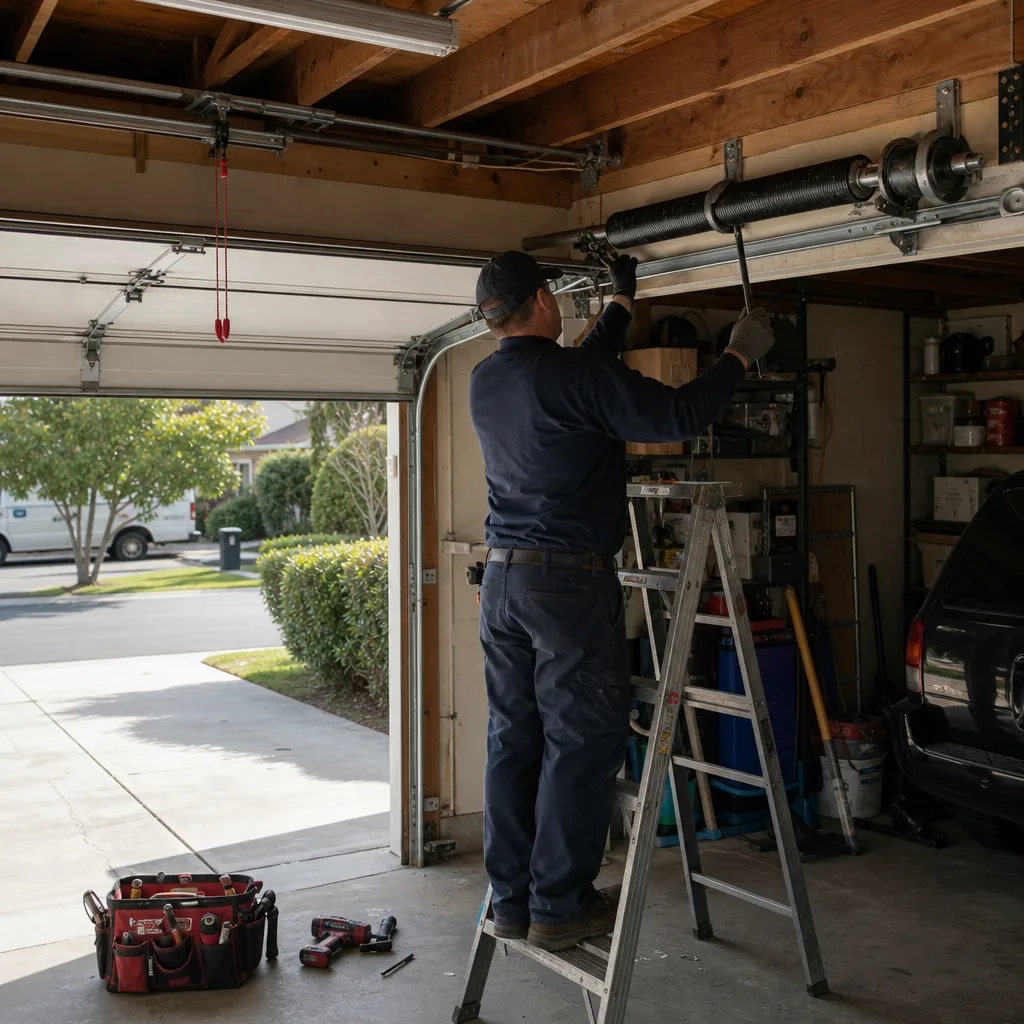
From May through September, Hayward’s garage doors face three specific stressors: thermal expansion, UV degradation, and particulate accumulation from dry conditions.
Thermal Expansion in Tracks and Panels
Steel expands approximately 0.00000645 inches per inch per degree Fahrenheit. A 16-foot wide garage door track heated from 65°F to 90°F gains roughly 0.03 inches in length. That seems negligible, but the horizontal track’s mounting bracket position relative to the vertical track’s curve determines roller clearance. When we install or adjust garage door installation in Hayward, we set track gap with summer expansion in mind, leaving the door slightly looser in the track than a Minneapolis installer would.
The symptom of summer-expansion-related binding is specific: the door operates smoothly in morning cool but drags or slows at peak afternoon heat. The rollers are riding tight against the track’s inner surface because the expanded track has reduced clearance. If your door shows this pattern, the track alignment needs adjustment for Hayward’s temperature swing, not lubrication.
UV Degradation of Weatherstripping
South- and west-facing garage doors in Hayward receive intense afternoon sun. The UV breaks down the rubber polymer in bottom seals and side jamb weatherstripping. The material hardens, cracks, and loses its compression set. By late August, you may notice daylight visible under the door, or the seal no longer conforms to floor irregularities.
UV damage is cumulative and irreversible. Once the rubber surface shows checking (fine surface cracks), replacement is the only fix. We document this with dated photos in every service record, per The Haven Standard.
Dust and Particulate Accumulation
Hayward’s dry summers mean dust. The rolling code systems in modern openers, particularly LiftMaster and Chamberlain models, are sealed units, but the safety sensors at the door base are not. Dust accumulation on the photo-eye lenses causes intermittent “door won’t close” complaints that spike in September. The fix is simple: wipe the lenses with a clean, dry cloth. But the diagnostic path matters, because homeowners often assume sensor failure when it’s just dust.
Summer inspection checklist:
- Check track gap at 2 p.m. on a hot day, not morning, to verify clearance at maximum expansion
- Inspect weatherstripping for UV checking on sun-facing sides
- Clean safety sensor lenses with dry cloth
- Verify opener motor housing ventilation grilles are clear of dust buildup
- Listen for motor strain during afternoon operation versus morning operation
Wet Season: Contraction, Corrosion, and Spring Tension Drift
October through March in Hayward brings the marine layer, rainfall concentrated in December through February, and temperatures that rarely freeze but frequently drop into the 40s. These conditions create distinct failure modes.
Contraction and Binding
As temperatures drop, steel contracts. The track gap set for summer expansion now becomes excessive, but paradoxically, the door often binds more, not less. This happens because the vertical track’s curve radius changes slightly with contraction, altering the roller entry angle. The door may “clunk” at the transition from vertical to horizontal, or the top roller may drag on the track’s outer edge.
In the Hayward Hills, where overnight lows run 5-10 degrees cooler than the flatlands, we see this pattern more frequently. The temperature differential between a cold garage interior and afternoon sun-warmed exterior track can also create temporary binding on east-facing doors.
Corrosion Acceleration
Hayward’s wet season humidity, combined with salt air near the Shoreline, accelerates corrosion on unprotected steel components. Bottom brackets, where the cable attaches to the door, are particularly vulnerable because they’re close to the floor where moisture accumulates. Cable drums on the torsion spring shaft can develop surface oxidation that increases friction and uneven lift.
We inspect these components with every service call, documenting condition with photos. When we quote replacement, the customer sees the corrosion pattern that justifies the recommendation, Clause 4 of The Haven Standard.
Spring Tension Drift
This is the most consequential wet-season phenomenon and deserves its own section below. Briefly: cold-wet conditions increase spring brittleness and alter the torque output of the torsion spring system. The door slows, the motor strains, and within four to six weeks, a break becomes likely if the spring was already near its cycle limit.
Wet season inspection checklist:
- Check track gap at 7 a.m. on a foggy morning for minimum clearance
- Inspect bottom brackets and cable drums for corrosion with flashlight
- Operate door by hand (disconnected from opener) to feel for binding or imbalance
- Listen for motor strain or slower travel speed
- Verify weatherstripping seals completely against floor after rain
Track Gap Tolerance: The Measurement That Prevents Binding
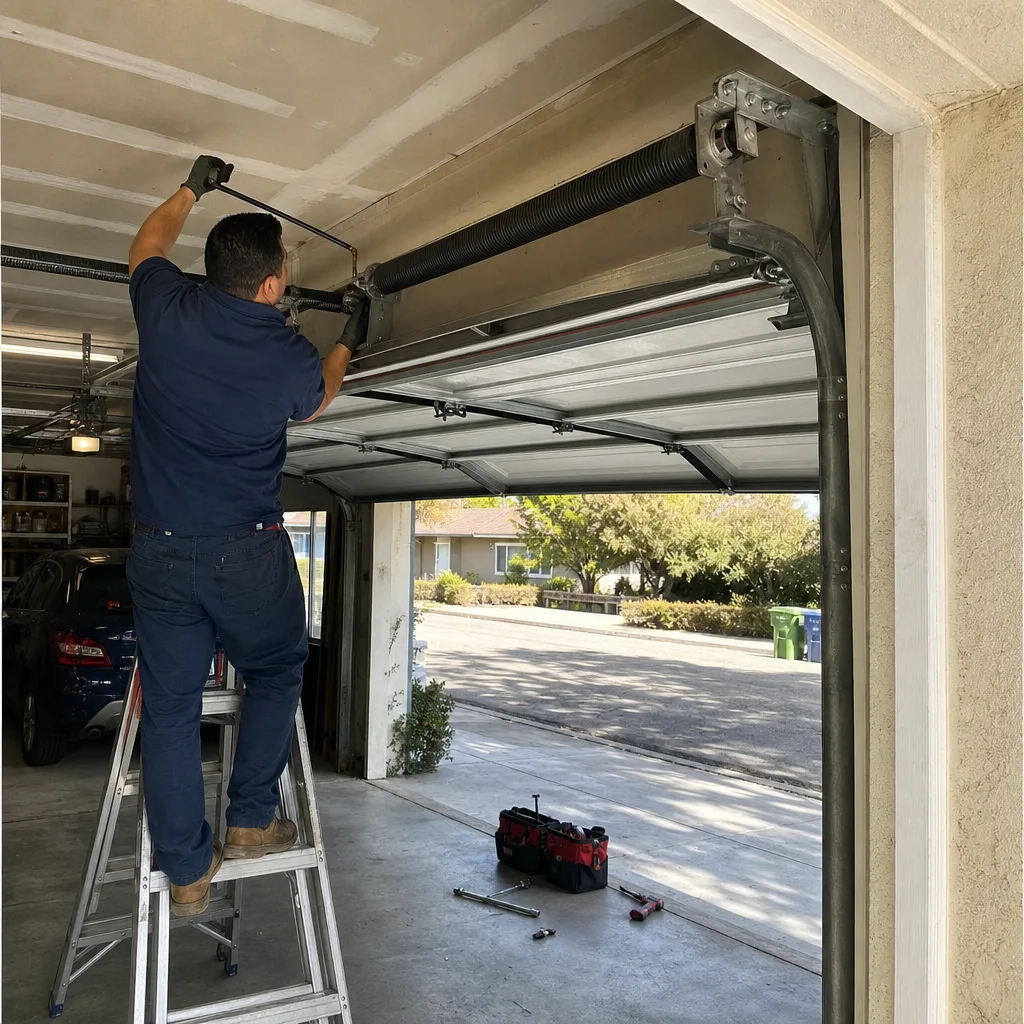
The critical specification for Hayward garage doors is track gap tolerance: the distance from the door panel face to the vertical track’s inner surface. This should measure between 1/8 inch and 1/4 inch when the door is in the closed position.
Here’s why this range matters for Hayward specifically. At 1/8 inch, you have minimum clearance for summer expansion without roller contact. At 1/4 inch, you have maximum clearance before the roller starts riding the track’s outer edge during wet-season contraction, which causes the door to wobble or the roller to pop out.
National installation manuals often specify 1/4 to 1/2 inch. That wider range works in climate-controlled environments or regions with smaller temperature swings. In Hayward, 1/2 inch is too loose. We’ve documented doors with that specification developing roller derailment during October’s first marine layer event, particularly on 16-foot wide double doors where the track length amplifies any alignment issue.
How to Measure Track Gap
- Close the door completely and disengage the opener (pull the red release cord)
- Measure from the door panel face to the vertical track’s inner surface at three points: bottom, middle, and top
- Record all three measurements; they should be consistent within 1/16 inch
- Repeat measurement at 2 p.m. on a hot day and 7 a.m. on a cool morning to determine your thermal drift range
If your thermal drift exceeds 1/16 inch between summer and winter measurements, the track mounting brackets need slotted-hole adjustment or the vertical track itself may be out of plumb. This is adjustment work, not replacement, and should be quoted as such. At Servo Garage Doors Hayward home, we provide a flat, written price for track alignment before any work begins, per Clause 1 of The Haven Standard.
The photo record matters here. We photograph the gap measurement, the bracket position, and the final adjusted state. The customer has dated evidence of what was found and what was changed.
Weatherstripping Timeline in Coastal Humidity
National sources typically state garage door weatherstripping lasts five years. In Hayward, three to four years is the realistic interval, and south- or west-facing doors may need replacement sooner. For detailed pricing on materials and labor, see Garage Door Cost Breakdown: The Hayward Homeowner’s Reference for 2026.
The difference is humidity plus UV. The marine layer keeps rubber compounds in a semi-swollen state for months, accelerating the loss of compression set, the material’s ability to spring back after compression. Then summer UV attacks the already-fatigued polymer structure. The result is weatherstripping that looks intact from a distance but no longer seals effectively.
Signs Replacement Is Needed
- Visible daylight under the door when closed
- Water pooling inside the garage after rain, not just near the seal edge but tracked inward
- Hard, shiny surface on the rubber, loss of matte texture
- Cracking or chunking, particularly at the corners where the bottom seal meets the side jambs
- Insect or rodent entry, which exploits gaps the seal no longer closes
In Fairview Park and other neighborhoods with older homes, we sometimes find original weatherstripping from the 1990s still in place. The material has fossilized into a hard strip that provides no compression at all. The homeowner adapted by accepting the draft and the occasional mouse. Replacement transforms the garage’s climate separation.
The correct replacement material for Hayward is EPDM rubber or high-grade vinyl with UV inhibitors, not the cheapest PVC option. We specify the material in our written scope, per Clause 1, and photograph the old and new states for the record.
Month-by-Month Maintenance Calendar for Hayward
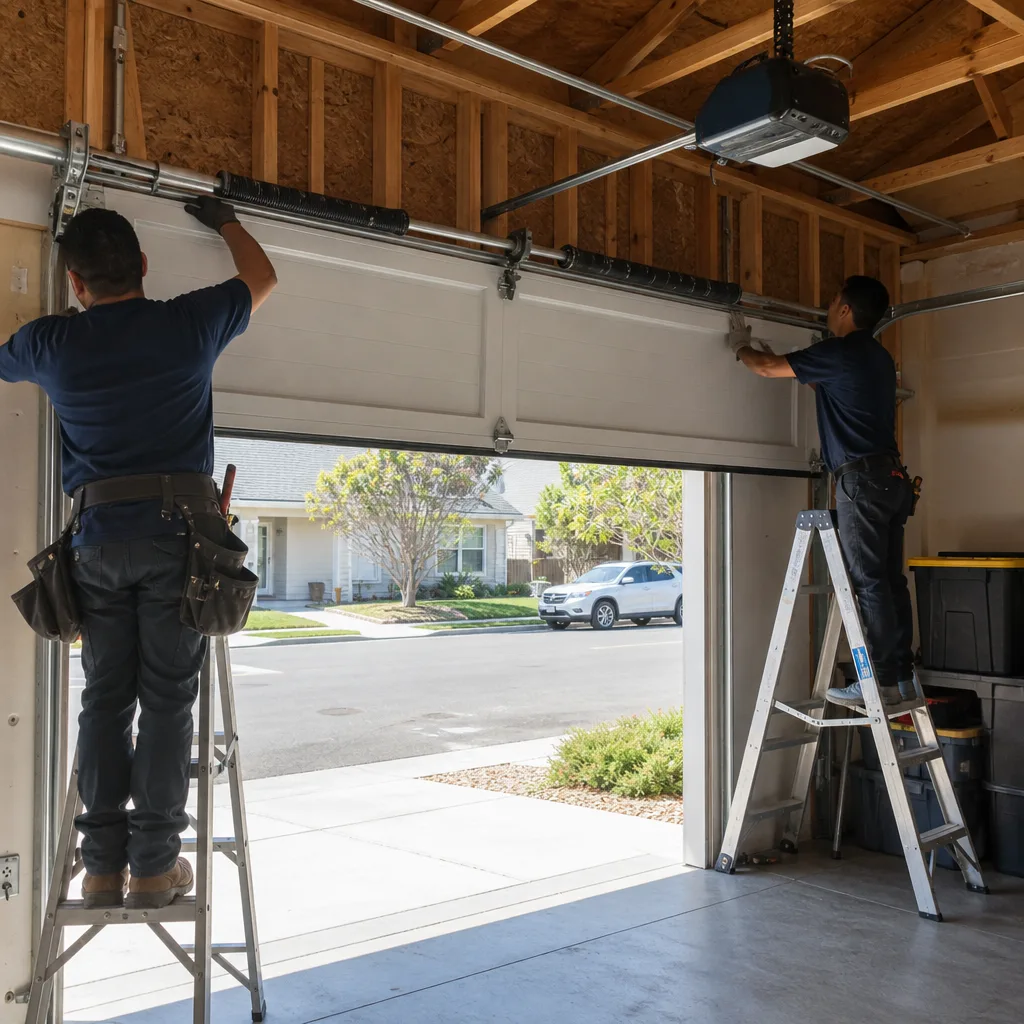
This calendar follows Hayward’s actual climate pattern, not a generic four-season template.
January
Wet season peak. Check for water intrusion after storms. Inspect bottom bracket corrosion. Listen for spring tension changes. If the door feels heavier to lift manually, schedule spring assessment before the break.
February
Continue wet season monitoring. Verify safety sensor function, rain can shift their alignment slightly. Check opener logic board enclosure for moisture intrusion, particularly in uninsulated garages.
March
Transition begins. First track gap measurement of the year, morning cool, to establish wet-season baseline. Schedule weatherstripping replacement if it’s been three-plus years or if you see daylight.
April
Short transitional window. Full system inspection: springs, cables, rollers, tracks, opener. This is the optimal timing for major maintenance before summer stress begins.
May
Dry period starts. Lubricate rollers, hinges, and torsion spring with silicone-based lubricant, not WD-40 which attracts dust. Check track gap at peak afternoon heat for summer clearance.
June
UV intensity peaks. Inspect weatherstripping on south and west faces. Clean safety sensors. Verify opener motor ventilation.
July
Heat peak. Monitor for afternoon binding. If door slows or drags only in peak heat, track gap needs summer-adjustment.
August
Dust accumulation peak. Clean all moving parts. Inspect trolley carriage and limit switch function on garage door opener repair & installation in Hayward systems, particularly Genie screw-drive models which are dust-sensitive.
September
Dry period ends. Final summer-condition track gap measurement. Document your thermal drift range for October comparison.
October
Marine layer returns. Critical measurement month. Check track gap at 7 a.m. fog conditions. This is when summer-adjusted doors bind. Address now before repeated strain damages rollers or opener.
November
Wet season establishes. Inspect for corrosion initiation. Check spring tension, cold-wet conditions reveal weakness.
December
Rain increases. Verify weatherstripping seal after storms. Monitor for water pooling patterns that indicate seal failure or floor slope issues.
Spring Tension Drift: Early Warning Signs
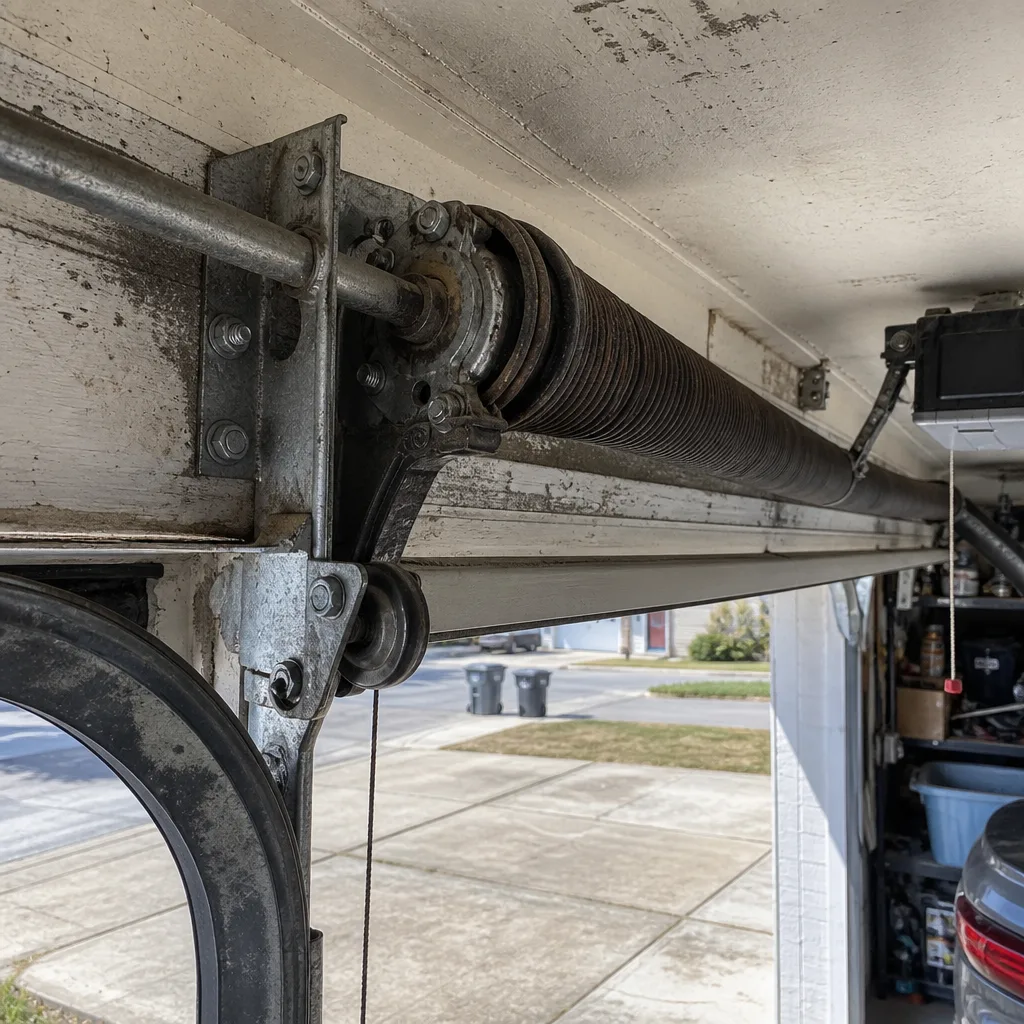
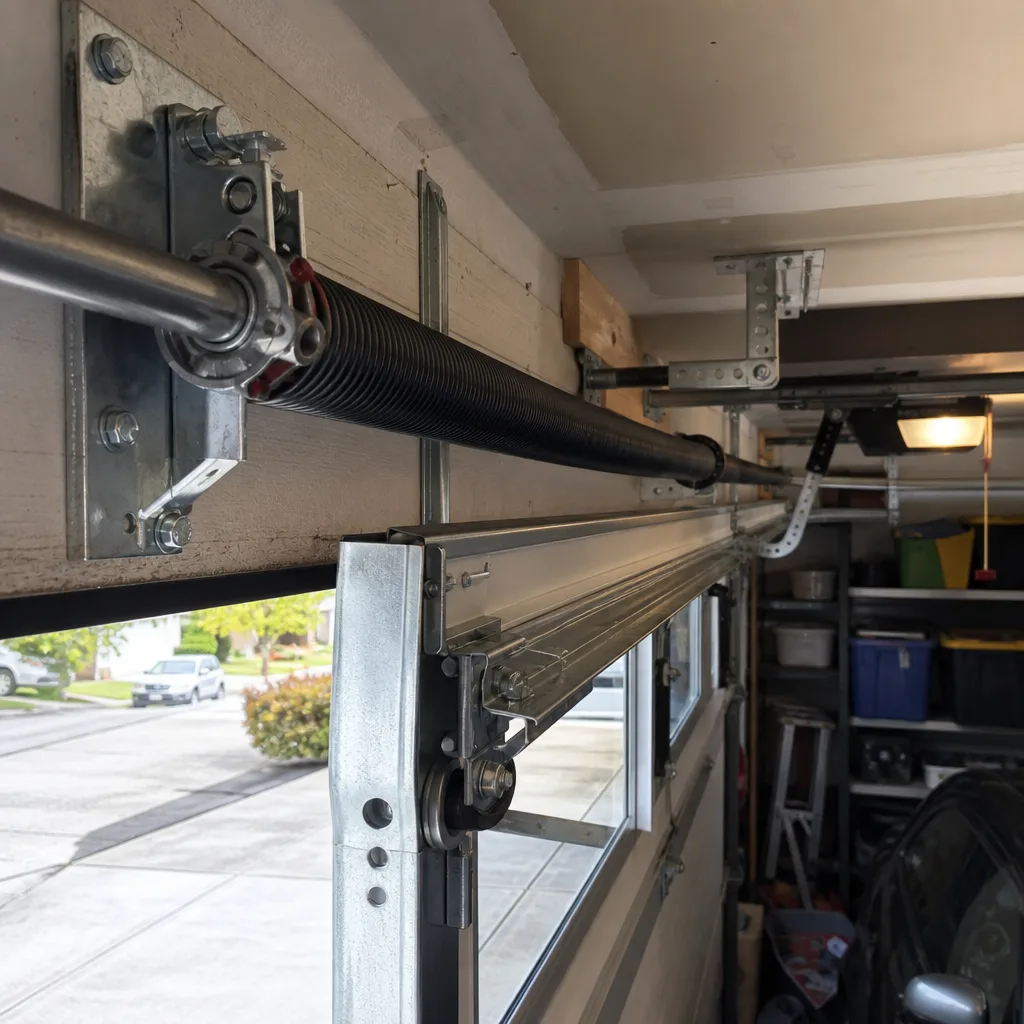
Torsion springs store mechanical energy to balance the door’s weight. In Hayward’s wet season, two factors alter their performance: temperature-dependent metal properties, and increased friction from contracting, slightly misaligned components.
A torsion spring at 45°F produces slightly less torque than at 75°F. The difference is small for a healthy spring, but for a spring approaching its cycle limit, typically 10,000 cycles for standard wire, the cold-weather deficit pushes it into underbalance. The door feels heavier. The opener motor works harder. The travel speed slows measurably.
The Four-to-Six-Week Warning Pattern
We’ve documented this pattern across thousands of Hayward service records. The sequence is:
- Door travel slows slightly, perhaps half a second longer to open
- Opener motor sounds strained, a deeper pitch under load
- Door stops slightly short of fully open or drifts closed from the open position
- Spring breaks, often with audible report, during a routine operation
Steps one and two are the warning window. If you notice slower travel or motor strain that correlates with cold mornings, not random occurrence, the spring is drifting out of specification. This is not a lubrication issue. Lubricating a weakening spring masks the symptom briefly but does not address the cycle limit.
Safety note: Torsion springs are under extreme tension and can cause serious injury or death if handled improperly. Do not attempt to adjust or replace a torsion spring yourself. The winding cone and cable drums are high-energy components that require specialized tools and training. If you observe the warning signs above, call a professional for assessment.
At Servo Garage Doors Hayward, we measure spring torque with a calibrated winding bar and compare to the door’s actual weight. If replacement is needed, we quote a flat, written price before any work begins, per Clause 1 of The Haven Standard. The customer receives a photo of the spring condition and the torque measurement, documented evidence of why replacement was recommended.
What You Can Check Yourself vs. What Needs a Technician
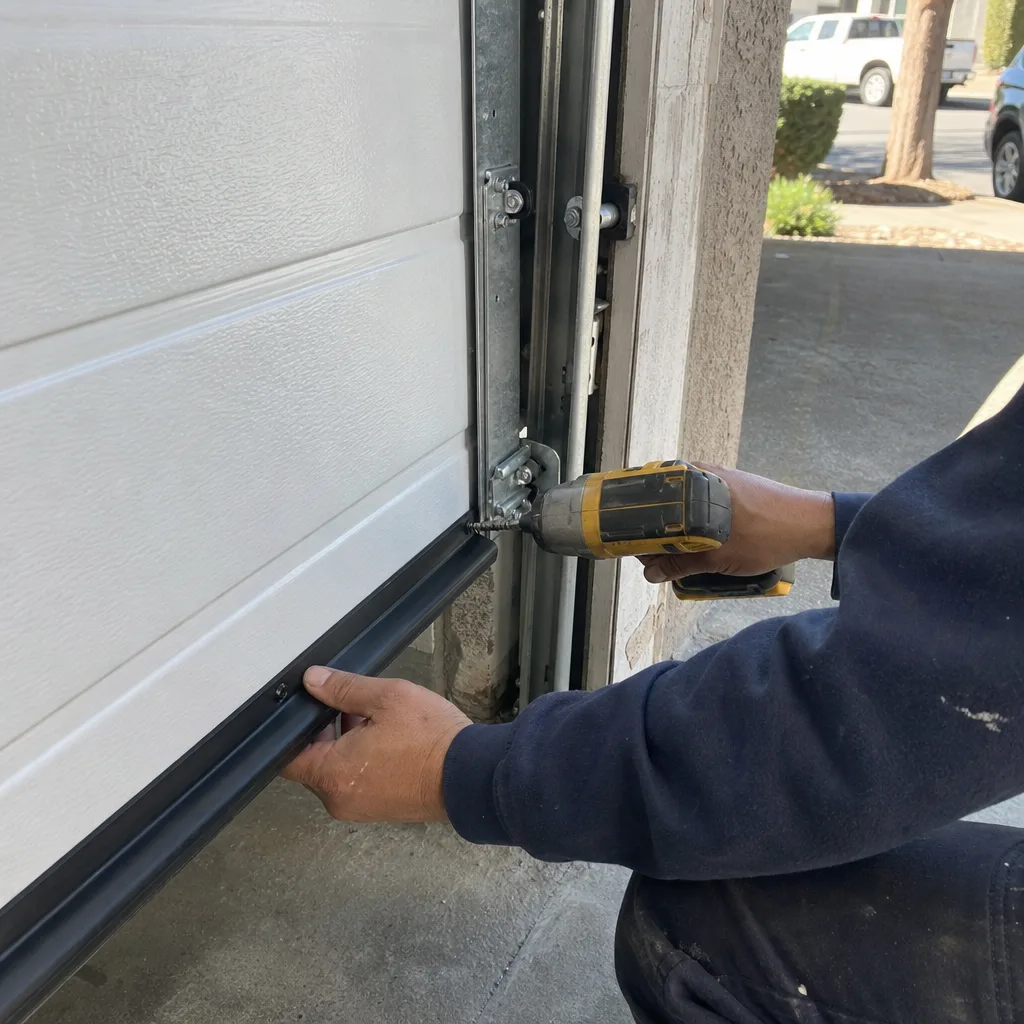
Some seasonal maintenance is appropriate for homeowners. Some requires professional assessment due to safety risk or specialized tooling.
Homeowner-Appropriate Tasks
- Visual inspection of weatherstripping condition
- Cleaning safety sensor lenses
- Listening for operational changes (speed, sound, smoothness)
- Basic track gap measurement with a tape measure
- Lubrication of hinges and rollers with appropriate product
- Testing manual operation by disengaging opener and lifting door
Technician-Required Tasks
- Spring torque measurement and adjustment or replacement
- Track alignment correction, particularly for thermal drift
- Cable tension balancing on extension spring systems
- Opener force limit and travel limit calibration
- Logic board diagnosis for electronic faults
- Replacement of bottom brackets, cable drums, or bearing plates
The dividing line is energy storage and height risk. Torsion springs, extension springs, and cables under tension can release stored energy violently. Bottom bracket replacement requires releasing cable tension first. These are not DIY tasks.
Our documented photo record system, Clause 4 of The Haven Standard, applies to every visit regardless of task size. The customer sees what we found and what we did, with dated images. This eliminates the “trust us” dynamic that dominates contractor-customer relationships.
Common Mistakes to Avoid
- Using WD-40 as garage door lubricant. WD-40 is a solvent and light oil that evaporates, leaving residue that attracts dust. Use silicone-based spray or lithium grease formulated for garage door components.
- Adjusting track gap in only one season. Hayward’s temperature swing means the gap set in July will be wrong in November. Measure at both extremes and set for the middle of your observed range, or accept seasonal adjustment.
- Ignoring the four-to-six-week spring warning window. Homeowners who notice slower travel but wait for “a convenient time” often experience a break at the least convenient moment. The warning signs are specific and time-limited.
- Replacing weatherstripping with the cheapest option. PVC foam degrades faster in Hayward’s UV-humidity cycle than EPDM rubber. The savings evaporate with earlier replacement and increased energy costs from poor sealing.
- Cleaning photo-eye sensors with wet cloths or cleaners. Moisture and residue films cause more problems than dust. Use a clean, dry cloth only.
- Assuming binding in October means “needs lubrication.” October binding in Hayward is typically thermal contraction, not friction. Lubrication won’t fix track alignment.
- Skipping professional assessment after any manual operation feels heavy. A door that feels heavy when disconnected from the opener has a spring balance problem. Continuing to operate it strains the opener motor and risks spring failure.
When to Call a Professional
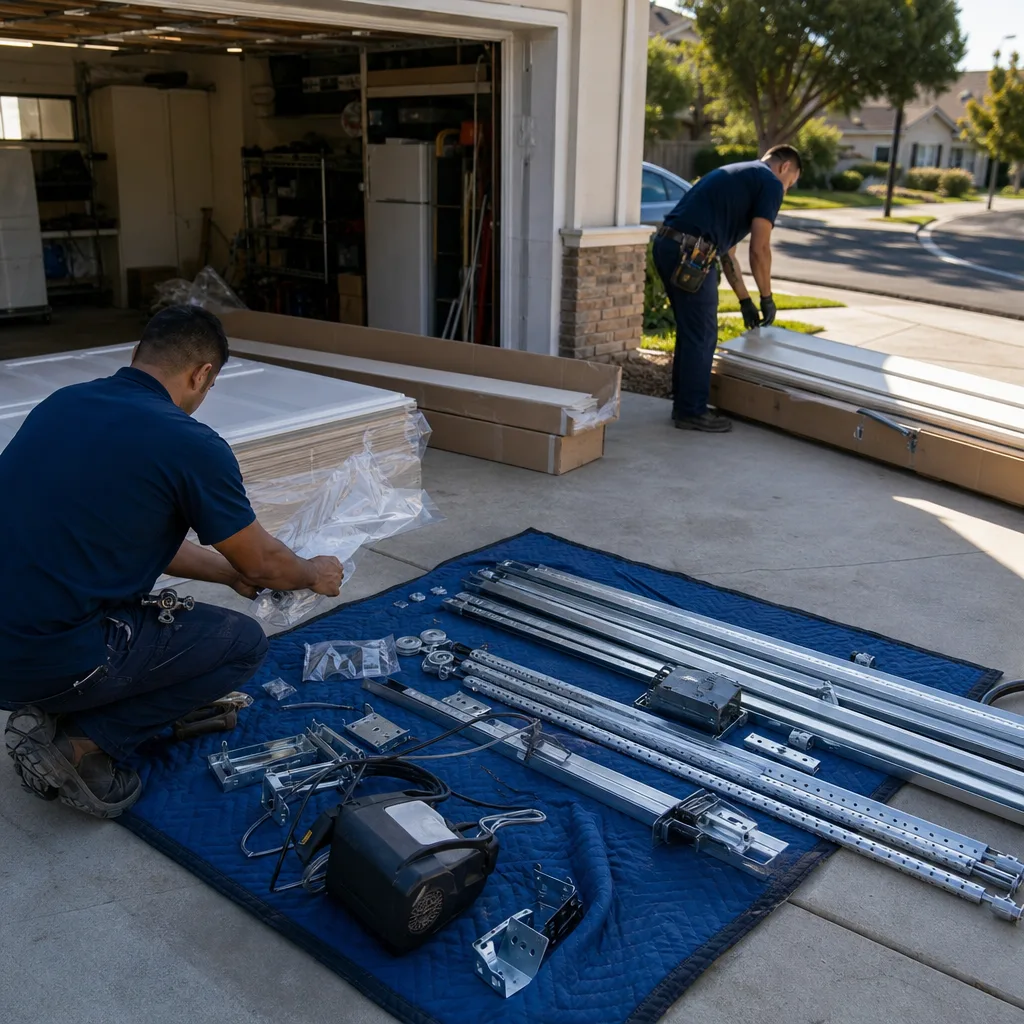
Call a technician when you observe spring tension warning signs, track gap thermal drift exceeding 1/16 inch, corrosion on load-bearing components, or any operational change that correlates with seasonal temperature shifts. The pattern matters more than the single occurrence. A door that binds every October morning but operates smoothly by noon has an alignment issue that will compound with years of seasonal cycling.
For emergency situations, a door stuck open or closed, a broken spring, or a cable off the drum, live phone coverage is available. Servo Garage Doors Hayward offers free estimates in Hayward, call (510) 330-2488. Every estimate includes a written, flat price before any work begins, per Clause 1 of The Haven Standard, and a documented photo record of findings, per Clause 4.
Frequently Asked Questions
Perform basic homeowner inspections monthly, following the calendar above, and schedule professional maintenance every 12 to 18 months. Hayward’s climate demands the October and May inspections at minimum, because those are the seasonal transition points where thermal drift and humidity changes stress the system.
Morning sticking in October through December is typically thermal contraction of steel tracks combined with marine layer humidity. The track gap set for summer expansion is now too tight for contracted dimensions, or the vertical-to-horizontal transition angle has shifted slightly. Measure track gap at 7 a.m. on a cool morning and compare to your summer measurement. If the difference exceeds 1/16 inch, alignment adjustment is needed.
Weatherstripping replacement for a standard single-car garage door in Hayward typically ranges from $120 to $220 including materials and labor, depending on door width and whether jamb seals, bottom seal, or both need replacement. Double-wide doors or specialized retainer profiles increase the range. We provide a flat, written price before any work begins, per Clause 1 of The Haven Standard. Call (510) 330-2488 for an exact quote, estimates are free.
Track gap measurement is a homeowner task. Track alignment adjustment involves loosening track mounting brackets, shifting vertical track position while maintaining plumb, and retightening without distorting the track. This requires experience to avoid creating new problems. If your measurement shows drift beyond 1/16 inch, professional adjustment is the safer choice.
Standard torsion springs are rated for approximately 10,000 cycles, one open-close cycle. For a door used four times daily, that’s roughly seven years. Hayward’s coastal humidity doesn’t directly shorten spring life, but the temperature cycling and corrosion on related components, cable drums and bottom brackets, can accelerate system wear that stresses the spring. We see springs reach cycle limit with predictable timing, and the four-to-six-week warning pattern gives advance notice if you’re watching for it.
Yes. Servo Garage Doors services all eight major brands: LiftMaster, Chamberlain, Genie, Clopay, Amarr, Wayne Dalton, Craftsman, and Raynor. Our technicians carry common parts for these brands and can diagnose logic board, limit switch, trolley carriage, and safety sensor issues across all models. The documented photo record shows you exactly what component failed and why replacement was recommended.
The Bottom Line
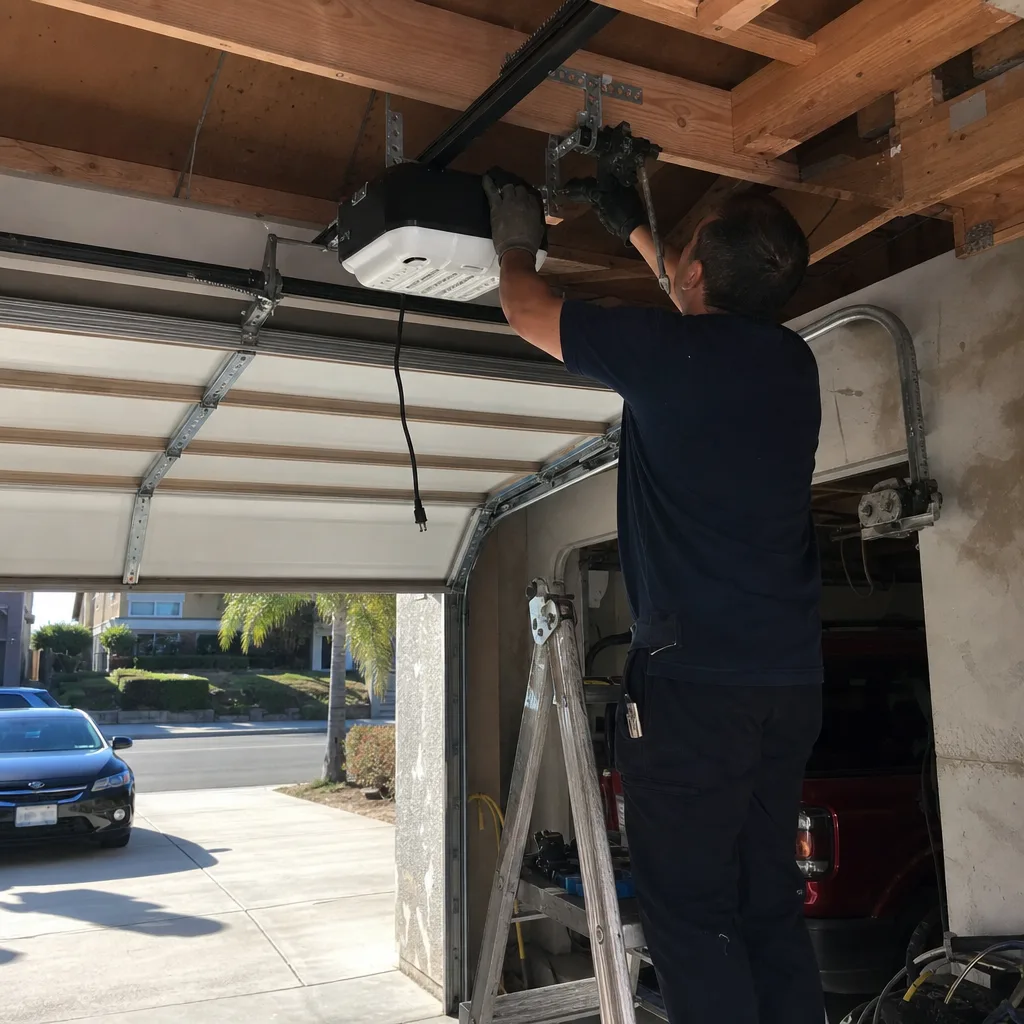
Hayward’s two-phase climate, marine fog wet season and dry-heat summer, creates specific garage door failure modes that generic maintenance advice misses. Track gap tolerance between 1/8 and 1/4 inch must account for thermal drift. Weatherstripping replacement every three to four years, not five, matches coastal humidity reality. Spring tension drift shows a four-to-six-week warning pattern before failure. The homeowners who avoid emergency repairs are those who measure in both seasons and act on the early signals. Documentation beats urgency every time, which is why every Servo service includes a written price before work and a photo record after.
Written by Marcus Deller, Owner at Servo Garage Doors Hayward, serving Hayward since 2015.